





Cloud Migration Company in India, USA, UAE
We’ve delivered migration and cloud architecture engagements for 10+ clients across India (Delhi, Mumbai, Gujarat, Indore, Bangalore) and the United States, on AWS, Azure, and Google Cloud, ranging from a single legacy application lift to full multi-region re-architecture.
Most cloud migrations don’t fail because the cloud is the wrong choice. They fail because of rushed assessment, no rollback plan, and nobody accounting for what breaks when a database that assumed local-network latency suddenly talks to an application three availability zones away. That’s the part we’re built to get right.

What Does a Cloud Migration Service Actually Involve?
A cloud migration service is an engagement where a specialist cloud migration company or agency assesses your existing on-premise or cloud infrastructure, plans a migration strategy suited to each application (rehost, replatform, refactor, or retire), and executes the move to a target cloud provider such as AWS, Azure, or Google Cloud, with minimal downtime and a tested rollback path. At Cybertize, this includes infrastructure assessment and application dependency mapping, migration strategy design, database migration, network and security architecture, phased cutover execution, and post-migration cost and performance optimization.

Cloud Migration Company in India, USA, UAE: The stakes are real, not theoretical. McKinsey’s widely cited 2021 research on enterprise technology migrations found that 75% of cloud migrations ran over budget and 37% ran behind schedule, and more recent industry data continues to show a similar pattern, with IDC putting the average cost overrun on cloud migration projects at 23% above the original plan. The single largest driver behind both figures is the same: migrations that start execution before the assessment phase is actually finished. We structure our engagements to front-load that assessment specifically to avoid becoming another statistic on that list.
India’s own cloud infrastructure is scaling fast enough that “we’ll migrate eventually” is no longer a strategy many businesses can afford. Enterprise cloud adoption in India has moved from roughly 25% in 2022 to an estimated 62% in 2026, and the country’s broader cloud computing market is projected to reach USD 17.8 billion by 2027 (IDC). Waiting means competing against companies that already migrated and are already running cheaper, faster infrastructure than you are.
Related Insights

Top Flutter Developers in India 2026: Your Complete Guide to Cross-Platform Excellence
Introduction to Top Flutter Developers in India 2026: Why Flutter Dominates India's Dev Landscape India has emerged as…
Read Article
State of Enterprise MCP Adoption 2026: Data, Architecture, Trends
MCP Adoption: How MCP Became Infrastructure This Fast In November 2024, Anthropic released the Model Context Protocol as…
Read Article
AI Development Cost Guide 2026
AI Development Cost: Why This Number Is So Hard to Pin Down Ask five agencies what an AI…
Read Article
Mankavit Law Academy — Building a Secure, Scalable Digital Learning Ecosystem
Project Overview Mankavit Law Academy, one of India's emerging law entrance coaching institutes, partnered with Cybertize Technologies Private…
Read Article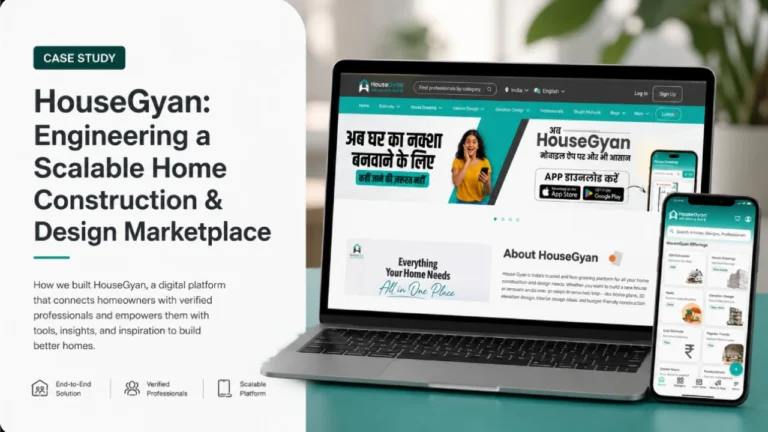
HouseGyan: Engineering a Scalable Home Construction & Design Marketplace
HouseGyan, an Indore-based home planning and construction platform, partnered with Cybertize Technologies Private Limited to transform an ambitious…
Read Article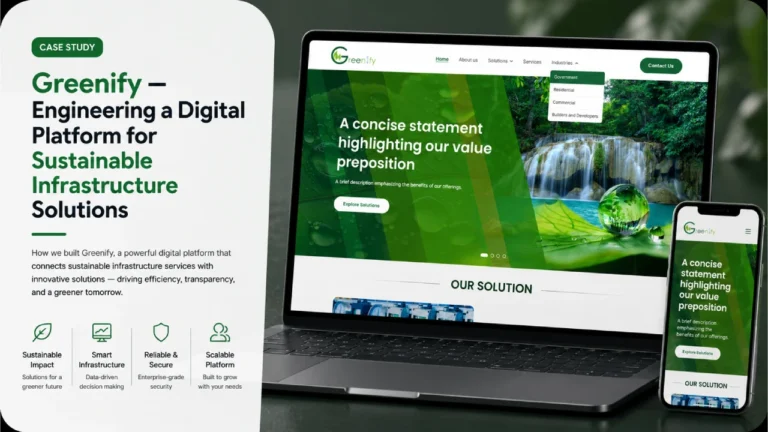
Greenify — Engineering a Digital Platform for Sustainable Infrastructure Solutions
Project Overview Greenify partnered with Cybertize Technologies Private Limited to build a modern digital platform that reflects its…
Read Article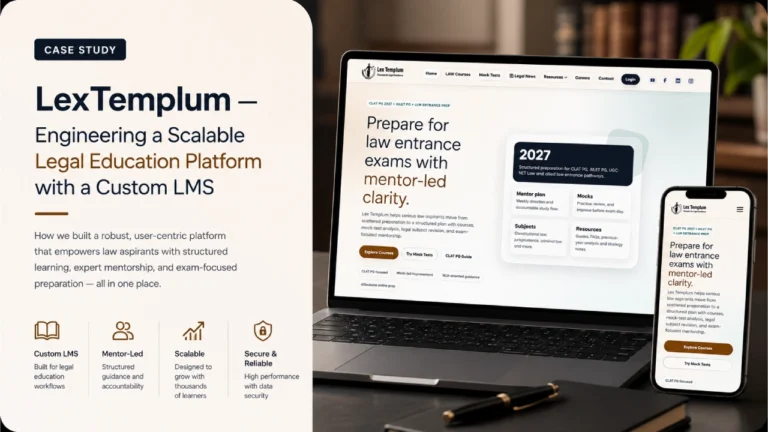
LexTemplum — Engineering a Scalable Legal Education Platform with a Custom LMS
Project Overview LexTemplum, a leading law entrance preparation institute, partnered with Cybertize Technologies Private Limited to modernize its…
Read Article
ForexBlues — Modernizing a Forex Advisory Platform with Real-Time Market Intelligence
Project Overview ForexBlues, a financial advisory platform specializing in foreign exchange and commodity market insights, partnered with Cybertize…
Read Article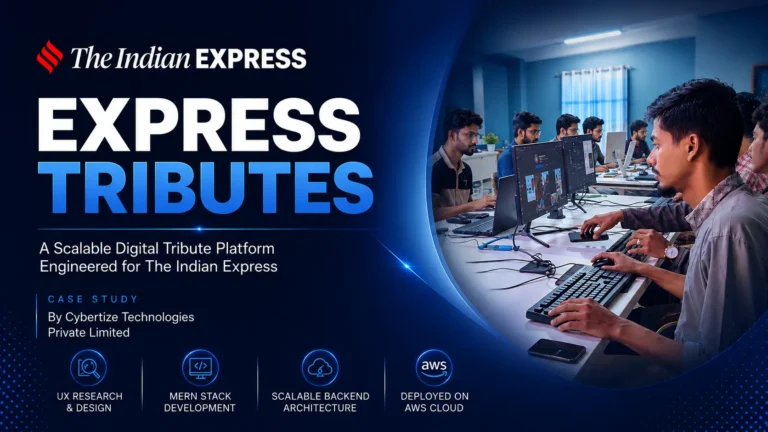
Building Express Tributes: A Scalable Digital Tribute Platform for The Indian Express
Industry Digital Publishing • Media Technology Services Delivered Product Discovery UI/UX Research Information Architecture Figma UI Design MERN…
Read Article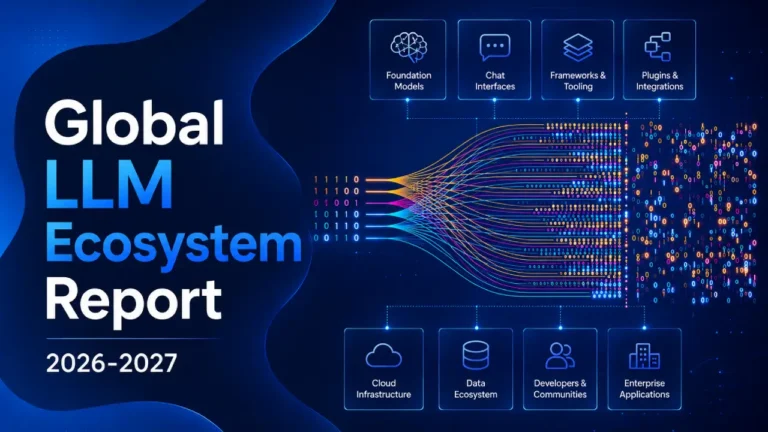
Global LLM Ecosystem Report 2026-2027: The Complete AI Landscape
Introduction Trying to describe the AI model landscape in one sentence has become close to impossible. Three years…
Read Article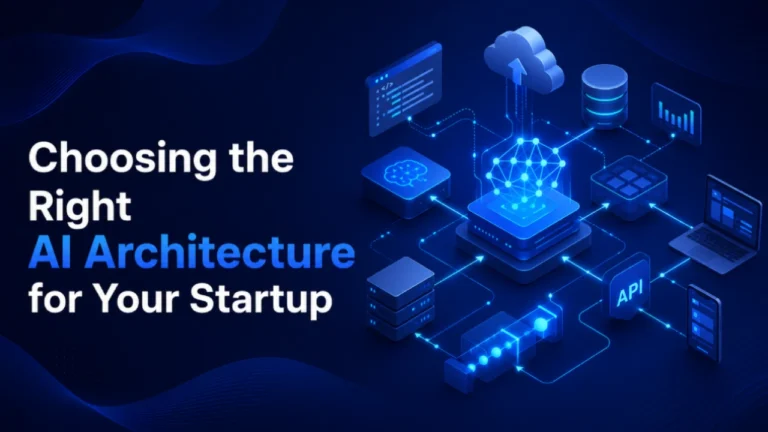
Choosing the Right AI Architecture for Your Startup in 2026
What's The Right AI Architecture: The Question Nobody Asks Before They Start Building Ask ten founders why they…
Read Article
The State of UI/UX Design in India 2026-2027
State of UI/UX Design in India: A Discipline That Has Outgrown Its Old Reputation Ten years ago, "UI/UX…
Read ArticleCloud Migration & System Design Services by the Leading Cloud Migration Company in India
1. Cloud Readiness & Migration Assessment
Before we as a Cloud Migration Company, move a single workload, we map your existing application portfolio: what depends on what, which applications are safe to lift-and-shift, which need re-architecture first, and which are candidates for retirement instead of migration. This includes a TCO (total cost of ownership) comparison across AWS, Azure, and GCP so the platform decision is based on your actual workload profile, not brand preference.
2. Rehost (Lift-and-Shift) Migration
The fastest path to the cloud: moving applications and VMs to cloud infrastructure with minimal code changes, typically using tools like AWS Application Migration Service, Azure Migrate, or GCP’s Migrate to Virtual Machines. Fast, but worth entering with eyes open: lift-and-shift alone leaves a meaningful share of potential cost savings on the table compared to re-architecting for cloud-native patterns, so we always flag which workloads are good rehost candidates versus which ones you’re better off replatforming from day one.
3. Replatform & Refactor Migration
For applications where lift-and-shift isn’t enough, we re-architect for cloud-native patterns: converting monolithic applications to containerized microservices, moving from self-managed databases to managed services (RDS, Cloud SQL, Azure SQL), and redesigning for autoscaling instead of fixed-capacity servers. This is where the real cost and performance gains show up, usually 20 to 30% or more in infrastructure savings once workloads are actually cloud-native rather than “technically running on a cloud VM.”
4. Database Migration
Database migration is where most cloud migrations quietly go wrong. We handle schema conversion, data validation, minimal-downtime replication using tools like AWS DMS or Azure Database Migration Service, and a tested cutover plan with rollback capability, for PostgreSQL, MySQL, MongoDB, Oracle, and SQL Server workloads.
5. Data Center Exit & Legacy System Migration
For businesses still running physical servers on-site, we plan the full data center exit: application inventory, dependency mapping, phased workload migration, and decommissioning, timed to avoid a hard cutover on a single high-risk weekend. On-premise infrastructure in India typically carries purchase costs in the range of ₹5 to ₹20 lakh per server plus ₹50,000 to ₹2 lakh in annual maintenance, costs that disappear entirely once workloads move to consumption-based cloud pricing.
6. Multi-Cloud & Hybrid Cloud Architecture
Not every workload belongs on one provider, and not every business wants full public cloud. We design hybrid architectures that keep sensitive or regulated data on-premise or in a private cloud while running elastic, customer-facing workloads on public cloud, along with multi-cloud strategies for businesses that need to avoid single-vendor lock-in for contractual or resilience reasons.
7. Zero (or Near-Zero) Downtime Cutover Planning
The actual cutover is where migrations are won or lost publicly. We plan phased traffic shifting (DNS-based, load-balancer-based, or blue-green), parallel-run periods where old and new environments both serve traffic before full cutover, and a documented, rehearsed rollback procedure, so a migration issue is a contained event instead of a customer-facing outage.
8. Post-Migration Cost & Performance Optimization
Cloud Migration Company: Migration doesn’t end at cutover. We audit the new environment for right-sizing, unused resources, and Reserved Instance or Savings Plan opportunities in the weeks after go-live, because the biggest waste in cloud spend usually shows up only once real production traffic hits the new environment.
9. Security, Compliance & Data Residency Architecture
Cloud migration is also a data governance decision by the cloud migration company you’re hiring. We design IAM policies, network segmentation, and encryption-at-rest/in-transit as part of the migration itself, and for Indian entities, we architect specifically around the Digital Personal Data Protection (DPDP) Act’s data localization requirements for sensitive personal data, using in-India cloud regions available across AWS, Azure, and GCP.
10. Disaster Recovery & Business Continuity Design
As part of migration, we design your Recovery Time Objective (RTO) and Recovery Point Objective (RPO) into the new architecture from the start, including cross-region backup, automated failover for critical services, and a disaster recovery runbook your team can actually execute under pressure.
11. SaaS & Application Modernization During Migration
For businesses using migration as an opportunity to modernize, not just relocate, we handle application refactoring, API modernization, and Node.js/Next.js application rebuilds alongside the infrastructure migration, so you’re not paying to move a legacy application as-is only to rebuild it a year later.
12. Ongoing Cloud Management Post-Migration
Once migrated, we offer managed cloud operations, monitoring, patching, and cost governance, so the platform you moved to stays optimized instead of drifting back into the same sprawl that made the old environment expensive.
Industries We’ve Migrated to the Cloud
Fintech and BFSI (compliance-heavy, largest share of global cloud migration spend at roughly a quarter of the market), D2C and e-commerce, healthtech, SaaS and B2B product companies, media and publishing platforms, and manufacturing and logistics businesses digitizing legacy ERP and inventory systems.
Common Technical Challenges We Plan Around
Application dependency blind spots. Nearly a third of migration rework happens because an application’s dependencies (a hardcoded internal IP, a shared file system, a scheduled batch job nobody documented) weren’t discovered until mid-migration. We do dependency discovery before scoping, not during execution.
Network latency assumptions breaking silently. Applications built assuming same-datacenter latency between app server and database can slow down significantly once that database sits in a different availability zone or region. We test latency-sensitive paths before cutover, not after users complain.
Underestimated data transfer time and cost. Large databases and file stores take longer to migrate than teams expect, and cross-region data transfer has real egress costs. We calculate both during assessment so the migration timeline and budget reflect reality.
Security misconfiguration during the move. A significant share of post-migration incidents trace back to overly permissive IAM roles or open security groups set up “temporarily” during migration and never locked back down. We treat security configuration as part of the migration deliverable, not a follow-up task.
No tested rollback path. The single biggest reason a migration turns into a visible outage is teams cutting over without a rehearsed way to go back. Every cutover plan we write includes a rollback procedure that’s actually been tested, not just documented.
How We Work: Engagement Models by the top Cloud Migration Company in India, USA, UAE
Fixed-Scope Migration Project. A defined application portfolio migrated on a fixed timeline, typically 6 to 20 weeks depending on portfolio size and complexity.
Phased Data Center Exit. For larger legacy environments, a multi-phase migration roadmap executed over months, with each phase independently scoped and validated before the next begins.
Cloud Modernization Retainer. Ongoing engagement combining migration with application refactoring, for businesses that want to modernize as they move rather than move and modernize separately.
Migration Assessment Only. A time-boxed readiness assessment and migration roadmap, for teams that want a clear plan and cost estimate before committing to execution, with no obligation to execute it with us.
Engagements are quoted in INR for Indian entities and USD for US clients, scoped after the initial readiness assessment, since a five-server rehost and a full data center exit with 40 interdependent applications are not priced the same way.
Why Cybertize Technologies
We plan the assessment as carefully as the migration. Given that roughly three-quarters of cloud migrations run over budget industry-wide, our process is built specifically to front-load dependency mapping and cost modeling before execution starts, not after problems appear mid-migration.
We build applications too, so we know what actually breaks in transit. Because Cybertize also delivers Node.js and Next.js application development, we understand exactly how a hardcoded connection string, a synchronous file read, or a caching assumption behaves when it suddenly sits on different infrastructure, and we catch it in assessment instead of in production.
Presence across India and the US. With teams operating out of Delhi, Mumbai, Gujarat, Indore, and Bangalore, alongside a US presence, we run migration engagements with overlapping working hours for Indian and North American clients, and UAE-based engagements benefit from timezone overlap with both regions.
No lock-in migration. Every engagement is documented with architecture diagrams and Infrastructure-as-Code your team owns outright, so your cloud environment is portable and auditable, not dependent on us to operate.
Assessment before quote, always. We don’t price a migration blind. The readiness assessment comes first, and the migration plan and cost estimate come out of what we actually find in your environment.
Start With an Assessment, Not a Commitment
You don’t need to decide on a cloud provider or a migration date before talking to us. The first step is a structured readiness assessment: what’s in your current environment, what it depends on, what it will cost to move, and what could go wrong if it’s rushed. From there, you decide on timeline and scope.