Developing a model is not the same as delivering an application
A model produces predictions. An application makes those predictions useful: it collects the right inputs, calls the model reliably, presents results to users, handles errors, enforces access controls, logs outcomes, and fits into existing workflows. Many AI initiatives stall because the model works in a test environment but nothing connects it to the people and systems that need it. Cybertize works on both sides, so the model and the product around it are designed together.
RAG vs Fine-Tuning
Custom AI and Machine Learning Development Services
Cybertize, a leading AI ML Development Company, develops AI/ML solutions for specific operational and product requirements. We start from the business objective, the data available, your existing systems, and your deployment constraints, then select the approach that fits. Our services include the following.
Custom AI Application Development
We build AI-powered web applications, internal business tools, operational platforms, and intelligent software products. The focus is on the full application: user interface, backend services, data flows, and model integration. This suits teams that want AI embedded in a product or workflow rather than delivered as a standalone experiment. Related capability: our AI App Development service.
Machine Learning Model Development
We develop supervised and unsupervised models, including classification, regression, clustering, and anomaly detection, using the approach that suits your data and accuracy requirements. For structured business data, simpler models often perform well and are easier to explain and maintain. Typical uses include lead scoring, churn prediction, credit-risk estimation, and customer grouping.
Predictive Analytics and Forecasting
Predictive systems help teams plan with more information: demand forecasting, sales predictions, inventory and capacity planning, and risk estimation. Implementation involves historical data review, feature preparation, model comparison against sensible baselines, and a way for planners to see and act on forecasts. This is most useful where you have meaningful historical data and decisions that repeat.
Generative AI Development
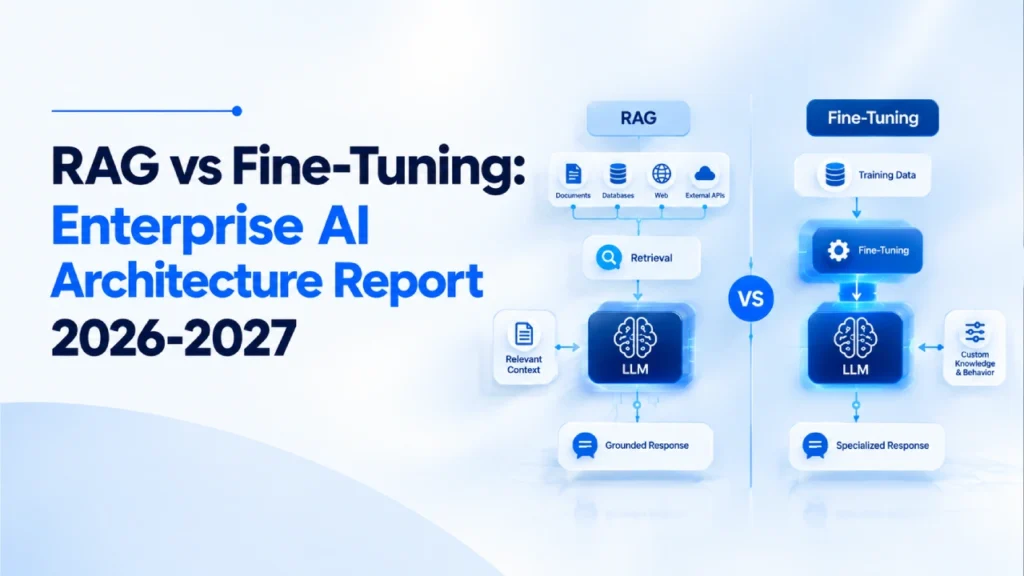
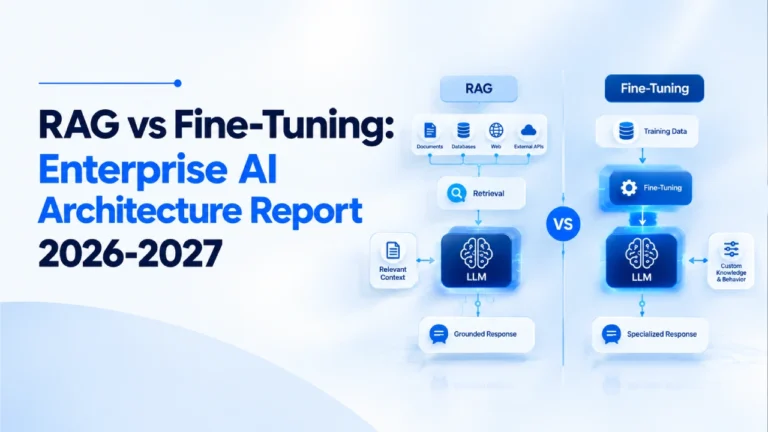
We build LLM-powered applications such as document assistants, internal knowledge search, drafting tools, and content generation workflows. Where answers must be grounded in your own documents, we design retrieval-augmented generation (RAG) pipelines, with attention to data access, output review, and failure handling. See our Generative AI Development and RAG Development services for more detail.
Computer Vision Development
Computer vision applications interpret images and video: image classification, object detection, visual inspection, document and ID image processing, and counting or tracking tasks. Suitable use cases include quality checks on production lines, shelf and inventory monitoring, and image-based verification. Image quality, labeling effort, and deployment hardware are the main planning considerations.
Natural Language Processing
NLP applications work with text: classification, information extraction, semantic search, sentiment analysis, summarization, and document processing. They suit organizations handling large volumes of emails, tickets, contracts, reviews, or reports, where reading everything manually is slow and inconsistent.
Recommendation Engine Development
Recommendation systems personalize products, services, content, or next-best actions in business workflows. Depending on data volume and product context, approaches range from rule-based and popularity-based methods to collaborative filtering and hybrid models. We help determine how much sophistication is justified before building.
AI and ML Model Integration
Cybertize, AI ML Development Company, integrate models, whether custom-built or third-party, into existing applications, APIs, enterprise systems, and software products. This includes designing inference endpoints, handling latency and fallback behavior, and connecting outputs to your CRM, ERP, or internal platforms. Related capability: our API Development and Custom Software Development services.
Intelligent Process Automation
We combine AI, business rules, APIs, and workflow automation to reduce repetitive work, for example classifying incoming requests, extracting data from documents, routing approvals, or triggering downstream actions. Not every step needs a model; we use AI where judgment or pattern recognition is required and plain logic elsewhere. For multi-step autonomous workflows, see our AI Agent Development service.
MLOps and Model Deployment Services
A model needs operational support after launch. We handle deployment, performance monitoring, version management, evaluation on live data, and retraining workflows where required. Data and user behavior change over time, and without monitoring, model quality can degrade unnoticed. Related capability: our Cloud and DevOps Services.
What Can You Build with AI and Machine Learning?
The table below shows common applications, the problem each addresses, and where it tends to be useful. Suitability always depends on your data and process.
| Application |
Problem it can address |
Where it may be useful |
| Predictive analytics applications |
Decisions made on intuition or lagging reports |
Sales, operations, and finance teams with historical data |
| Demand forecasting systems |
Overstock, stockouts, and weak planning |
Retail, manufacturing, and distribution |
| Customer segmentation tools |
Treating all customers the same |
Marketing, subscription, and e-commerce businesses |
| Fraud and anomaly detection |
Unusual transactions or behavior that rules miss |
Payments, lending, insurance, and marketplaces |
| Recommendation engines |
Low discovery and weak personalization |
E-commerce, media, and learning platforms |
| AI-powered business intelligence |
Slow access to insights across scattered data |
Leadership and analyst teams with multiple data sources |
| Intelligent document processing |
Manual data entry from invoices, forms, and contracts |
Finance, legal, logistics, and healthcare administration |
| Computer vision applications |
Inconsistent or slow visual checks |
Manufacturing, warehousing, and retail |
| AI chatbots and virtual assistants |
High support volume and repetitive queries |
Customer support, HR, and internal helpdesks |
| AI-powered SaaS platforms |
Adding intelligent features to a software product |
Startups and product companies |
| Predictive maintenance systems |
Unplanned equipment downtime |
Plants and asset-heavy operations with sensor data |
| Workflow automation applications |
Repetitive, rule-heavy manual processes |
Back-office and operations teams |
Our AI ML Development Process
Our lifecycle is designed to establish feasibility early, so you invest in builds that have a realistic chance of working.
- Business discovery and use-case assessment. We define the problem, the users, the success measures, and whether AI is the right tool at all.
- Data audit and feasibility analysis. We review data sources, quality, volume, labeling, access, and privacy constraints, and give an honest view of what is achievable.
- Solution architecture and model selection. We design the system and choose an approach, which may be a classical ML model, a pre-trained model, an LLM API, or a rules-based component.
- Data preparation and model development. We clean and structure data, build features, run experiments, and compare candidates against baselines.
- Application and API integration. We build the surrounding product, including interfaces, backend services, and connections to your systems.
- Testing, validation, and model evaluation. We evaluate with metrics matched to the business goal, test edge cases, and validate with real users before release.
- Deployment, monitoring, and optimization. We deploy to your target environment, monitor performance, and improve the system as data and needs change.
Model selection depends on the problem, data availability, accuracy requirements, infrastructure, and business constraints. Not every project requires a custom-trained model. Often a pre-trained model, an API, or a simpler statistical method delivers the needed result faster and at lower cost. We recommend custom training only when it is justified.
Technologies and Frameworks We Work With
The list below describes the technology categories we work across. Each project uses the tools that fit its requirements, not every tool listed.
- Languages and data processing: Python, SQL, and suitable data-processing libraries and tools.
- Machine learning: Scikit-learn, XGBoost, and other appropriate frameworks for structured and tabular data.
- Deep learning: PyTorch and TensorFlow where neural networks are the right fit.
- Generative AI: LLM APIs, embeddings, RAG architectures, and model orchestration tools.
- Data infrastructure: Databases, data pipelines, storage systems, and vector search where required.
- Application integration: REST APIs, backend services, web applications, and enterprise integrations.
- Deployment and MLOps: Containers, cloud infrastructure, monitoring, model versioning, and CI/CD practices.
AI ML Development for Different Industries
Every industry has its own data, privacy, and integration requirements. Below are practical use cases and the considerations that usually come with them.
- Healthcare and health technology: Clinical document processing, appointment and resource forecasting, and decision-support tools. Patient data privacy, consent, and applicable health-data regulations need early attention, and AI outputs should support, not replace, professional judgment.
- Banking and financial services: Fraud and anomaly detection, credit-risk models, document processing, and customer analytics. Explainability, audit trails, and regulatory requirements are central.
- Retail and e-commerce: Recommendations, demand forecasting, customer segmentation, and search improvement. Data freshness and integration with catalog and order systems are key.
- Manufacturing: Visual inspection, predictive maintenance, and quality analytics. Sensor data quality, edge deployment, and plant-system integration often drive the design.
- Logistics and supply chain: Route and demand forecasting, delay prediction, and document automation. Value depends on timely data from multiple partners.
- Education: Personalized learning recommendations, content tagging, and assessment support. Student data privacy and fairness need careful handling.
- Real estate: Price estimation, lead scoring, and document processing for listings and agreements. Data consistency across sources is a common challenge.
- Media and advertising: Content recommendation, audience segmentation, and generative content workflows. Rights, brand safety, and human review matter.
- SaaS and technology: Embedding AI features such as smart search, assistants, and predictions into a product. Multi-tenant data isolation and cost per request are key design factors.
- Professional services: Contract and document analysis, knowledge retrieval, and workflow automation. Confidentiality and access control come first.
AI ML Development Company in India
Businesses in India range from fast-growing startups to established enterprises with legacy systems, and AI projects here often need to work within existing ERP, CRM, and billing setups. Cybertize supports Indian organizations with custom software development, AI-powered applications, model integration, predictive analytics, and ongoing engineering support after launch.
Whether you are an AI ML development company seeking partner in Delhi for enterprise automation, a team in Mumbai building fintech or retail analytics, a product company in Bengaluru adding AI features to a SaaS platform, a manufacturer in Gujarat exploring visual inspection or predictive maintenance, or a growing business in Indore looking to apply machine learning to operations, the engagement starts with the same step: understanding your problem and your data.
Projects can be delivered remotely or collaboratively according to your requirements, with regular reviews, shared documentation, and agreed milestones. We do not assume you need an on-site team; where in-person workshops add value, they can be planned as part of the engagement.
AI ML Development Company in USA
US startups, growing businesses, and enterprises often look for a remote AI/ML engineering partner to extend their team, build a first AI product, or move a prototype into production. Cybertize supports AI product development, machine learning applications, predictive systems, data-driven automation, model integration, and production deployment.
Remote collaboration works best with structure. We emphasize clear communication, written technical documentation, defined deliverables for each phase, and overlap planning across time zones so decisions are not delayed. Sprint reviews, shared project boards, and agreed escalation paths keep your internal team informed.
We do not make blanket promises about cost or delivery speed. After reviewing your use case, data, and constraints, we outline scope, assumptions, and a realistic plan. For US clients, we also discuss data-handling requirements, security expectations, and any sector-specific obligations at the outset.
AI ML Development Company in UAE
Organizations in the UAE are exploring AI for customer service, document-heavy operations, forecasting, and automation across sectors such as real estate, logistics, hospitality, finance, and trade. Cybertize builds custom AI applications, intelligent automation, predictive analytics, document processing, and machine learning integration for these needs.
For UAE projects, we pay particular attention to how data is stored and processed, which cloud and hosting options are acceptable, and what privacy or regulatory obligations apply to your sector. Multilingual requirements, such as Arabic and English documents or customer interactions, are also a common design consideration for NLP and document-processing projects.
Solutions are designed around your existing business processes, data availability, and infrastructure, so the AI component fits how your teams already work.
Why Choose Cybertize Technologies for AI ML Development?
We focus on engineering considerations that determine whether an AI project delivers value.
- Business-first use-case selection. We start with the outcome you need, which prevents spending on technology that does not move a metric.
- Custom application and model integration. Models are built into usable software, so people actually adopt the result.
- Data-aware architecture. Designs reflect your real data sources, volumes, and quality, reducing surprises mid-project.
- Appropriate model and technology selection. We choose the simplest approach that meets requirements, which often lowers cost and maintenance burden.
- Integration with existing software. Connecting to your current systems avoids disruptive rebuilds and duplicate data entry.
- Evaluation and validation before deployment. Testing against meaningful metrics and real scenarios builds confidence before launch.
- Security and access-control considerations. Sensitive data and model outputs are protected through role-based access and secure design practices.
- Monitoring and ongoing improvement. Models are watched in production and improved as data changes.
- Flexible project scope. You can begin with a proof of concept and extend to a production application as results justify.
Custom AI/ML Development vs Off-the-Shelf Solutions
Ready-made AI tools are often the right first choice. Custom development makes sense when the tool no longer fits the work.
| Factor |
Off-the-shelf AI tools |
Custom AI/ML development |
| Customization |
Limited to vendor features |
Built around your workflow and requirements |
| Integration |
Standard connectors; custom needs can be restrictive |
Designed for your systems and APIs |
| Control |
Vendor controls roadmap and models |
You control logic, data handling, and roadmap |
| Data requirements |
Minimal setup; learns little from your proprietary data |
Can use proprietary data for specialized predictions |
| Deployment |
Usually vendor-hosted |
Cloud, on-premises, or hybrid as required |
| Maintenance |
Handled by the vendor |
Shared or managed by your team or partner |
| Cost |
Lower upfront, recurring subscription |
Higher upfront, potentially better fit over time |
A ready-made tool is usually sufficient for common needs such as general transcription, standard chatbots, or basic analytics. Custom development may be justified when you have unique workflows, proprietary data, specialized predictions, strict data-residency needs, or when AI is a core part of your product. We will tell you honestly if an existing tool already meets your requirement.
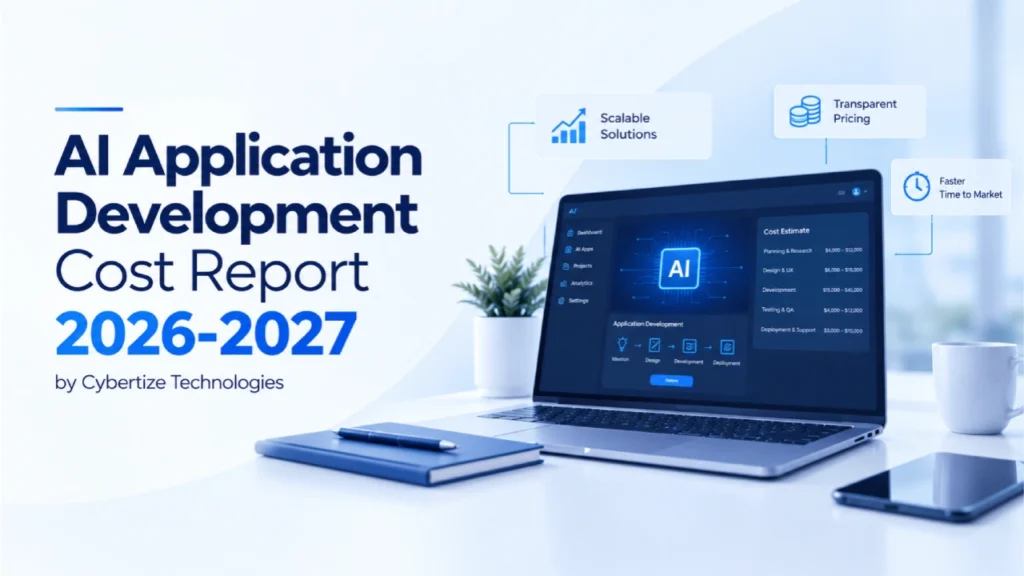
AI and ML Development Cost
Cost depends on scope and uncertainty, so a fixed number is rarely meaningful before discovery. The main factors are:
- Problem complexity: a simple classifier differs greatly from a multi-model system.
- Data quality and availability: missing, inconsistent, or unlabeled data increases effort.
- Data preparation requirements: cleaning, labeling, and pipeline work can be a large share of the project.
- Model selection and experimentation: more experimentation is needed when the right approach is unclear.
- Application complexity: dashboards, user roles, workflows, and interfaces add engineering scope.
- API and third-party integrations: each connected system adds design and testing.
- Infrastructure and compute requirements: training and inference needs affect hosting costs.
- Security and compliance requirements: regulated data requires additional controls and review.
- Testing and evaluation: rigorous validation takes time but reduces risk.
- Deployment and ongoing maintenance: monitoring, retraining, and support continue after launch.
Common engagement stages
- Proof of concept: tests feasibility on a limited scope with real data before larger investment.
- MVP: delivers a working application for a defined set of users and core features.
- Full application development: extends the MVP into a complete, production-ready product with broader features and integrations.
- Enterprise implementation: covers scale, security, multi-system integration, governance, and rollout across teams.
After understanding your use case, we provide a scoped estimate with assumptions stated clearly.
Discuss Your AI/ML Development Project
If you are exploring an AI or machine learning application, the most useful first step is a practical conversation about feasibility, architecture, scope, and the right development approach. Share what you can about the following, and our team will respond with next steps:
- The business problem you want to solve
- Your available data sources
- The type of application or model required
- Existing systems and integrations
- Target users and deployment environment
- Expected timeline and budget range
Early-stage ideas are welcome. If AI is not the right fit, we will say so and suggest a more suitable path.
Contact Cybertize Technologies to discuss your AI/ML project.