Custom AI App Development Built Around Your Business
The Leading AI App Development Company: Calling an AI model through an API takes an afternoon. Building an application that uses that model reliably, on your data, inside your workflow, for the right users, is a software engineering project.
That is the real difference between a generic AI tool and a custom AI application. With a generic tool, a person opens the tool and operates it. With a custom application, AI becomes part of your product or your workflow: it runs when a document arrives, when a ticket is created, when a customer asks a question inside your app, or when a manager needs a summary of what happened this week.
Building that properly involves several layers of work:
- Business-specific workflows, so the AI does the task the way your business actually does it
- Proprietary data, connected through retrieval so answers come from your information, not general knowledge
- User roles and permissions, so people only see what they are authorized to see
- Existing software integrations with your CRM, ERP, databases, and internal tools
- Model selection matched to the task’s accuracy, speed, and cost requirements
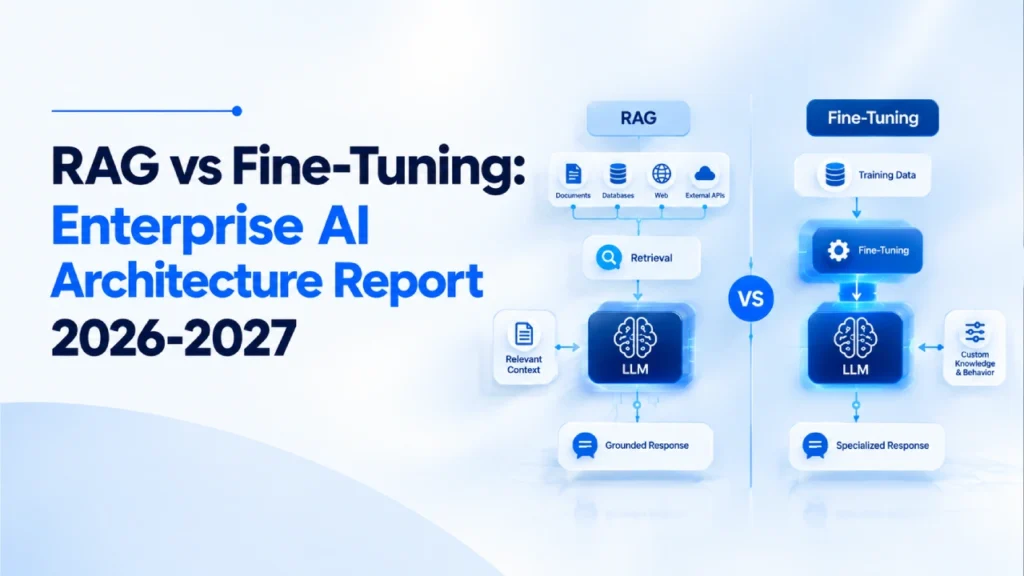
- RAG and knowledge retrieval where answers must be grounded in approved sources
- Structured outputs, so AI results can feed other systems reliably
- Automation and human approval workflows for steps that need a person to review
- Analytics and monitoring to track quality, usage, and cost
- Security and scalability designed in from the start
AI App Cost
What Types of AI Applications Can We Build?
| AI Application |
Typical Business Use |
| AI Customer Support |
Resolving common questions from approved knowledge, with escalation to human agents |
| AI Sales Assistant |
Lead qualification, product recommendations, and research support for sales teams |
| Internal AI Assistant |
Employee access to policies, procedures, and company knowledge |
| Document AI |
Extracting fields, classifying documents, and summarizing contracts, forms, and reports |
| AI Search |
Semantic search across documents, tickets, and internal systems |
| RAG Application |
Answers grounded in private company data, with source references |
| AI Agent |
Multi-step task execution across tools and systems with approval points |
| Recommendation Engine |
Personalized product, content, or service suggestions from user and catalog data |
| Predictive Application |
Demand forecasting, churn risk, and decision support from historical data |
| AI Content Application |
Controlled content generation within brand and compliance rules |
| AI Analytics Assistant |
Asking questions of business data in plain language |
| AI-Powered SaaS |
AI embedded directly into a commercial product used by many customers |
Computer vision applications, such as image inspection or document and ID recognition, are also within scope where the use case calls for them.
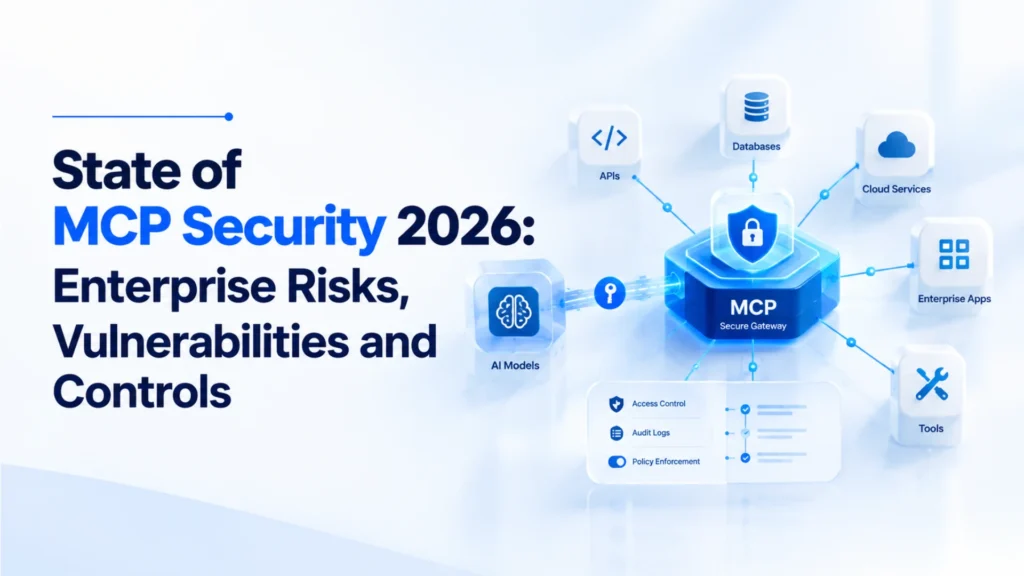
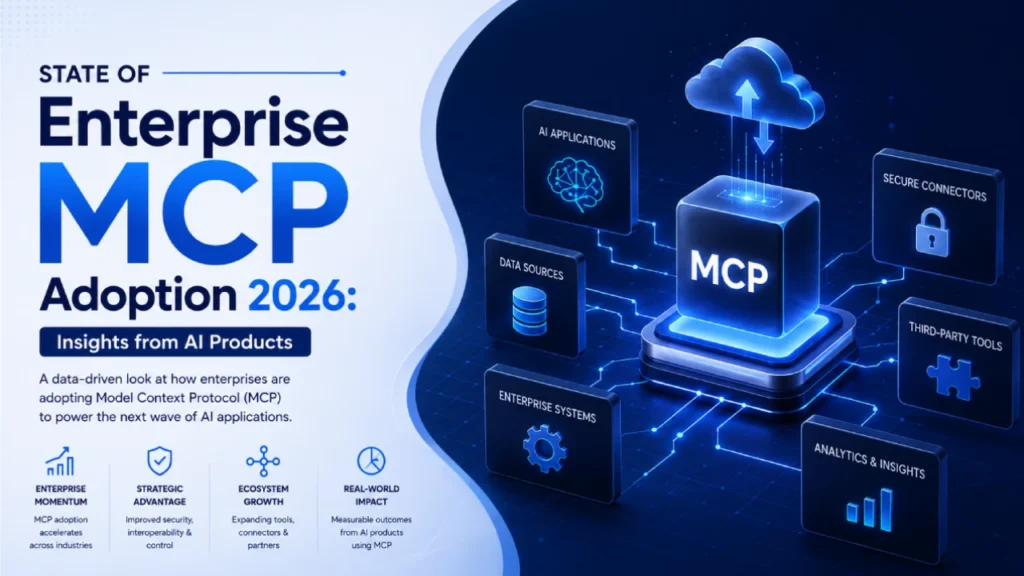
MCP Security Report
Technologies We Use for AI Application Development
We choose technology according to the application’s requirements. We do not force every project onto the same stack or the same architecture.
AI and LLM Technologies
We work with OpenAI models, Anthropic Claude, and Google Gemini, and with open-source models where data residency, cost, or control requirements make them the better fit. Depending on the application, this includes embeddings for semantic search, structured outputs so results are machine-readable, function and tool calling so models can act on systems, and fine-tuning where it is justified by a specific, measurable need rather than used by default.
AI Application Architecture
Retrieval-augmented generation and vector search for grounded answers, knowledge bases for controlled information, and agent architectures for multi-step tasks. Around these sit prompt engineering, AI orchestration, model routing to match tasks with the right model, guardrails to constrain behavior, and evaluation systems that measure output quality against realistic test cases.
Application Development
AI features live inside real applications, so the surrounding engineering matters: web applications, APIs, backend systems, databases, authentication, role-based access control, cloud deployment, and monitoring. This is the part of the work where a software company differs from a team that only knows how to prompt a model.
Our AI App Development Process
1. Discovery and AI Use-Case Analysis. We map the business problem, the people who will use the system, the data it needs, and what a correct result looks like. We also test whether AI is the right tool for the problem at all, and identify the smallest version that would prove value.
2. Product and UX Planning. We define user roles, key screens, and workflows, including where a person reviews or approves AI output. AI behavior that users cannot understand or correct does not get adopted, so interface design for uncertainty and review is planned early.
3. AI Architecture and Model Selection. We decide what the system actually needs: a direct model call, retrieval, an agent, a combination, or a conventional non-AI approach for some parts. We select models and providers against accuracy, latency, cost, and data handling requirements.
4. Data and Knowledge Integration. We connect the sources the application needs: documents, databases, and business systems. For retrieval-based systems this includes ingestion, chunking, indexing, and access control, since retrieval quality largely determines answer quality.
5. Application Development. We build the application itself: backend, APIs, interfaces, authentication, and the AI components, in iterations with working software you can review along the way.
6. Testing and AI Evaluation. Beyond normal software testing, we evaluate AI behavior against realistic scenarios, including messy and adversarial inputs. We measure retrieval accuracy, answer faithfulness to source material, and failure handling, because AI output cannot be validated with simple pass or fail checks alone.
7. Deployment, Monitoring and Optimization. We deploy with logging, cost tracking, and quality monitoring in place. Model behavior, data, and usage change over time, so we plan for ongoing evaluation and improvement after launch rather than treating release as the finish line.
AI Agent Development Report
AI Application Architecture
Most AI applications share a layered structure. Seeing the layers makes it clear where the engineering work actually sits.
User Interface
      ↓
Application Layer
      ↓
Business Logic
      ↓
AI / LLM Layer
      ↓
RAG / Vector Search / Knowledge Layer
      ↓
Business Databases / APIs / External Tools
The user interface is where people interact with the system and where AI output is presented, reviewed, and corrected. The application layer handles authentication, permissions, sessions, and requests. Business logic encodes your rules, approvals, and workflows, and decides when the AI is involved at all. The AI layer holds the model calls, prompts, structured outputs, and guardrails. The knowledge layer provides retrieval over approved documents and data when answers must be grounded. At the bottom, databases, APIs, and external tools are the systems of record the application reads from and acts on.
Not every application needs every layer. Many useful AI applications do not need RAG, agents, fine-tuning, or multiple models. A document classification tool may need only a single model call with structured output. An internal policy assistant needs retrieval but not an agent. An automation that books and updates records across systems needs tool use and strong permissions. We recommend architecture based on the actual use case, and we will tell you when a simpler design is the better one, instead of adding AI components because they are fashionable.
RAG vs Fine-Tuning
AI App Development for Different Business Requirements
Startups
Startups need speed without building something they must throw away. We help with AI MVPs, AI SaaS products, proof of concepts, and product validation: a focused first version built on an architecture that can grow once the product finds users.
SMEs
Small and mid-sized businesses typically benefit most from workflow automation, customer support applications, internal knowledge systems, and business applications that remove repetitive manual work, built around the tools and data they already use.
Enterprises
Enterprises need secure AI applications, private data integration, role-based access, internal AI assistants, document intelligence, and integration with existing enterprise systems, along with the governance, logging, and review processes larger organizations require.
Industries We Serve
Healthcare: document summarization for administrative workflows, patient communication assistants, and internal knowledge tools, built around data privacy requirements. Financial services: document review, internal policy assistants, support automation, and analytics assistants over structured data. Real estate: property search and matching, listing content, and document processing for agreements and records. Education: tutoring and content assistants, administrative automation, and knowledge search for staff.
E-commerce: product recommendation, catalog enrichment, and support assistants that handle order and return queries. Manufacturing: maintenance knowledge assistants, quality documentation processing, and demand forecasting. Logistics: shipment exception handling, document extraction, and forecasting. Professional services: research assistants, proposal drafting with review, and internal knowledge retrieval.
Media and advertising: controlled content generation and audience analysis tools. SaaS and technology: AI features embedded into existing products, and AI-native platforms. Retail: personalization, inventory forecasting, and customer service automation. Legal and compliance: contract analysis support, policy search, and regulatory knowledge assistants, with human review kept in the loop.
These are examples of where AI application development applies, not claims about specific past clients. The right application depends on the problem being solved.
AI Development Cost
AI App Development Company in India
Cybertize develops AI applications for businesses across India, including Delhi, Mumbai, Bengaluru, Gujarat, and Indore. A fintech company in Mumbai and a SaaS startup in Bengaluru need quite different AI architectures even if both are described as AI projects, so we scope around the problem, not the city.
Working with an India-based AI software development company offers practical advantages: access to a deep pool of software engineering talent, flexible engagement models from fixed-scope projects to dedicated teams, and working hours that overlap well with both Asian and Western business days, which helps when stakeholders are spread across regions. We do not claim to be the best or number one. We claim a clear process, honest scoping, and engineering that holds up in production.
AI App Development Company in USA
For US businesses, Cybertize works as an offshore and remote technology development partner for custom AI application development. Typical engagements include AI MVPs for product validation, enterprise AI applications on private data, AI integrations into existing platforms, RAG systems, AI agents, AI-powered SaaS development, and ongoing engineering support after launch.
The value is engineering capability and continuity: a team that can take an AI product from architecture through deployment and then keep improving it, with structured communication, clear milestones, and overlap hours for key decisions. We would rather be judged on the quality of what ships than on cost-saving claims.
AI App Development Company in UAE
For companies operating in UAE markets, we develop AI applications for business automation, customer-facing AI applications, internal knowledge assistants, document processing, AI SaaS products, enterprise integrations, AI agents, and RAG applications.
Each application is designed around the company’s existing systems, workflows, and data requirements, including where data should reside and who may access it. We work remotely with structured communication and defined milestones, with timezone overlap that supports regular collaboration.
Why Choose Cybertize for AI App Development?
Software Engineering + AI
AI capability is combined with application engineering: APIs, databases, authentication, UX, and deployment. A model call is a small part of a working product, and we build the rest of it.
Custom Architecture
We design for the business use case. Some applications need retrieval, some need agents, and some need neither. We do not force every project into the same pattern.
Production-Focused Development
A demo shows that a model can do something once, on a good example. A production application handles bad inputs, scales to real usage, protects data, controls cost, and keeps working as models change. We build for the second standard.
RAG and Private Data
Applications can connect AI systems with approved business information where appropriate, with access control so people only retrieve what they are permitted to see.
Human-Centered UX
AI should be understandable and useful to the person operating the application. We design review, correction, and escalation into the interface instead of presenting AI output as unquestionable.
Scalable Architecture
Models and requirements will change. We structure applications so models can be swapped, prompts and data sources updated, and capabilities extended without rebuilding the product.
Ongoing Optimization
AI applications need monitoring, evaluation, and improvement after deployment. We plan for that work from the beginning.
AI App Development vs Using Off-the-Shelf AI Tools
| Off-the-Shelf AI Tool |
Custom AI Application |
| General-purpose functionality |
Business-specific functionality |
| Limited workflow control |
Custom workflows |
| Generic knowledge |
Private business data integration |
| Limited system integration |
API and software integration |
| Vendor-defined UX |
Custom user experience |
| Limited automation |
Custom automation |
| Subscription-based tool |
Business-owned application |
| Limited customization |
Application-level control |
Custom development is not always the right answer. If a standard AI product already solves your problem effectively, handles your data safely, and fits your workflow, building custom software is hard to justify. Off-the-shelf tools are faster to adopt and cheaper to start with. Custom development earns its cost when the tool cannot connect to your systems, cannot use your private data safely, cannot follow your approval rules, or when AI is meant to become a differentiating part of your own product. We will say so plainly if an existing tool is the better choice for your situation.
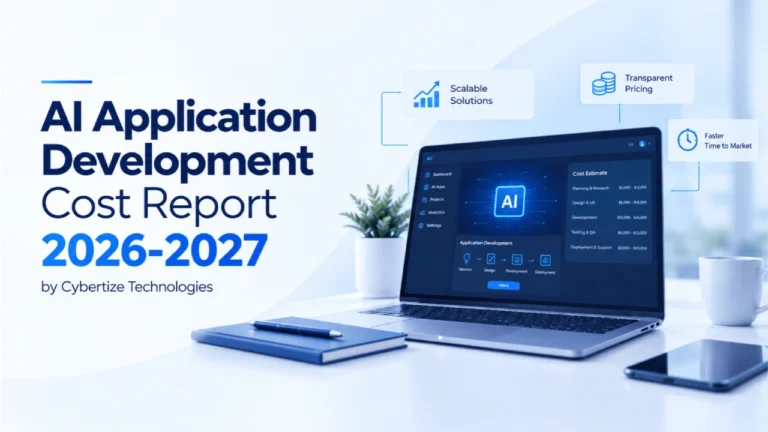
How Much Does AI App Development Cost?
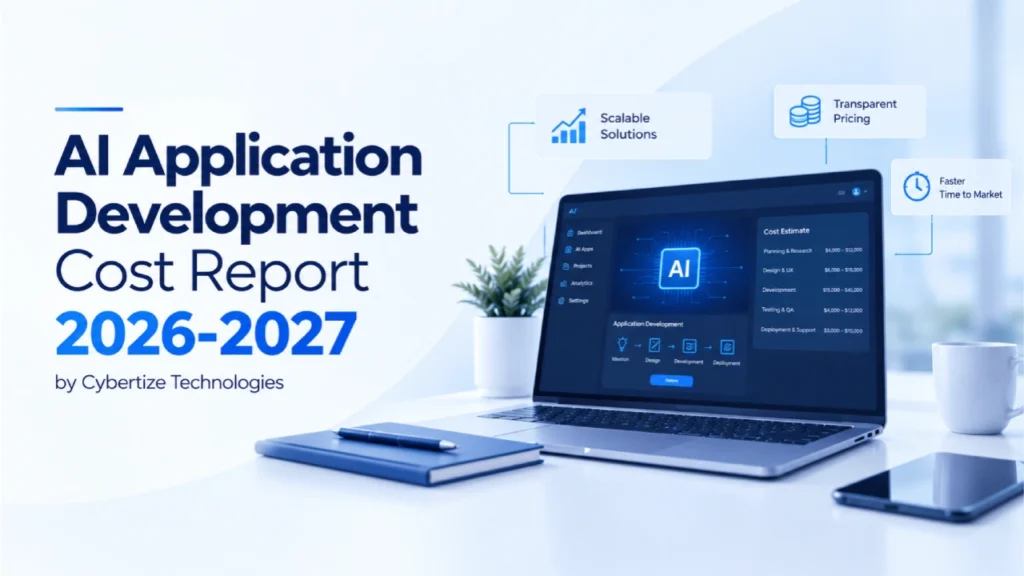
AI app development does not have a single price. Cost depends on application complexity, number of users, the AI models involved, data sources and data quality, RAG requirements, agent complexity, integrations with existing systems, UX and UI complexity, security and compliance requirements, cloud infrastructure, admin dashboards, web and mobile requirements, testing and AI evaluation, and ongoing support.
The tiers below describe how scope changes. The ranges are indicative planning estimates drawn from published 2026 industry cost guides, which vary widely and mostly reflect Western-market pricing. They are not Cybertize quotes. We quote each project after scoping.
| Tier |
What It Typically Includes |
Indicative Planning Range (USD) |
| AI Proof of Concept |
One use case on real data, minimal interface, goal is a go or no-go decision |
Roughly 10,000 to 40,000 |
| AI MVP |
Working system for early users, core workflow, basic evaluation, basic admin |
Roughly 30,000 to 100,000 |
| Business AI Application |
Integrated with one or two business systems, roles and permissions, evaluation and monitoring |
Roughly 80,000 to 250,000 |
| Advanced AI Platform |
Multiple workflows, RAG or agents across several data sources, dashboards, stronger governance |
Roughly 150,000 to 400,000 |
| Enterprise AI Application |
Multiple integrations, compliance and audit requirements, private infrastructure, change management |
Roughly 250,000 and above |
What changes between tiers is mostly surface area: more data sources, more integrations, more user roles, higher reliability and security standards, and more evaluation. A proof of concept answers whether something can work. An MVP shows whether people will use it. A production application has to keep working under real conditions. Starting with a proof of concept or a discovery phase is often the most economical way to learn which tier you are actually in.
How Long Does AI App Development Take?
Timelines depend on scope, data readiness, and how many systems must be integrated. These stages are indicative, not promises.
- Discovery and architecture: typically one to three weeks, depending on how well the problem and data are already understood
- Prototype or proof of concept: typically three to six weeks to test one use case on real data
- MVP: typically two to four months for a focused first version with real users
- Production application: typically three to six months, including integrations, security, and evaluation
- Enterprise-scale implementation: often six to twelve months or more, phased across systems and teams
Adding AI to an existing application can be very different from building a complete AI product from scratch. Integration into a well-structured existing system can move faster. It can also be slower if the existing system’s data is messy, its APIs are limited, or its architecture was not designed for this kind of feature. We assess this early so the plan reflects reality.
What Makes an AI Application Production-Ready?
A working AI demo is not automatically a production-ready application. The gap between the two is where most AI projects stall. These are the areas we engineer for before launch:
Reliability, error handling, and fallbacks. Model providers have outages, rate limits, and slow responses. Production systems handle failures gracefully, retry sensibly, and fall back to another model or a safe response instead of breaking.
Security, authentication, and authorization. Every request is tied to an authenticated user, and what that user can retrieve or do is enforced on the server, not left to the model’s discretion.
Data privacy. Decisions about what data is sent to which provider, what is stored, what is logged, and what is redacted are made deliberately and documented.
Prompt and model controls. Prompts, model versions, and settings are managed as versioned configuration, so changes are tracked and can be rolled back.
Hallucination mitigation and retrieval quality. Answers are grounded in approved sources where accuracy matters, with source references, and the system is designed to say it does not know when retrieval finds nothing relevant. Retrieval itself is measured and tuned.
Evaluation. A test set of realistic questions and tasks is run whenever prompts, models, or data change, so quality regressions are caught before users see them.
Observability, logging, and cost monitoring. Requests, outputs, latency, errors, and token spend are logged and visible, with alerts for unusual behavior and cost spikes.
Rate limiting and performance. Usage limits protect budgets and availability, and the system is tested at expected load.
Human review. Steps where an error would be costly route through a person for approval.
Version management and scalability. Models change quickly. The application is built so model versions can be upgraded or swapped with regression testing, and so it scales with usage.
Let’s Scope Your AI Application
If you have a product idea, a workflow that eats your team’s time, or an existing application that should be smarter, the useful first step is a focused conversation about the actual problem. Tell us what data you have, what the application needs to do, who will use it, and what systems it must connect to. We will tell you whether it calls for an AI MVP, a RAG application, an agent, a deeper integration into software you already run, or whether an off-the-shelf tool would serve you better.
Let’s Scope Your AI Application
If you have a product idea, a workflow that eats your team’s time, or an existing application that should be smarter, the useful first step is a focused conversation about the actual problem. Tell us what data you have, what the application needs to do, who will use it, and what systems it must connect to. We will tell you whether it calls for an AI MVP, a RAG application, an agent, a deeper integration into software you already run, or whether an off-the-shelf tool would serve you better.
Book an AI Application Scoping Call →