Web Application Development Services
There’s a real, practical difference between a business website and a web application, and it’s worth being specific about it rather than treating “web development” as one undifferentiated category.
A business website is primarily informational: it presents content, communicates what a company does, and guides a visitor toward contacting the business or making a purchase. A web application is software that runs in a browser: it holds state, manages user accounts and permissions, processes data, and performs real operations, closer in nature to desktop or mobile software than to a page of content.
Web application development at Cybertize covers things like:
- Customer portals, where users log in to view account information, order history, or service status
- Dashboards, presenting data and analytics in a usable, interactive interface
- SaaS platforms, multi-tenant applications serving many customers from shared infrastructure
- Internal business systems, tools built for employees to manage operations, inventory, or workflows
- Workflow applications, systems that move a process through defined stages with approvals, assignments, and tracking
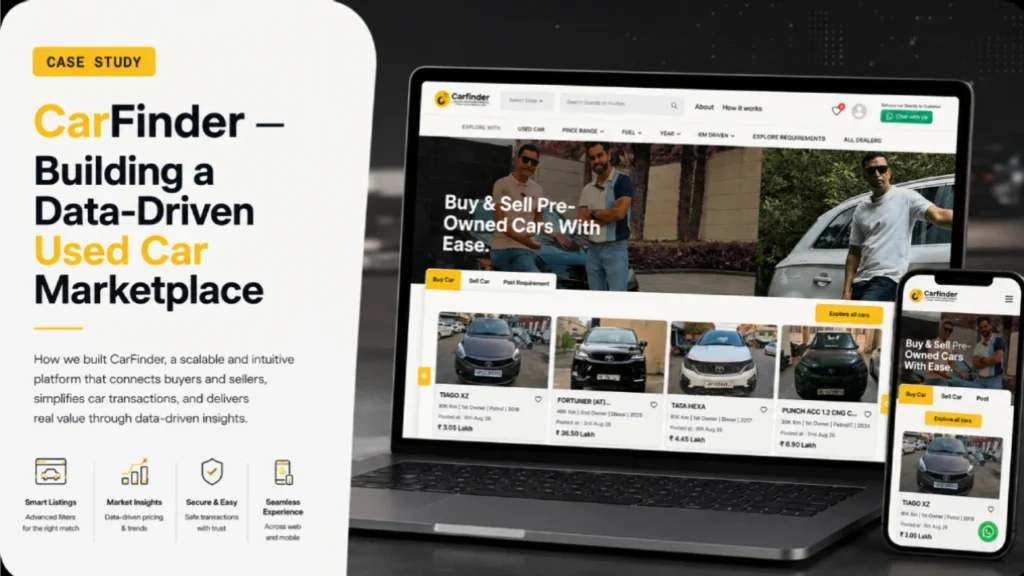
- Marketplaces, platforms connecting multiple buyers and sellers with listings, transactions, and messaging
- Booking and scheduling platforms, handling availability, reservations, and confirmations
- CRM/ERP interfaces, custom front-ends built on top of or alongside existing business systems
- API-driven applications, where the application’s core logic is exposed through an API consumed by a web frontend, a mobile app, or both
Web Development Company: The distinction matters because it changes how the project should be scoped and built. A website project is largely about content, structure, and presentation. A web application project is about data modeling, business logic, user permissions, state management, and how the system behaves under real, ongoing use, questions that need to be answered before a single interface screen gets designed, not after.
Technologies and Architecture
We choose technologies based on what a specific project actually needs, not a fixed stack applied to every engagement regardless of fit.
React and Next.js form the core of most of our frontend and full-stack web application work, chosen because they support fast page loads, strong search engine visibility through server-side rendering, and a component-based structure that makes a large application easier to extend and maintain as it grows, rather than becoming harder to touch with every new feature.
Node.js powers much of our backend development, giving us a single language across frontend and backend for applications where that consistency speeds up development and reduces the coordination overhead of maintaining two completely separate technology stacks.
WordPress and PHP remain a sound choice for content-driven business websites where the priority is ease of content management for a non-technical team, and where the project doesn’t call for the custom application logic a fully bespoke build would require.
APIs and databases are architected around your actual data relationships and access patterns, not a default schema applied without regard for how the application will actually be queried and scaled over time.
Cloud infrastructure (AWS, Azure, or GCP depending on fit) underpins deployment, giving applications room to scale with demand instead of being constrained by a fixed server’s capacity.
Authentication and third-party integrations are built with security as a first-class requirement, not an afterthought added once the rest of the application is already working.
The point of naming specific technologies isn’t the technology itself, it’s what each choice enables: faster load times that keep visitors from leaving, an architecture that doesn’t need to be rebuilt the first time the business scales, and a codebase the next developer who touches it, whether on our team or yours, can actually understand.
Our Web Development Process
- Discovery and Requirements. We start by understanding your business, your users, and what the website or application actually needs to accomplish, including constraints like existing systems it needs to work with and timelines that affect scope.
- Technical Planning. Before any design or code, we define the technical approach: architecture, technology choices, and how the system will handle the specific data and logic your project requires.
- UX/UI Planning. Interface structure and user flow are planned around how real users will actually use the product, not just how it looks in a static mockup.
- Architecture. For web applications specifically, this stage defines data models, API structure, and how different parts of the system will interact, the decisions that are expensive to change later if skipped or rushed early on.
- Development. Building happens in defined phases with visible progress, so you can see what’s being built as it’s built rather than waiting for a single reveal at the end.
- Testing. Functional testing, cross-browser and device testing, and, for applications with real business logic, testing against the actual rules and edge cases the system needs to handle correctly.
- Deployment. A planned, low-risk release to production, with a defined rollback approach in case anything needs to be reverted quickly.
- Monitoring and Support. Post-launch monitoring to catch performance or stability issues early, and an ongoing support arrangement for updates, fixes, and new feature development as your needs evolve.
Why Choose Cybertize
Engineering-led development. Projects are approached as engineering problems first, with the visual and content layer built on top of a sound technical foundation, not the other way around.
Custom architecture over template defaults. We design the data model, API structure, and technical approach around your specific requirements rather than defaulting to a generic pattern because it’s faster to ship.
Integration and API capability. Web products we build are designed to connect to the systems your business already runs, not to exist as a disconnected island requiring manual data entry on both sides.
Scalable infrastructure. Applications are architected with room to grow, so a successful launch or a traffic spike doesn’t become an infrastructure crisis.
Modern, maintainable frontend and backend development. Code is written to be understood and extended by whoever touches it next, reducing the long-term cost of every future change.
Ability to handle both websites and applications. You don’t need to find two separate vendors as your needs grow from a business website into something closer to a genuine web application; the engineering foundation carries over.
Ongoing support after launch. A relationship that continues past deployment, for maintenance, security updates, and new feature development as your business changes.
Who We Build For
Startups that need a functional, credible web presence or a first product build without over-architecting for scale they don’t have yet.
Growing businesses that have outgrown a template-based website or an off-the-shelf tool and need something built around how they actually operate.
Enterprises replacing aging internal systems or building new web platforms that need to integrate cleanly with existing infrastructure and meet higher security and compliance expectations.
Organizations replacing legacy systems that have become difficult to maintain, insecure by modern standards, or simply unable to support the business’s current requirements.
Companies building SaaS products that need a properly architected, multi-tenant platform rather than a single-customer application retrofitted to serve many.
Businesses requiring custom portals or workflows that off-the-shelf software doesn’t support, customer-facing or internal, where the specific process matters more than general-purpose functionality.
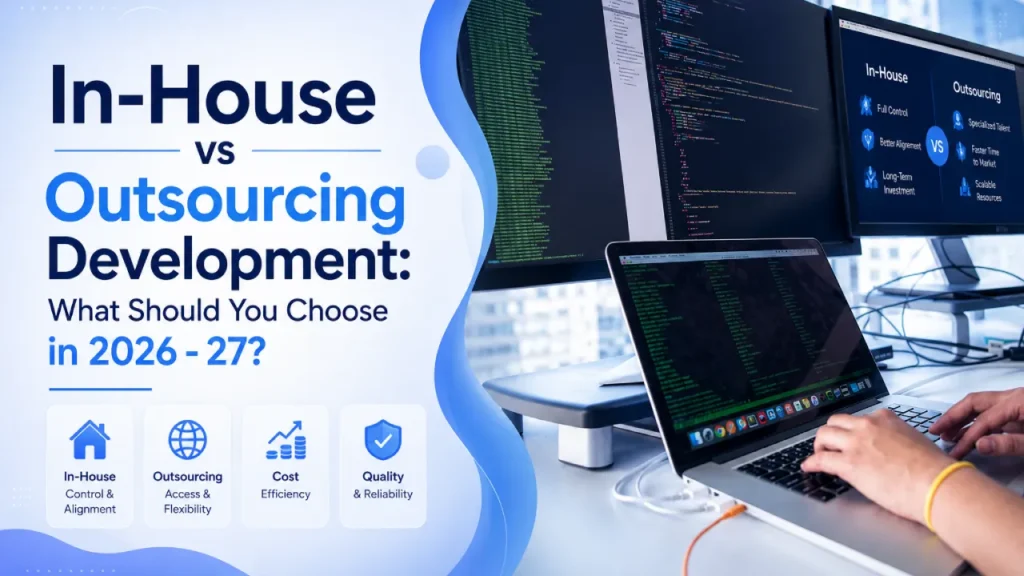
Custom vs. Template-Based Development
Template-based platforms (WordPress themes, website builders, off-the-shelf eCommerce platforms) are a genuinely good fit for many businesses, particularly when the requirement is a standard business website or store with no unusual workflow behind it. They’re faster to launch and typically less expensive upfront.
Custom development becomes the better approach once a business has requirements a template wasn’t built to handle:
- Unique workflows that don’t map cleanly onto a template’s assumptions about how the business operates
- Integrations with internal or third-party systems that a template platform doesn’t support natively, or only supports through fragile workarounds
- Scalability needs beyond what a shared, general-purpose platform is architected to handle
- Security requirements specific to the data being handled or the industry being served
- Ownership of the underlying code and architecture, rather than being dependent on a platform vendor’s roadmap and pricing changes
- Long-term maintainability as the business and its requirements continue to evolve past what the template was originally built to support
The right approach genuinely depends on the specific requirement. A well-built WordPress site is the correct choice for plenty of businesses. The decision point is whether the platform’s constraints are still smaller than the business’s actual needs, not a blanket preference for custom development regardless of fit.
Working With a Web Development Company in India
For businesses outside India, working with a web development company based here typically comes down to a few practical factors rather than a general assumption about where good engineering happens.
Engineering talent and development capability. India has a large, mature software engineering workforce, with meaningful depth specifically in the web technologies (React, Next.js, Node.js, PHP) most custom web projects are built on.
Time-zone collaboration. With teams able to overlap working hours with both US and UAE business hours at different points in the day, coordination on active projects doesn’t have to wait a full day for a response.
Flexible engagement models. Fixed-scope projects, dedicated development teams, and ongoing support retainers are all viable structures, scoped to whether a business needs a one-time build or continuous development capacity.
Cost considerations. Development costs in India are typically lower than equivalent US or Western European rates for comparable engineering quality, which matters for budget-conscious projects without requiring a compromise on technical standards, provided the team doing the work has genuine senior oversight rather than being staffed entirely by junior developers.
Long-term technical support. An ongoing relationship with a development partner, rather than a one-time build with no path for future maintenance, is often more practical when working across geographies and time zones over the life of a product.
Let’s Talk About What You’re Building
Whether it’s a business website that needs to represent your company properly or a web application with real logic and data behind it, the conversation starts with understanding what you actually need, not a generic sales pitch.
Connect now