What Does a Mobile App Development Company Actually Do?
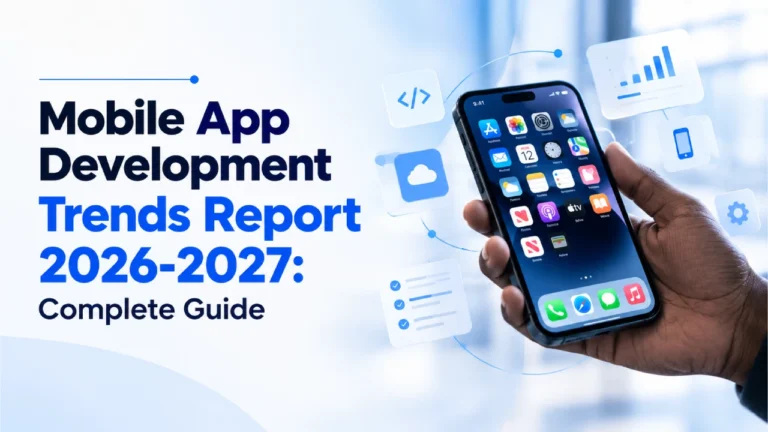
Mobile App Developers, design, build, test, and maintain native or cross-platform mobile applications for iOS and Android, covering everything from UI/UX design and frontend development to backend infrastructure, API integration, app store submission, and post-launch support. As a full app making company, Cybertize handles the complete lifecycle, discovery and technical planning, native or cross-platform development, backend architecture built to scale with real usage, and ongoing maintenance after launch, rather than handing over a build and disappearing the moment it’s submitted to the app store.
Hire Mobile App Developers: Engagement Models
MVP-First Mobile App Development
For early-stage founders and new product launches, we scope a minimum viable version built to validate the core use case fast, on an architecture that can genuinely scale once the product has real users, rather than needing a rebuild the moment it gets traction.
Outsource Mobile App Development (Fixed-Scope Project)
Full ownership of design, development, and launch for a defined app, delivered on a fixed timeline and cost, the right model for a well-scoped app with clear requirements.
Hire Dedicated Mobile App Developers
Ongoing dedicated iOS, Android, or cross-platform developers embedded with your team, for businesses actively building and expanding mobile capability over time rather than a single release.
Managed App Support Retainer
Ongoing maintenance, OS compatibility updates, and feature development for an app already in the app stores, so it doesn’t quietly fall behind platform requirements or user expectations.
What Mobile App Development Costs
App development cost varies sharply with scope and complexity. Industry-wide, mobile app projects typically range from roughly USD 40,000 for a straightforward MVP to USD 400,000 or more for a complex, multi-feature application, with healthcare apps generally requiring higher budgets due to compliance and security requirements (AppVerticals, 2026). In India, mobile app developers typically run USD 20 to 45 per hour depending on seniority and platform specialization, compared to USD 70 to 160 per hour for equivalent talent in the US. Building with an experienced Indian team typically delivers substantial cost efficiency without a corresponding drop in quality, provided the team includes genuine senior mobile engineering oversight rather than junior developers working from a template.
We quote in INR for Indian entities and USD for US and UAE clients, scoped after understanding your specific app requirements and platform targets.
Industries We Build Mobile Apps For
Healthcare and telemedicine (compliance-aware architecture for patient data), e-commerce and D2C retail (mobile commerce and re-engagement), fintech and banking (secure transaction handling), logistics and on-demand services (real-time tracking and marketplace dynamics), and SaaS and B2B product companies (companion apps sharing a backend with an existing web platform).
What Separates Top App Development Agencies From the Rest
A lot of app building companies describe themselves similarly. A few concrete things genuinely distinguish an agency worth hiring from one that isn’t:
- Backend architecture that scales before it has to. An app that performs well in a demo with ten test users and falls over at ten thousand real ones was never actually ready to launch.
- Platform-specific design, not a single interface stretched across iOS and Android. Users notice when an app ignores their platform’s conventions, even if they can’t articulate exactly why it feels off.
- A real post-launch plan. The best app building companies treat launch as the start of the relationship, not the end of the invoice, since mobile platforms update constantly and an unmaintained app degrades fast.
- Security and compliance built in from architecture, not bolted on before submission. This matters for every app, and it’s non-negotiable for healthcare and fintech apps specifically.
- Transparency on what won’t work. An agency that never tells a client a feature idea is a bad fit for mobile, or for their actual users, is optimizing for the sale, not the outcome.
Why Mobile Apps Underperform After Launch
Retention treated as an afterthought. An app optimized entirely for the install and never for what happens in the first session loses most of its users before the core value ever lands. We design onboarding and early-session experience as a first-class part of the build, not a final polish pass.
Backend that wasn’t built for real scale. An app backend that works fine during development and buckles under real user load is one of the most common, and most expensive, post-launch surprises. We architect backend infrastructure for realistic growth scenarios from the start.
Treating iOS and Android as identical platforms. Users on each platform have real expectations shaped by the platform’s own conventions. Apps that ignore this feel subtly wrong to users even when they can’t name why.
No plan for OS updates. Both iOS and Android release major updates annually, and an app that isn’t actively maintained against them accumulates compatibility issues and app store warnings over time, usually discovered only when users start complaining.
Security gaps in regulated categories. Healthcare and fintech apps built without compliance architecture from day one face a materially harder, more expensive retrofit later, when a regulator or an enterprise customer’s security review finally asks the hard questions.
Why Cybertize Technologies
Backend engineering depth most app-focused agencies don’t have. Because Cybertize is a full-stack development company running dedicated MERN stack, cloud, and DevOps practices, the backend infrastructure behind your app is architected by engineers who build production systems for a living, not just frontend mobile interfaces.
AI capability available where it genuinely adds value. For apps that benefit from AI features, chat support, smart recommendations, document processing, our dedicated AI chatbot and RAG development practices mean that capability is built in-house, not outsourced to a disconnected third vendor.
We scope for the platform that actually fits. Native, cross-platform, or a phased approach starting with one platform, we recommend based on your actual users and budget, not a default answer that happens to be our preferred stack.
Presence across India, the US, and UAE. With teams operating out of Delhi, Mumbai, Gujarat, Indore, and Bangalore, alongside a US presence, we support overlapping working hours for Indian and North American clients, and UAE-based engagements benefit from that same cross-market experience.
Post-launch accountability. Every engagement includes a clear path to ongoing maintenance, so an app we build doesn’t become an orphaned project the moment it’s live in the app stores.
Let’s Talk About the App You’re Building
Whether it’s a healthcare app with real compliance requirements, an e-commerce app that needs to handle live transactions, or an internal tool that replaces a process your team has outgrown, the first conversation is free and ends with a clear, honest scope.
Do 1:1 with our team