Our AI Agent Development Services
1. Custom AI Agent Development
Purpose-built agents designed around one well-defined task done reliably, report generation, data reconciliation, inbox triage, research compilation, rather than an overambitious “do everything” agent that ends up doing nothing reliably. Narrow scope, done well, is consistently what separates agents that survive contact with production from the ones that get quietly switched off after two weeks.
2. Multi-Agent System Development
Orchestrated systems of specialized agents that collaborate on a larger workflow, a research agent that gathers information, a validation agent that checks it, and an execution agent that acts on it, coordinated through a defined orchestration layer rather than one monolithic agent trying to handle every responsibility itself.
3. Autonomous Workflow & Business Process Automation Agents
Agents that execute multi-step business processes end-to-end: invoice processing and reconciliation, lead qualification and CRM updates, compliance document review, and report generation pulling from multiple internal systems, built around your actual process, not a generic automation template.
4. Agents for Customer Operations
Beyond a conversational support chatbot, these are agents that take real action, processing a refund, updating an order, rescheduling a booking, within clearly defined permission boundaries, so routine operational requests get resolved without a human having to manually execute the backend action every time.
5. Enterprise AI Agent Development
Agent systems built for enterprise governance requirements from day one: role-based permissions, full audit trails of every action an agent takes, human-in-the-loop approval steps for higher-stakes actions, and clear boundaries on what an agent is and isn’t authorized to do autonomously. Enterprise adoption of agentic AI already sits at roughly 83% among organizations with 5,000-plus employees, and at that scale, governance isn’t optional scaffolding, it’s the difference between a deployable system and a compliance incident waiting to happen.
6. Tool-Using & RAG-Powered Agents
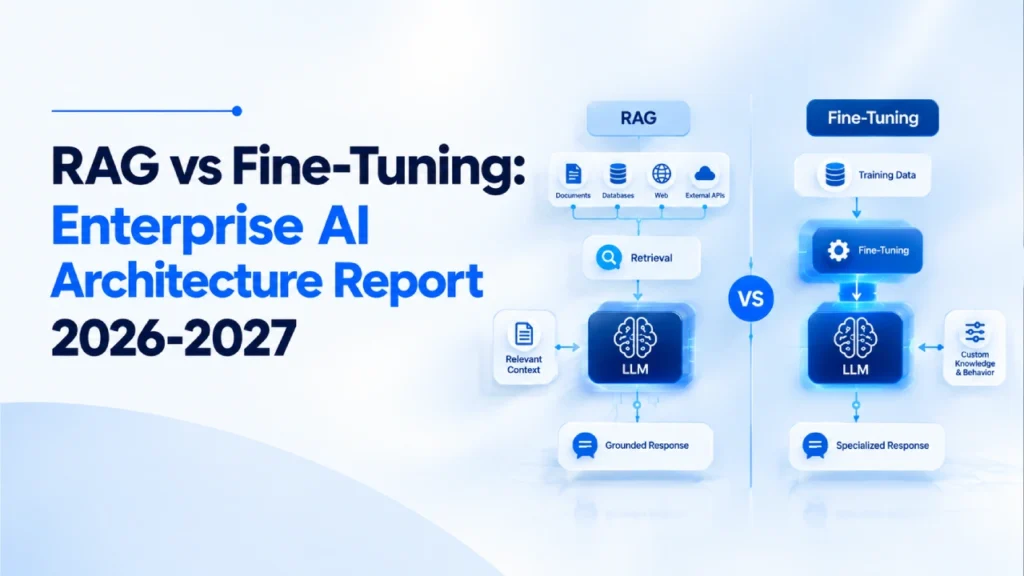
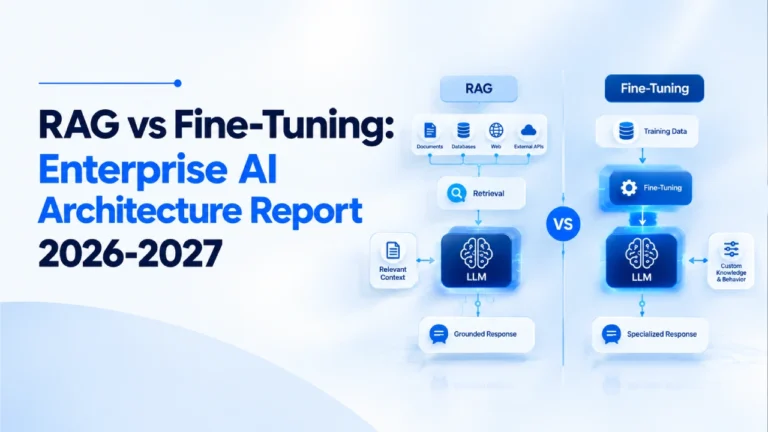
Agents connected to your internal systems, APIs, and knowledge bases through function calling and the Model Context Protocol (MCP), combined with retrieval-augmented generation so the agent’s actions and answers are grounded in your actual data, not just a language model’s general training knowledge. This is a direct extension of the RAG engineering discipline we run as a dedicated practice.
7. AI Coding & Developer Productivity Agents
Agents that assist with code review, test generation, bug triage, and routine engineering tasks, integrated into your existing development workflow. Software development currently leads AI agent adoption by a wide margin, with roughly 89% of tech companies actively deploying agents somewhere in their engineering process.
8. Data & Analytics Agents
Natural-language query agents that sit on top of your existing data warehouse and BI stack, letting stakeholders ask a plain-English question and get back an answer, and in some cases an automatically generated report, grounded in governed, structured data rather than a static dashboard someone has to go build.
9. Voice & Multimodal Agents
Agents that operate across voice, text, and document inputs, handling phone-based customer interactions or processing scanned documents and images as part of a larger agentic workflow, not just a single-modality chatbot.
10. Agent Orchestration & MCP Integration
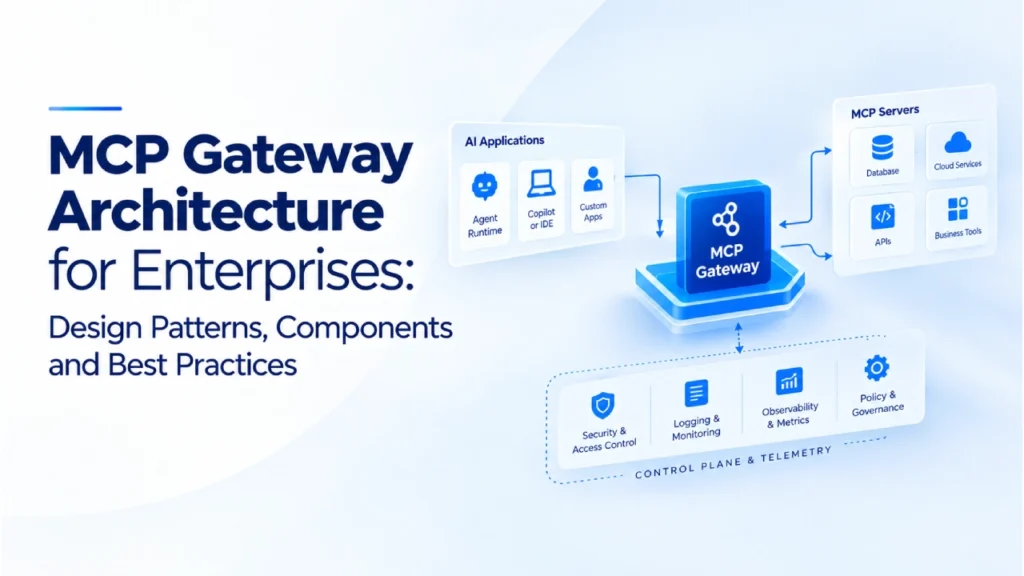
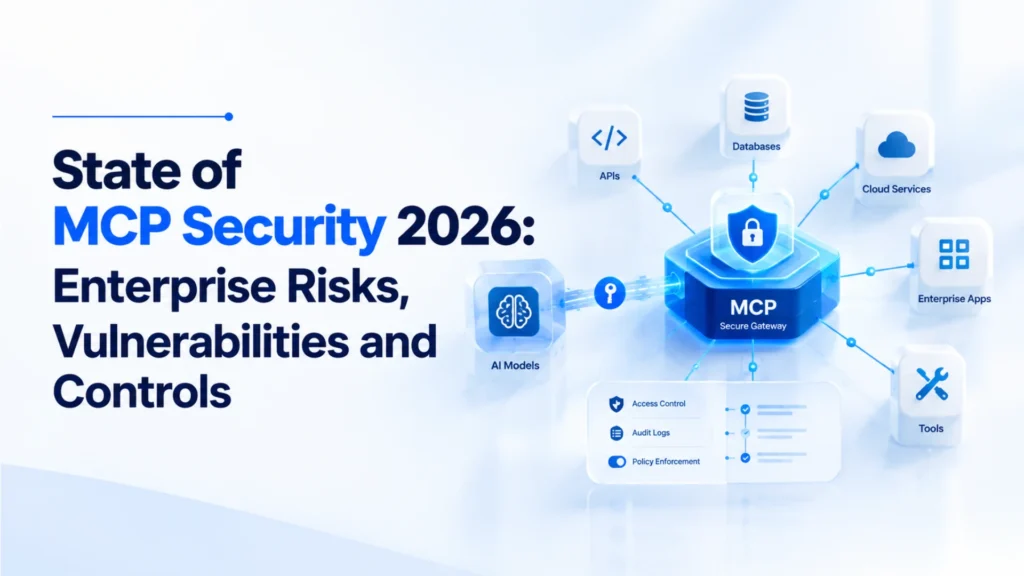
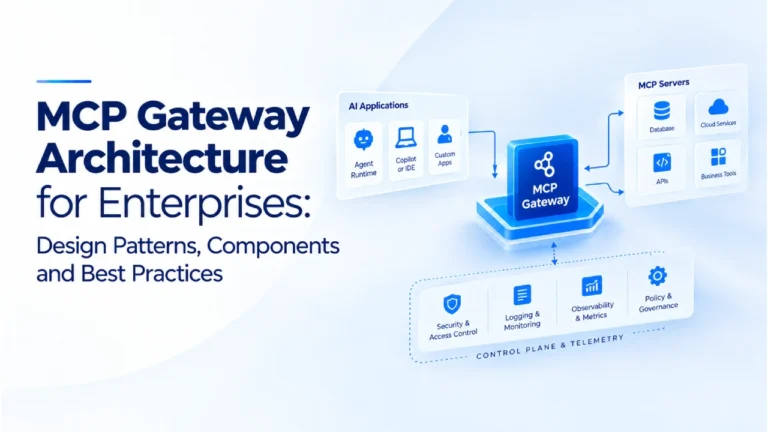
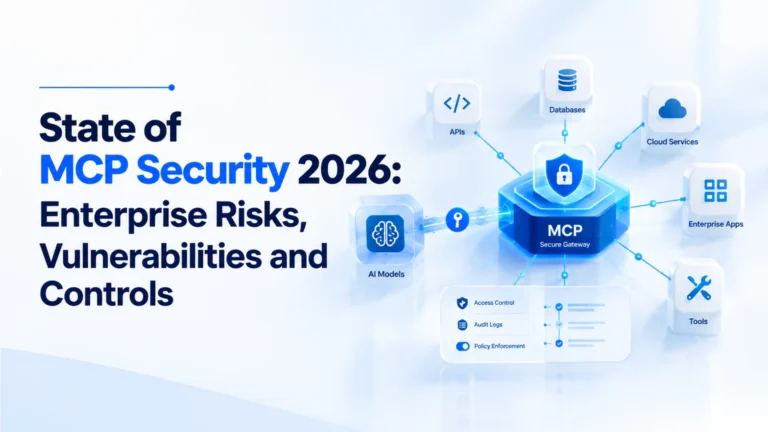
Architecture for coordinating multiple agents and tools through the Model Context Protocol, establishing a standardized, maintainable way for agents to discover and use the tools and data sources available to them, rather than custom-wiring every new integration from scratch.
11. Agent Evaluation, Guardrails & Safety Design
Building the evaluation and safety layer most rushed agent projects skip entirely: testing against realistic task scenarios, defining clear boundaries on autonomous action, rate-limiting and cost controls to prevent runaway agent loops, and fallback behavior for when an agent genuinely can’t complete a task reliably. This is consistently the single biggest differentiator between an agent that survives production and one that gets pulled after an embarrassing failure.
12. Managed Agent Operations (AgentOps)
Ongoing monitoring of agent performance, cost, and reliability once deployed, including drift detection as underlying models and APIs change, since an agent that worked correctly at launch can quietly degrade in accuracy or reliability months later without active oversight.
Where We Deliver AI Agent Development Services
AI Agent Development Company in Delhi
On-ground engagement for Delhi NCR businesses, with in-person workshops available for scoping which workflows are genuinely ready for agentic automation versus which still need a human in the loop.
AI Agent Development Company in Mumbai
Support for Mumbai’s dense BFSI and fintech ecosystem, where agent deployments typically require audit-trail and compliance architecture built in from the first design conversation, not added after a regulator asks a question.
AI Agent Development Company in Bengaluru
Delivery for Bengaluru’s product and SaaS-heavy market, where engagements most often center on developer-productivity agents and agentic features embedded directly into existing products, reflecting a market that’s already comfortable with AI tooling and wants genuine capability, not a demo.
AI Agent Development Company in Gujarat
Agent development for Gujarat’s manufacturing and trading businesses, typically starting with workflow automation agents for inventory reconciliation, order processing, and supply chain reporting.
AI Agent Development Company in Indore
Agentic AI development scoped for Indore’s growing IT and services sector, priced for the mid-market reality of a cost-conscious, rapidly expanding tier-2 tech hub.
AI Agent Development Company in the USA & UAE
Direct engagement for US-based businesses with delivery scheduled around US business hours, and UAE-based businesses benefiting from timezone overlap with both our Indian and US teams for coordinated delivery.
Why Most AI Agent Projects Stall Before Production
Scope that’s too ambitious to ever be reliable. An agent asked to autonomously handle an entire complex process end-to-end, with no narrower milestones, is an agent that’s hard to trust and harder to debug. We scope agents around specific, well-bounded tasks first, then expand autonomy as reliability is actually demonstrated.
No evaluation framework before launch. Teams that test an agent on the five scenarios they thought of and call it done are routinely surprised by how it behaves on the thousand scenarios they didn’t think of. We build structured evaluation against realistic, varied task scenarios before calling any agent production-ready.
Tool access broader than the task requires. An agent with unrestricted access to systems it only occasionally needs is a larger security and compliance surface than the task justifies. We scope tool and data access tightly to what each specific agent actually needs to do its job.
No cost or action ceiling on autonomous loops. An agent that can call an API, a tool, or an LLM in an unbounded loop can turn a minor logic error into a significant and fast-accumulating cost, or worse, a cascade of incorrect actions. We build explicit rate limits, cost ceilings, and loop-detection into every autonomous agent we ship.
No human-in-the-loop step where one is actually warranted. Full autonomy isn’t the goal for every task, it’s the goal for the tasks where the cost of an occasional error is genuinely low. For higher-stakes actions, we build in an approval step rather than defaulting to full autonomy because it demos better.
Treating deployment as the finish line. Agent reliability drifts as underlying models, APIs, and business processes change. We build ongoing monitoring into every engagement specifically because an agent that worked well at launch is not guaranteed to still work well six months later without active oversight.
How We Work: Engagement Models
AI Agent Proof-of-Concept. A time-boxed build to validate a specific agentic use case against real tasks and data before committing to a larger build, the model we recommend as a starting point for nearly every new agent use case.
Outsource Agentic AI Development (Fixed-Scope Project). Full ownership of design, development, and deployment for a well-defined agent or multi-agent system on a fixed timeline and cost.
Hire Dedicated AI Agent Developers. Ongoing dedicated engineering capacity for organizations building and expanding agentic capability across multiple workflows over time.
Managed AgentOps Retainer. Ongoing monitoring, evaluation, and reliability maintenance for agents already in production, so performance doesn’t quietly degrade as the systems around it change.
Engagements are quoted in INR for Indian entities and USD for US and UAE clients, scoped after understanding your specific workflow, systems, and risk tolerance for autonomous action.
Why Cybertize Technologies
Agentic AI is a natural extension of work we already do, not a new buzzword we bolted on. Because Cybertize runs dedicated RAG development and AI chatbot development practices, agent development builds directly on engineering discipline we’ve already applied: grounding, retrieval, evaluation, and production reliability, extended into systems that take action, not just generate answers.
We build for the production gap specifically. Given that a large majority of enterprises are stuck between a promising pilot and genuine scaled value, our process is built around narrow scoping, real evaluation, and governance from day one, specifically to avoid becoming another stalled pilot.
We build the systems agents have to act inside. Because Cybertize also delivers full-stack Node.js and Next.js application development, our agents integrate cleanly with your actual product and infrastructure instead of operating as a disconnected prototype someone else has to wire in.
Presence across India, the US, and UAE. With teams operating out of Delhi, Mumbai, Bengaluru, Gujarat, and Indore, alongside a US presence, we support overlapping working hours for Indian and North American clients, and UAE-based engagements benefit from that same cross-market experience.
Honest about what should and shouldn’t be autonomous. We’ll tell you plainly when a task isn’t a good fit for full agent autonomy yet, rather than building an impressive demo that quietly falls apart the first time it meets a real edge case.