Table of Contents
At Cybertize Media Productions (our other vertical of TheCybertize), where we work across film production, advertising, and commercial video projects, we have significantly transformed our production workflows over the past two years by integrating AI into various stages of the creative process.
This experience, combined with the technology expertise of Cybertize Technologies, where we are actively exploring and developing AI-powered agentic solutions, has given us a first-hand perspective on the changes taking place across the media production industry.
The article is a collaborative effort by both teams, bringing together practical experience from the media production side and technical insights from the AI and software development side.
We are witnessing a significant paradigm shift in how videos are conceptualized, produced, edited, and delivered. With AI agents opening up new possibilities for creative automation and interconnected production workflows, we felt it was important to explore this emerging space and help businesses understand the potential of Agentic AI in video production.
Businesses are increasingly using video content for marketing, product demonstrations, employee training, and customer communication. However, producing these videos often involves several stages, from developing scripts and planning visuals to creating scenes, adding narration, and making final adjustments. Managing these tasks across different tools can make the production process time-consuming.
AI agents are changing how businesses approach video production by bringing several creative tasks into a more connected workflow. They can help turn written briefs into scripts, plan scenes, generate visuals, and prepare video drafts while following the project’s creative direction.
This approach allows businesses to manage video production more efficiently, create content for different purposes, and maintain greater consistency across projects while keeping human teams involved in creative decisions and final approvals.
AI Video Agents vs. Traditional Video Generators
An AI video generator typically creates visuals from a prompt. An AI video agent can coordinate several related tasks, such as interpreting a brief, developing a script, planning scenes, generating footage, and preparing a draft for review.
A production agent can work with the wider brief: who the video is for, which product details must appear, what the voiceover should explain, and how one scene leads to the next.
This broader process is often called AI filmmaking. It does not mean every production decision happens automatically.
Why Businesses Are Adopting AI Video Agents
Business video work is rarely a one-off task. Marketing teams need product explainers, onboarding clips, training modules, sales demonstrations, and campaign variations. A single launch can require several lengths, formats, and languages.
The difficulty is keeping those outputs consistent while working with limited time and resources. Teams may use one application for writing, another for visuals, and a third for editing.
AI agents can bring some of these steps into a connected workflow. A shared brief can inform the script, scene choices, and later revisions.
How AI Agents Turn a Business Brief Into Video
Turning a business brief into a finished video involves several tasks, including scriptwriting, scene planning, visual generation, and narration. Managing these stages separately can make it difficult for teams to maintain a consistent message and creative direction.
Invideo Agent helps bring these tasks into a connected production workflow. Its text to video AI capabilities allow businesses to create videos from written briefs, scripts, or prompts, while generating supporting visuals, voiceovers, and music based on the project’s requirements.
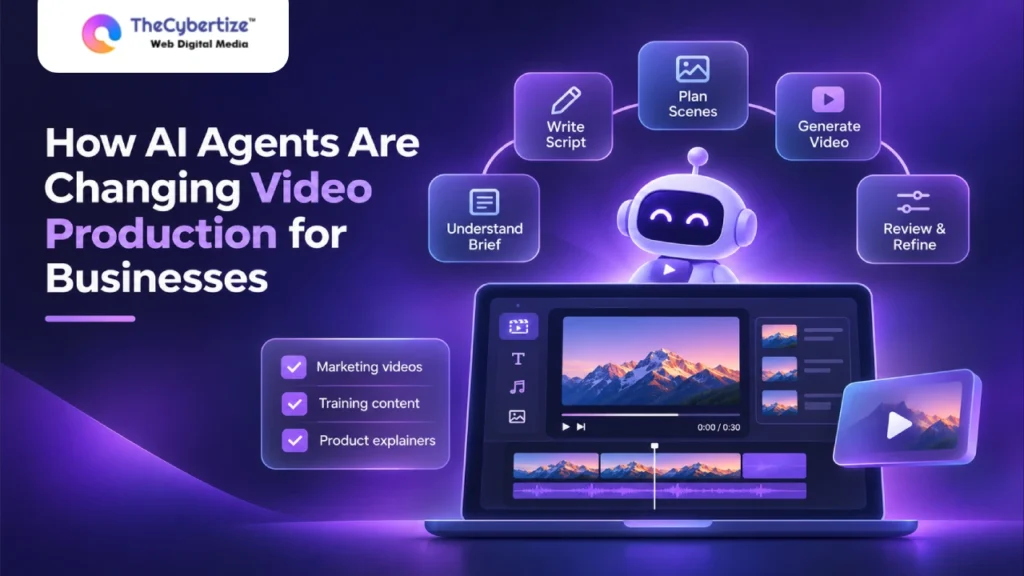
The process generally follows five stages:
- Understand the brief: Identify the audience, key message, brand guidelines, and intended video format.
- Develop the script: Organize the main ideas into a clear story or sequence.
- Plan the visuals: Prepare scenes and shot sequences that support the message.
- Generate the video: Create visuals, narration, music, and other supporting elements.
- Review and refine: Check the scenes, pacing, and overall message before finalizing the video.
By keeping these stages connected, Invideo Agent helps businesses move from an initial idea to an editable video draft without managing every part of production separately. Teams can review the result, adjust scenes, and refine the video to match their approved creative direction.
Also Read | How MCP Connects AI Agents to Video Editing Workflows
Business Applications of AI Video Production
AI agents can support different types of business videos, from marketing campaigns to employee training. The production process can be adapted to each video’s audience, purpose, and format.
Product Marketing and Launches
A SaaS company launching a new feature might need a short announcement, a longer explainer, and a vertical social clip. An AI agent can help plan related videos from the same campaign brief rather than treating each as an unrelated assignment.
Teams still need to verify interface demonstrations, product claims, and any footage that appears to show the software in action. Generated visuals should never misrepresent a feature.
Employee Training and Internal Communication
HR and operations teams may turn written instructions into onboarding or policy videos. Agents can help organize the steps, prepare narration, and generate supporting scenes.
A human reviewer should check that procedures are accurate and current. For safety-related or regulated training, a polished video is not evidence that the instructions are correct.
Customer Education and Support
Businesses can build short explainers around common customer questions. The source material may be an approved knowledge-base article, a support script, or a product guide.
Campaign Localization
A campaign may require different voiceovers, on-screen text, or examples for regional audiences. An agent-assisted workflow can help prepare localized versions while keeping the approved message and visual identity aligned.
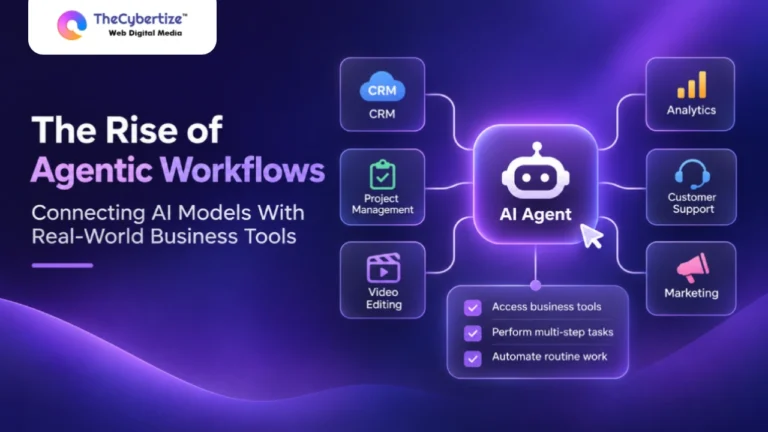
Also Read | The Rise of Agentic Workflows: Connecting AI Models With Real-World Business Tools
Maintaining Brand Consistency With AI Agents
A major challenge in AI filmmaking is keeping a product, character, or setting recognizable across several scenes. Generated shots can drift in appearance if every scene is treated independently.
Project context helps reduce that problem. Teams can store brand colors, product references, character descriptions, and visual rules, then apply those details as new scenes are planned.
Invideo Agent supports this approach through shared project context and individual creative briefs. An ongoing campaign can retain its broader creative direction while individual videos follow different scripts. Specialist agents can also support tasks such as storyboarding and production design.
Consistency is still something to inspect, not assume. Reviewers should watch for changes in labels, logos, clothing, proportions, and other visual details before a video is approved.
Measuring the Success of AI Video Production
Before scaling AI video production, businesses should assess whether the workflow saves time while maintaining content quality. Key factors include production time, revision effort, brand consistency, and overall costs, including AI generation credits and manual adjustments.
Teams should also track how their videos perform through engagement, completion rates, or learning outcomes, depending on the content’s purpose. Setting clear budgets and approval steps can help manage costs and maintain consistent quality as production increases.
How Can a Business Start With AI Video Agents?
Begin with one contained project, such as a short product explainer based on an already approved script. Provide real brand assets, product details, audience information, and a clear definition of success.
In AI filmmaking workflows, Invideo Agent can keep a shared brief for related videos. Create a first draft, then assess the script, visuals, narration, and claims separately. Record which changes required human judgment and which could be handled through another agent instruction.
Businesses should also confirm rights and consent for any supplied footage, likenesses, voices, and music.
Also Read | Enterprise MCP Guide 2026-2027: How It Differs From APIs, and How to Secure and Govern It
Conclusion
AI agents are making business video production more connected, from interpreting briefs to preparing scenes and revising drafts. They can help teams create recurring content without managing every small production step separately.
The best results still come from clear goals, accurate source material, careful review, and measurable outcomes. AI filmmaking can support production, but businesses remain responsible for what they publish.
Frequently Asked Questions
Can AI agents produce videos from a written script?
Yes. Compatible systems can turn scripts and prompts into scenes, visuals, voiceovers, and draft videos. The available controls and output quality depend on the tool, and the finished material should be reviewed for accuracy.
How is an AI video agent different from an AI editor?
A video production agent can help plan and generate new material from a brief. An AI editor focuses more on changing existing footage or an editable timeline. Some products support both activities.
Can businesses keep the same visual identity across several AI videos?
They can improve consistency by supplying brand guidelines, product references, and shared project context. Invideo Agent supports project-level context for related productions, but teams should still inspect every output for visual mistakes.
Should businesses replace video production teams with AI agents?
AI agents can handle parts of scripting, scene generation, and production preparation. Human teams remain important for strategy, creative decisions, fact-checking, rights management, and final approval.