What Does a Digital Transformation Consultant Do?
A digital transformation consultant does more than recommend new technology. The role is to connect business objectives with technology decisions, so that investment goes where it changes outcomes instead of where it is simply fashionable.
In practice, that means:
- Assessing existing business processes and technology systems. Understanding how work is done today, which systems support it, and where they fall short.
- Identifying operational bottlenecks and digitalization opportunities. Finding the steps that consume time, create errors, or hide information, and judging which are worth fixing.
- Defining transformation priorities and a practical roadmap. Sequencing initiatives by value, cost, complexity, and risk.
- Evaluating technology options and integration requirements. Comparing build, buy, and configure choices, and checking how each fits your existing systems.
- Planning implementation, change management, and adoption. New systems only help if people use them, so rollout, training, and process changes are planned alongside the technology.
- Establishing KPIs to measure business outcomes. Agreeing, before work starts, how success will be measured.
- Supporting ongoing optimization. Reviewing results and adjusting after launch.
Consulting is different from implementation. Consulting produces understanding, priorities, and plans. Implementation builds and configures the systems. Cybertize can do both, but they are distinct stages, and some clients take only the assessment and roadmap and carry out the implementation themselves.
Consult Now
IT Digital Transformation
IT digital transformation is the part of transformation that deals with the technology foundation: the applications, infrastructure, data, and integration that business processes run on. Done well, it makes the IT environment better able to support operations and future growth.
The main areas are:
- Legacy technology assessment. Cataloguing applications and infrastructure, their condition, dependencies, risks, and business importance.
- Application modernization. Updating or replacing applications that limit change.
- Cloud infrastructure. Moving suitable workloads to cloud platforms for flexibility and resilience.
- Cybersecurity considerations. Access control, identity management, data protection, and secure configuration built into the design.
- Integration architecture. A deliberate approach to how systems exchange data, instead of a tangle of point-to-point connections.
- Deployment automation. Automated build, test, and release processes that make change safer and faster.
- Data management. Consistent, accessible, well-governed data.
- Scalable application development. Software designed to handle growth without redesign.
Replacing Technology vs. Transforming How It Supports the Business
Replacing technology means swapping one tool for another, often with the same process on a newer screen. Transforming how technology supports business processes means asking whether the process itself should change: whether approvals can be automated, whether data can flow between departments without retyping, and whether staff should be doing this task at all. A new system running a broken process is still a broken process. We look at the process first, then choose the technology.
Digital Transformation Management Consulting
Transformation initiatives involve many moving parts, and the hardest problems are often about coordination, sequencing, and adoption instead of code. Our digital transformation management consulting helps businesses prioritize and coordinate those initiatives.
Business and technology assessment. A structured review of processes, systems, data, and team capacity.
Current-state and target-state analysis. A clear picture of where you are, where you want to be, and the gap between.
Transformation roadmap and prioritization. Initiatives ranked by value, effort, risk, and dependency.
Project planning and dependency management. Plans that account for which pieces must be done before others and who is responsible.
Technology selection and architecture decisions. Recommendations with the trade-offs explained, so decisions are yours and are informed.
Budget and risk planning. Realistic effort and cost estimates, along with the risks that could change them and how to reduce them.
Stakeholder communication. Clear updates for executives, department heads, and users.
Change management and employee adoption. Training, communication, and process updates so teams use new systems effectively.
KPI definition and progress measurement. Metrics agreed in advance and tracked after launch.
Typical Deliverables
- Assessment reports covering current processes, systems, and gaps
- Implementation roadmaps with phases, priorities, and dependencies
- Architecture recommendations and technology options with trade-offs
- Project plans with milestones, responsibilities, and risks
- KPI frameworks defining what will be measured and how
This describes how we work with clients. It is not a claim to a formal, branded consulting methodology or professional certification.
Digital Transformation Solutions by Business Challenge
Manual processes that consume staff time. Solutions: workflow automation and custom applications that capture data once, route work automatically, and track status.
Multiple systems that do not share information. Solutions: system integration through APIs and a shared data layer, so records match across ERP, CRM, finance, and operations.
Legacy applications that limit innovation. Solutions: phased modernization, replacing the most constraining modules first, often combined with cloud migration.
Inconsistent reporting and poor data visibility. Solutions: consolidated data, standard metric definitions, and dashboards that update without manual preparation.
Slow customer onboarding and service delivery. Solutions: digital onboarding flows, customer portals, workflow automation behind the scenes, and integration with back-office systems.
Difficulty coordinating multiple departments or locations. Solutions: shared platforms with role-based access, standard workflows, and consolidated reporting across sites.
Growing operational costs and technical complexity. Solutions: rationalizing overlapping tools, automating routine work, moving suitable workloads to cloud, and cleaning up integrations.
Inconsistent digital customer experiences. Solutions: a consistent design system across web and mobile, integrated customer data, and unified service workflows.
Digital Transformation in the Retail Industry
Digital transformation in the retail industry is mostly a connection problem. Retailers run stores, warehouses, online channels, marketplaces, payment systems, loyalty programs, and supplier relationships, and each often has its own software. When those systems do not share accurate, current data, customers see wrong stock levels, staff reconcile spreadsheets by hand, and managers make decisions on yesterday’s numbers.
Technology can improve operations across stores, warehouses, online channels, and customer touchpoints. The main areas are below.
Omnichannel Retail Systems
Customers move between store, website, app, and marketplaces and expect consistent prices, availability, and order status. Omnichannel systems share product, stock, pricing, and customer data across channels, so options such as buy online and collect in store, or checking availability at a nearby store, are possible.
Inventory and Order Management
A central view of stock across locations, with orders routed to the right location and statuses updated automatically, reduces stock-outs, overselling, and delays in fulfillment.
E-Commerce Platform Integration
Online storefronts need to connect to inventory, pricing, payments, shipping, and accounting. Integration prevents manual order entry and keeps catalog and stock data aligned between channels.
Customer Relationship Management
Unified customer records, covering purchases, service requests, and preferences, allow more relevant communication and consistent service across channels.
Loyalty Programs and Customer Personalization
Loyalty systems connected to point-of-sale and online data can recognize customers across channels. Purchase history can inform relevant offers and recommendations, with attention to customer consent and data protection.
Point-of-Sale and Back-Office Integration
When point-of-sale systems feed sales directly into inventory, accounting, and reporting, daily sales no longer need manual re-keying and end-of-day reconciliation becomes faster and more accurate.
Sales Dashboards and Demand Reporting
Dashboards showing sales by product, store, and channel, along with trends and stock cover, help buyers and managers plan replenishment and promotions with current information.
Warehouse and Supply-Chain Visibility
Tracking stock movements, inbound shipments, and supplier performance gives better insight into availability and lead times.
Automated Business Workflows
Purchase approvals, supplier onboarding, returns handling, and price change approvals can follow defined, tracked workflows instead of email chains.
AI-Assisted Customer Support and Operational Analysis
AI-based assistants can answer routine questions about orders, returns, and products using your own data, with escalation to staff. AI can also assist with analyzing sales patterns and flagging anomalies, with people reviewing the conclusions.
A Practical Example: Connecting Inventory, Orders, and Sales Data
Consider a retailer with five stores and an online shop. Each store keeps its own stock sheet, the online shop has a separate inventory count, and head office combines figures weekly by hand. The result is predictable: an item shows as available online but is sold out, a store cannot tell whether another location holds the item, and staff spend hours each week reconciling sales against stock.
A connected approach would integrate point-of-sale systems, the e-commerce platform, and the warehouse record into a central inventory service, so every sale and receipt updates a single stock figure. Orders from any channel would draw on that figure, and low-stock alerts would trigger replenishment workflows. A dashboard would show stock by location and sales trends without manual compilation.
The benefits are better stock visibility, fewer oversold items, and much less manual reconciliation. The size of those benefits depends on the retailer’s starting point, so we measure baseline effort and error rates first, then compare after rollout, instead of promising a fixed improvement.
Digitalization Companies and Digital Transformation Services Companies
If you are evaluating digitalization companies or other digital transformation services companies, a few criteria matter more than the length of a service list.
- Understanding of business processes. Does the provider ask how your business works before proposing technology?
- Technical architecture and integration capabilities. Can they explain how new systems will connect to your existing ones?
- Experience with relevant technologies. Ask for specifics about the technologies your project needs, and how they are used in practice.
- Security and data management practices. How do they handle access, sensitive data, and testing?
- Project governance and communication. How will progress, risks, and changes be reported?
- Implementation and change management. Do they plan for user training and adoption, or only for software delivery?
- Documentation and knowledge transfer. Will your team be able to operate and extend the result without depending entirely on the provider?
- Long-term maintenance and support. What happens after go-live?
Cybertize approaches technology delivery with these questions in mind. We start with processes, plan in phases, document what we build, and stay available after launch. We make no claims about market rankings, client portfolios, or industry leadership, and we encourage you to compare providers against criteria like these.
Our Digital Transformation Process
- Discovery and assessment. Purpose: understand business objectives, workflows, existing systems, and pain points. Deliverables: assessment findings, a system and process inventory, and a list of stakeholder priorities.
- Opportunity identification. Purpose: find high-impact improvements and technology gaps. Deliverables: a ranked list of opportunities with expected benefits and rough effort.
- Strategy and roadmap. Purpose: prioritize initiatives by value, cost, complexity, and risk. Deliverables: a phased roadmap, KPI framework, and a budget and risk outline.
- Solution design. Purpose: define how the chosen initiatives will work technically. Deliverables: architecture, integration and data flow designs, and implementation requirements.
- Implementation. Purpose: develop, configure, integrate, or modernize the required systems. Deliverables: working software released in phases, with integrations and migrated data.
- Testing and adoption. Purpose: validate functionality and prepare teams for operational change. Deliverables: test results, training materials and sessions, and a rollout plan.
- Measurement and optimization. Purpose: confirm the changes deliver what was intended. Deliverables: KPI reports compared with the baseline, and a list of refinements based on performance and feedback.
Technologies That Enable Digital Transformation
Technology should follow business need, not trends. These are the categories we work with, and where they apply.
- Cloud platforms and infrastructure for scalable hosting, backup, and recovery.
- Enterprise applications and custom software for processes that standard products do not fit.
- ERP and CRM systems to connect finance, operations, sales, and customer data.
- APIs and integration platforms to let systems exchange data reliably.
- AI, machine learning, and intelligent automation for document-heavy, repetitive, or pattern-based work, with human oversight.
- Business intelligence and analytics for dashboards, reporting, and forecasting.
- Web applications and digital portals for customers, partners, and employees.
- DevOps and automated deployment for faster, safer releases.
- Security, identity, and access management to control who can see and do what.
We mention specific products only when they suit a requirement. A small business with a simple process may need a basic workflow tool, not an enterprise platform, and recommending otherwise would add cost without benefit.
Industries We Support
Retail and e-commerce. Connected inventory, orders, and customer data across channels, as described above.
Manufacturing. Integration of ERP with production and inventory records, procurement workflows, and operations dashboards.
Logistics and supply chain. Shipment tracking, partner integrations, warehouse records, and delivery reporting.
Healthcare. Streamlined administrative workflows, appointment and records systems, and internal staff applications, with careful access control.
Financial services. Digital onboarding, approval workflows, case management, and reporting.
Education. Admissions, fee, and records workflows, and portals for students and staff.
Real estate. Lead and property management, booking and contract workflows, and portfolio reporting.
Professional and B2B services. Client portals, project and resource tracking, billing integration, and management reporting.
These are examples of where transformation initiatives apply. They are not claims of specific prior engagements or regulatory credentials, and compliance requirements should be confirmed with your advisors.
Why Choose Cybertize Technologies?
- Business-first technology planning. We begin with goals and processes and choose technology afterward.
- Solutions aligned with existing workflows. We design around how your teams work, changing processes deliberately where it helps.
- Integration with current systems. New solutions connect with what you already run instead of forcing a full replacement.
- Phased implementation to manage risk. Smaller, sequenced releases reduce disruption and show early results.
- Scalable and maintainable software architecture. Systems are built so they can grow and be maintained by whoever supports them later.
- Clear project scope and communication. You know what is being delivered, what is not, and how progress will be reported.
- Focus on adoption and measurable outcomes. We plan training and measurement as part of the project.
- Ongoing technical support and optimization. We stay involved after launch, because that is when real usage reveals what to improve.
Because Cybertize both advises and builds, recommendations are grounded in what is practical to implement.
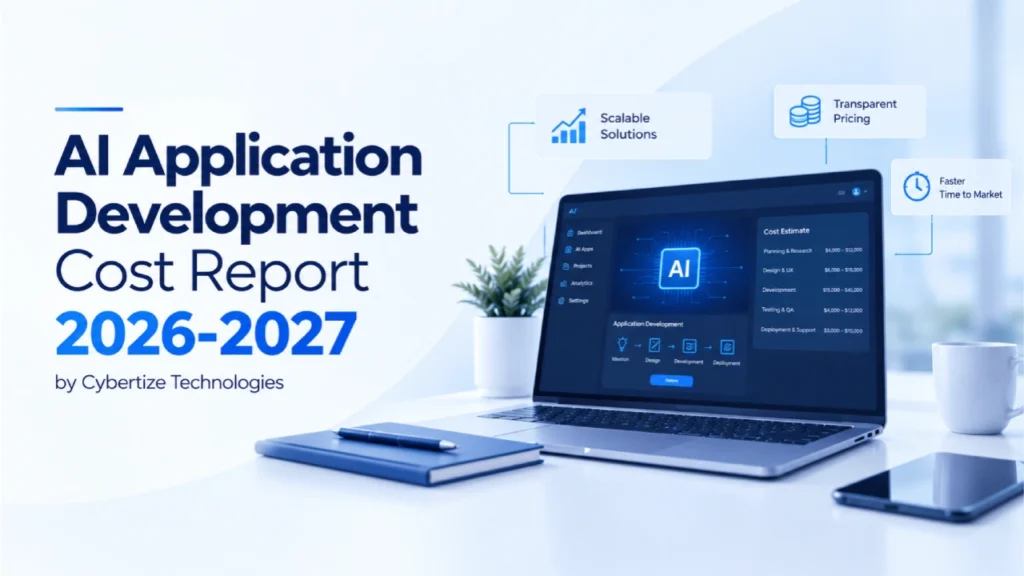
Digital Transformation Cost and ROI
What Affects Cost
The cost of digital transformation services depends on scope. The main factors are:
- Number and complexity of systems involved
- Custom development requirements
- Data migration and integration effort
- Cloud infrastructure and licensing costs
- Automation and AI requirements
- Security and testing needs
- Training and change management
- Ongoing maintenance
A focused workflow automation project and a multi-system modernization programme are very different in scope. We do not publish fixed prices. We recommend assessing business priorities first, then preparing an estimate against a defined scope, often phased so each stage can be approved separately.
Evaluating ROI
Return on investment is best judged against metrics agreed before the work starts. Useful measures include:
- Processing time for key tasks such as order handling or approvals
- Error rates such as data entry mistakes or reconciliation differences
- System availability and incident frequency
- Customer response time and service delivery speed
- Reporting speed and the effort needed to produce reports
- Adoption, meaning how many people actually use the new system
- Total operating cost, including licensing, infrastructure, and staff effort
We help establish a baseline for these measures at the start so improvement can be assessed afterward. We do not guarantee ROI figures, because results depend on the starting point and on adoption.
Plan Your Digital Transformation with Cybertize Technologies
If processes depend on manual work, your systems do not share data, or software is holding the business back, a practical first step is an honest look at what you have today. We will review your systems and processes, identify where digitalization will matter most, and outline a phased roadmap with realistic effort, risks, and measures of success. Cybertize Technologies has inhouse Digital Consultants for 1:1 Discuss in India (Delhi, Mumbai, Indore, Bengaluru, Gujarat), the USA and UAE.
Discuss your project now