Fintech Payment Processing and Financial Integrations
Financial applications are only as dependable as their connections to external providers and financial infrastructure. Payments clear through other parties, identity checks run on third-party services and bank data arrives through APIs you do not control. Good fintech software integration assumes those systems will be slow, return ambiguous results or go down, and handles each case without losing or duplicating a transaction. Every integration also depends on provider access, API documentation, commercial agreements, technical limitations and regulatory permissions, which we confirm during discovery.
Payment Gateway Integration
We integrate payment providers for collection, handle payment status across pending, successful, failed and timed-out states, implement refunds, verify and process webhooks safely, and reconcile transactions against provider settlement reports so finance teams can trust the numbers.
Banking API Integration
Where a bank or authorized provider offers supported APIs, we integrate them for account services, transfers, statements and status queries. Work centers on secure credential handling, request signing, error mapping and clear handling of cut-off times and downtime windows.
UPI and Digital Payment Integration
For India, we build UPI payment flows, payment intent handling and status verification by integrating with authorized payment service providers. UPI access and payment network authorization come from the provider and banking partners, not from the software developer. Our role is a dependable integration, including handling of delayed or deemed-pending statuses.
Open Banking API Integration
Open banking relies on consent-based access to account information through supported financial APIs. Availability, consent models and standards differ by region, so we design consent capture, token management, data refresh and revocation handling around the framework applicable to your market.
KYC and Customer Onboarding Integration
We implement document collection, integrate identity verification providers, build onboarding workflows and manage verification status, including retries and manual review queues. Integrating a verification provider does not by itself satisfy KYC or AML obligations; those depend on your regulatory role and policies.
Financial Data Provider Integration
Applications often consume exchange rates, market information, portfolio data and reference data from external feeds. We handle caching, timestamping, source attribution and fallback behavior so users know how current the figures are.
Accounting and ERP Integration
We synchronize transactions, invoices and payment records with accounting platforms and ERP systems, supporting reconciliation, reporting and consistent master data between finance operations and your product.
Third-Party Financial System Integration
Existing banking, lending, insurance, payment and financial infrastructure can be connected to custom applications through APIs, file exchanges or middleware. Where modern APIs are missing, we use adapter layers that isolate legacy constraints from the rest of the product.
Fintech Security, Risk Management and Compliance Considerations
Security in fintech is an architectural property, not a feature. The controls below are the engineering measures we design and implement, and they are chosen according to your product’s data, transactions and risk profile.
- Secure authentication and authorization: strong credential handling, token-based authentication and least-privilege authorization on every API endpoint.
- Role-based access control: permissions by role and, where needed, by tenant or business unit, with approval flows for sensitive actions.
- Multi-factor authentication: OTP, authenticator or biometric options for login and high-risk actions.
- Encryption in transit and at rest: TLS for all traffic and encryption of stored sensitive data, with managed keys and rotation.
- Secure API architecture: input validation, rate limiting, signature verification, idempotency keys and consistent error handling.
- Transaction monitoring integration: hooks and event streams that feed your monitoring or rules systems.
- Audit logs and traceability: immutable records of who did what, when and from where, tied to each transaction state change.
- Fraud detection integration: connection to dedicated fraud tools and alerting workflows for review teams.
- Secure session management: short-lived sessions, token revocation, device awareness and safe handling on shared devices.
- Data privacy and retention: data minimization, masking in interfaces and logs, and retention or deletion rules aligned to policy.
- Backup and disaster recovery: tested backups, recovery objectives and failover planning proportionate to the product.
- Vulnerability assessment and security testing: dependency scanning, code review and security testing before release, with independent penetration testing recommended for production financial systems.
- Infrastructure monitoring: logging, metrics and alerting that surface failed payments, queue backlogs and unusual access.
- Secure software development lifecycle: threat modeling, secure coding practices, peer review, secrets management and controlled deployments.
Standards and Regulatory Considerations
Financial products may need to consider several frameworks, depending on their role and market:
- PCI DSS applies to environments that store, process or transmit payment card data. Many products reduce scope by using tokenization and certified payment providers instead of handling card data directly.
- RBI requirements and directions in India apply to regulated financial activities and payment systems, including authorization, data localization and security expectations for relevant entities.
- India’s Digital Personal Data Protection Act and applicable rules govern how personal data is collected, processed, stored and erased.
- KYC and AML requirements vary by business model and jurisdiction.
- GDPR applies where personal data of people in applicable regions is processed.
- SOC 2 is an assurance framework some organizations pursue to demonstrate controls to customers and partners.
- ISO 27001 is an information security management standard assessed at the organizational level.
Software development alone does not make a fintech business compliant or authorized to offer regulated financial services. Requirements depend on your role, financial activity, jurisdiction, data handling, licensing, infrastructure, contracts and operational controls. We build software that supports your controls and recommend that you work with qualified legal, compliance and financial regulatory specialists to define them.
Fintech Technology Stack and Architecture
We select technologies according to transaction volumes, integration needs, data requirements, availability targets, security architecture and long-term maintenance. No project needs every technology below.
Frontend Development
React, Angular, Vue.js, Next.js, Nuxt.js and plain HTML, CSS and JavaScript cover dashboards, portals and customer interfaces. Component frameworks suit data-heavy admin tools, while Next.js or Nuxt.js suit public pages that also need fast loading and SEO.
Mobile Application Development
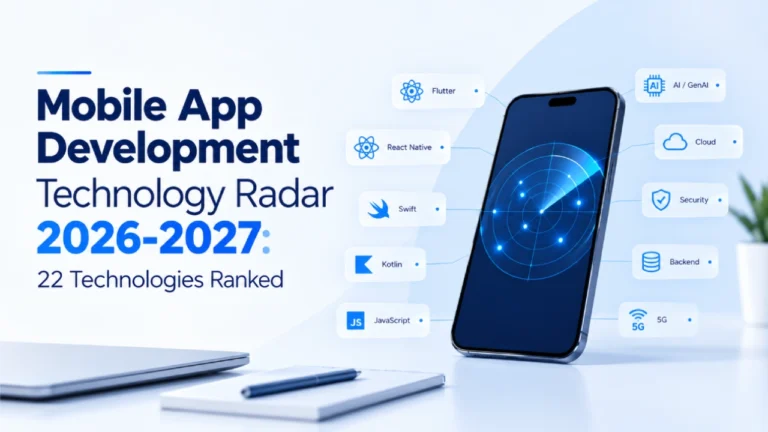
Flutter and React Native allow a shared codebase across Android and iOS, which suits many startups. Kotlin and Swift provide native performance and deeper platform security features where the product requires them.
Backend Development
Node.js suits API-centric products and real-time features. Java with Spring Boot is common in enterprise and banking-adjacent systems. Python fits analytics and data workflows, PHP suits teams extending existing platforms, and .NET suits organizations on the Microsoft ecosystem.
Databases and Caching
PostgreSQL and MySQL provide transactional integrity for ledgers, loans and accounts. MongoDB can suit flexible document data such as onboarding records. Redis supports caching, rate limiting, queues and short-lived state.
Cloud and Infrastructure
AWS, Microsoft Azure and Google Cloud host production workloads. Docker and Kubernetes support consistent deployment and scaling, and CI/CD pipelines automate testing and controlled releases.
Financial Integration and Messaging
REST APIs and webhooks connect providers. Message queues and event-driven architecture decouple payment processing, notifications and reconciliation so a slow provider does not block the user journey. Third-party financial APIs complete the integration layer.
Testing and Quality Assurance
Testing includes API testing, transaction workflow testing, integration testing, security testing, performance and load testing, and automated regression testing. Financial flows need tests for failure paths such as timeouts, duplicate callbacks and partial failures, not just successful cases.
AI and Automation in Fintech Software
AI is useful in fintech when applied to well-defined tasks with human oversight. We integrate it where it reduces manual effort without replacing accountable decision-making.
AI-Powered Financial Analytics
Analytics layers can summarize reporting, detect patterns in transactions, surface financial insights and support business intelligence dashboards for finance and operations teams.
Fraud Detection and Anomaly Monitoring Integration
Software can integrate with fraud detection systems, flag unusual patterns and route cases into investigation workflows with the supporting data attached. These tools reduce risk but do not guarantee fraud prevention.
Automated Loan Processing Workflows
We automate document intake, application routing, eligibility workflow steps and integrations with underwriting systems. Automated decisions are not appropriate in every case, so workflows include manual review paths and policy-defined thresholds.
AI-Powered Financial Customer Support
Chatbots can answer FAQs, explain statuses and assist with account-related queries, handing off to staff where needed. Access controls, authentication before account data is shown and privacy safeguards are essential.
Financial Document Processing
Document extraction and classification can speed up onboarding, lending and claims. Extracted data should be shown for review and confirmed by a person for important fields.
Financial Risk Analytics
Applications can integrate validated analytical models and present risk indicators to authorized users. AI should not be treated as an independent source of reliable investment or credit decisions without model validation, monitoring and human oversight.
Fintech Software Development Process
A fintech project follows a clear lifecycle, with financial and compliance stakeholders involved throughout.
- Fintech product discovery and business requirement analysis. We map business goals, users, revenue model, provider dependencies and constraints. Deliverables: requirements document, scope boundaries and a risk list.
- Financial workflows and system architecture planning. We define transaction lifecycles, state models, ledger design, integration approach and security architecture. Deliverables: workflow diagrams, architecture document and technology recommendations.
- UI/UX design and user journey mapping. We design onboarding, payment, repayment and dashboard journeys with clear status messaging. Deliverables: wireframes, prototypes and a design system.
- Backend and frontend application development. We build in iterations with code review and demonstrable releases. Deliverables: working increments, API documentation and admin tools.
- Payment, banking and third-party API integration. We integrate providers in sandbox environments first, then move to production credentials. Deliverables: integration modules, webhook handlers and reconciliation logic.
- Security, transaction and functional testing. We test full transaction lifecycles including failures, retries, duplicates and reversals, plus security and load testing. Deliverables: test reports and a defect log.
- Deployment and release. We run staged releases with rollback plans and production readiness checks. Deliverables: deployment runbooks and monitoring configuration.
- Monitoring, maintenance and continuous improvement. We track errors, performance and operational metrics, then prioritize fixes and enhancements. Deliverables: reports, patches and a product roadmap.
Across every stage we emphasize transaction lifecycle testing, failure handling, reconciliation and auditability, and we work with your finance, risk and compliance stakeholders so requirements are captured before they become rework.
Why Choose Cybertize Technologies for Fintech Software Development?
Our positioning rests on software engineering capability and a responsible approach to financial technology requirements. Cybertize has delivered web and mobile products across industries, and we apply the same engineering discipline to financial products, with extra attention to transaction integrity and security.
- Custom financial application development shaped around your workflows rather than a fixed template.
- Architecture chosen for your product and transaction requirements, from a lean MVP structure to event-driven designs for higher volumes.
- Frontend, backend, mobile and API engineering within one team, so integrations and interfaces stay consistent.
- Integration with financial service providers, including payment, verification, banking and data APIs, with careful failure handling.
- Maintainable and scalable software architecture with documented APIs, clean module boundaries and automated tests.
- Security-conscious development covering access control, encryption, logging and secure release practices.
- Testing and quality assurance that includes transaction lifecycle and integration scenarios.
- Close collaboration with founders and technical stakeholders, with transparent planning and regular demonstrations.
- Flexible development and ongoing support models that match your stage and budget.
We are clear about boundaries. We build software. We do not provide banking, lending, payment or investment services, and we do not replace your legal, compliance and regulatory advisors.
Fintech Software Development Company in India, USA and UAE
We work with financial technology businesses across markets through remote-first delivery, structured communication and engagement models that fit each client’s time zone and governance needs. Each market below has different integration ecosystems and regulatory contexts, so product scope is defined locally with your advisors.
Fintech Software Development Company in India
India’s fintech ecosystem is shaped by UPI, account aggregation initiatives, digital KYC and a large NBFC and microfinance sector. Startups, payment businesses, lending platforms and financial service providers often need integrations with payment service providers, credit bureaus and verification services, along with reporting suited to Indian regulatory expectations.
Fintech Software Development Company in Delhi
Delhi-based fintech startups, financial businesses and product companies often need custom applications that connect with existing operations: lead-to-loan journeys, partner and agent portals, integrations and reporting. We support these teams with product engineering and dedicated developers who can join an existing roadmap.
Fintech Software Development Company in Mumbai
Mumbai’s concentration of banks, payment technology firms, asset managers and lenders creates demand for dependable systems: payment processing integrations, investment and portfolio platforms, lending operations tools and financial reporting applications with strong audit trails.
Fintech Software Development Company in Bengaluru
Bengaluru’s product-led ecosystem includes fintech startups, financial SaaS companies and technology-driven financial services. Typical needs are fast MVP iteration, multi-tenant SaaS architecture, API-first products and scalable infrastructure that grows with user adoption.
Fintech Software Development Company in Gujarat
Businesses in Gujarat, including trading, manufacturing and financial services firms, often need practical financial software: lending and collection tools, payment solutions, billing and financial administration platforms that connect with accounting and ERP systems. We support these through remote collaboration and clear delivery planning.
Fintech Software Development Company in Indore
Indore’s startups, growing businesses and financial service providers often look for cost-conscious yet well-engineered custom financial software or dedicated development resources, for example a loan management system, an agent network portal or a payments dashboard built by a team that can scale with them.
Fintech Software Development Company in the USA
For US fintech businesses we provide product engineering, financial API integrations and secure application development, working alongside your product, security and compliance teams. US regulatory obligations vary by activity and state, so we build to your documented requirements and recommend qualified US advisors for compliance decisions.
Fintech Software Development Company in the UAE
UAE businesses developing digital financial products, payment applications, lending platforms and financial administration tools need systems that handle multi-currency flows, bilingual interfaces and integrations with regional providers. Licensing and approvals in the UAE depend on the regulator and activity, and remain the client’s responsibility with its advisors.
Fintech Software Development Cost
Fintech software development cost depends on scope, so we estimate after discovery rather than quote a universal figure. The main factors are:
- Product type and complexity.
- Number of user roles and permission models.
- Web and mobile application requirements.
- Transaction workflows and edge cases such as refunds, reversals and disputes.
- Payment and banking integrations.
- Number and maturity of third-party financial providers.
- Data security and access control requirements.
- Reporting and analytics depth.
- Testing and reliability requirements.
- Infrastructure and deployment needs.
- Maintenance and support after launch.
Products differ widely. A payment application centers on transaction state handling and reconciliation. A lending platform adds origination, schedules, collections and credit data integrations. A digital wallet needs a robust ledger, limits and verification flows. An investment product depends on accurate data feeds, reporting and brokerage or custodian integrations. Each can have a very different development scope, so a clear requirement workshop is the fastest route to a reliable estimate.
Fintech Software Development Engagement Models
Fixed-Scope Fintech Software Development
Best for well-defined projects such as a payment integration, a loan calculator module or an MVP with stable requirements. It suits startups with a clear first release and institutions with approved specifications. Change requests are managed through a defined process.
Dedicated Fintech Developers
A good fit when you already have a product and team and need additional skilled engineers, for example React, Node.js or mobile developers experienced with financial workflows. Developers work under your product direction.
Dedicated Software Development Team
Suited to larger products and financial software companies that need a cross-functional team of developers, QA, design and project management with continuity across releases.
Time-and-Materials Engagement
Useful when requirements are evolving, as in early product discovery or integrations with uncertain provider behavior. You pay for effort spent and keep flexibility to reprioritize.
Ongoing Product Development and Maintenance
Appropriate after launch, when the product needs monitoring, security updates, new features and provider changes. It suits any financial business that depends on continuous availability and steady improvement.
Discuss Your Fintech Software Development Project
Whether you are a fintech startup founder shaping a first product, a payment or lending business improving operations, an NBFC or financial institution modernizing systems, an investment and wealth management business building investor tools, or a financial SaaS product owner scaling a platform, we can help. Bring a new product idea, an existing financial application, a system integration challenge or a need for dedicated developers, and we will help you define a practical path forward.
Discuss Your Fintech Software Requirements