Enterprise Application Development
Enterprise Software Development Service in India: Enterprise application development focuses on software that many people in an organization use together, so its value comes from connecting teams and standardizing how work gets done.
A well-designed enterprise application can:
- Connect teams by giving departments a shared system of record, instead of parallel spreadsheets.
- Standardize workflows so a purchase request, leave application, or customer onboarding follows the same steps every time.
- Improve access to business information through role-appropriate views, search, and reporting.
- Support organization-wide processes such as approvals, compliance checks, and escalations.
Typical applications include web applications for operations, internal business portals, employee systems for requests and records, customer platforms for orders and service, approval workflows, and applications that integrate with existing enterprise software. Most of the effort goes into understanding processes, defining roles and permissions, and getting the data model right, because those decisions are hard to change later.
ERP Development Services
ERP software connects core business functions, including finance, inventory, procurement, manufacturing, sales, HR, and logistics, around shared data. When those functions share a system, a sales order can reserve stock, trigger procurement, and flow through to invoicing without retyping.
Our ERP development services include:
- Custom ERP development for organizations whose processes are specific enough that packaged ERP would need heavy modification
- Existing ERP customization to adapt a product you already use
- Module development, building individual modules such as inventory, procurement, production planning, or HR as needed
- Third-party integrations with accounting, payment, e-commerce, logistics, and CRM systems
- Data migration from legacy systems and spreadsheets, with validation
- Reporting tailored to operational and management needs
- Ongoing support and enhancement
When Custom ERP Makes Sense
A custom ERP can be justified when your core processes are a competitive differentiator, when packaged products cannot support them without extensive customization, or when licensing and customization costs approach the cost of building. Many businesses do not need a fully custom ERP. A packaged ERP, perhaps extended with custom modules and integrations, is often the more practical choice. We will tell you honestly which situation you are in.
Custom Enterprise Software Development Agency
As a custom enterprise software development agency, Cybertize works as a technology partner from discovery through implementation and long-term improvement, rather than only delivering code against a fixed specification.
- Requirements analysis. We work with stakeholders to understand processes, pain points, and priorities, and to separate must-have needs from nice-to-have wishes.
- Technical consulting. We advise on build-versus-buy decisions, phasing, and risks.
- Solution architecture. We design the structure, data model, integration approach, and security model.
- Development. We build in iterations with working software at each step.
- Testing. We cover functional, integration, performance, and security testing.
- Deployment. We handle environments, release, data migration, and rollout.
- Documentation. We document architecture, APIs, configuration, and operations.
- Maintenance. We stay involved after launch for support and enhancements.
A key part of our role is aligning software scope with business priorities and existing infrastructure. Enterprise projects fail more often from unclear scope than from technical difficulty, so we phase the work so the most valuable capabilities are delivered first and the rest follows without blocking the business.
Business Problems We Solve
Disconnected software systems and data silos. Solution: an integration layer or consolidated data platform so systems exchange data and teams work from the same numbers.
Manual, repetitive operational processes. Solution: workflow software that automates data entry, routing, reminders, and approvals.
Legacy applications that are difficult to maintain. Solution: phased modernization that refactors, replaces, or rebuilds the parts that cause the most pain.
Limited reporting and business visibility. Solution: dashboards and reports built on consolidated, reliable data with role-based access.
Growing transaction volumes and performance bottlenecks. Solution: performance analysis, database and query optimization, caching, and architecture changes so the system scales with demand.
Complex approval and compliance workflows. Solution: configurable workflow engines with audit trails, role-based permissions, and clear status tracking.
Lack of integration between ERP, CRM, and other systems. Solution: API-based integrations with monitoring and error handling, so data flows reliably and failures are visible.
Difficulty adapting software to changing business requirements. Solution: modular architecture, where changes affect a single module instead of the whole system.
Enterprise Software Development Process
- Business discovery and requirements analysis. Purpose: understand goals, processes, users, and constraints. Deliverables: requirements document, stakeholder map, and prioritized scope.
- Workflow mapping and solution planning. Purpose: document how work flows today and how it should flow. Deliverables: process maps, a solution outline, and a phased delivery plan.
- Architecture and technology selection. Purpose: decide how the system will be structured and what it will be built with. Deliverables: architecture design, data model, integration plan, security approach, and technology recommendation.
- UI/UX design and prototyping. Purpose: make sure the system suits the people who will use it every day. Deliverables: wireframes, interactive prototypes, and feedback from real users.
- Iterative development and integrations. Purpose: build working software in increments and connect it to existing systems. Deliverables: tested releases in a staging environment, demos, and integration components.
- Quality assurance and security testing. Purpose: verify correctness, performance, and security before launch. Deliverables: test results, defect resolution, performance and security review findings, and release readiness assessment.
- Deployment, data migration, and team onboarding. Purpose: move into production with minimal disruption. Deliverables: production deployment, migrated and validated data, training materials, and user onboarding.
- Maintenance, monitoring, and continuous improvement. Purpose: keep the system healthy and evolving. Deliverables: monitoring, support, regular updates, and an improvement roadmap.
Technology Stack
We select technology for the project rather than applying one stack everywhere. Options we work with include:
- Backend: Java and Spring Boot, .NET, Node.js, and Python
- Frontend: React and Next.js
- Data: relational databases such as PostgreSQL, MySQL, and SQL Server, and NoSQL databases where the data model suits them
- Integration: REST APIs, messaging, and integration layers
- Platform: cloud platforms, containers, and CI/CD pipelines
- Analytics: reporting and dashboard tools
Choices depend on security requirements, existing systems, expected scale, team capabilities, integration needs, and long-term maintenance. If your IT team already runs a particular stack, that is often a strong reason to stay with it, since software must be maintained long after it is delivered.
Industries and Use Cases
Manufacturing. Inventory and procurement systems, production planning and tracking, quality records, and ERP integration with shop-floor data.
Logistics. Order and shipment management, route and fleet records, partner and carrier integrations, and operations dashboards.
Healthcare. Appointment, records, and billing workflows, internal staff applications, and integration between administrative systems, designed with careful access control.
Retail. Order management, inventory across locations, supplier and purchasing workflows, and multi-location management.
Financial services. Customer onboarding workflows, approval chains, internal case management, and reporting.
Education. Student and staff portals, admissions and fee workflows, and institutional reporting.
Real estate. Property and lead management, booking and contract workflows, and portfolio dashboards.
B2B services. Customer portals, project and resource management, billing, and enterprise reporting.
These are examples of software we can build. Regulatory requirements differ by industry and country, so we design to the requirements you provide, and compliance questions should be confirmed with your own advisors.
Integration and Legacy Modernization
Integration
Enterprise software rarely stands alone. We connect new and existing systems through APIs and integration layers, including ERP, CRM, accounting, payment, inventory, HR, and third-party platforms. Good integration handles failure: retries, duplicate protection, monitoring, and clear error reporting, so a failed sync does not go unnoticed for weeks.
Modernization Options
Legacy modernization does not have to mean a risky full rewrite. Depending on the system, we may recommend:
- Refactoring the existing code to improve structure, performance, and maintainability without changing behavior
- Replacing individual modules that are the most painful, while leaving stable parts in place
- Rebuilding selected workflows on modern technology and connecting them to the legacy system
- Gradually migrating functionality in phases until the legacy system can be retired
We assess the current system first, then choose the lowest-risk path to your goals, keeping operations running throughout.
Why Choose Cybertize Technologies?
We would rather you judge us on how we work than on claims.
- Software designed around real business workflows. We study how work is done before deciding what to build.
- Modular and maintainable architecture. Systems are structured so changes stay local and new modules can be added.
- Integration with existing business systems. We design for the environment you have, not an idealized one.
- Security-conscious development. Role-based access, input validation, secure handling of sensitive data, and dependency management are part of the baseline.
- Clear project scope and delivery milestones. You know what is being delivered, when, and how progress will be shown.
- Documentation and knowledge transfer. Architecture, configuration, and operational procedures are documented so your team is not dependent on us to understand its own system.
- Scalable implementation options. You can start with one module or one location and expand in phases.
- Ongoing maintenance and technical support. We remain available after launch for fixes, updates, and enhancements.
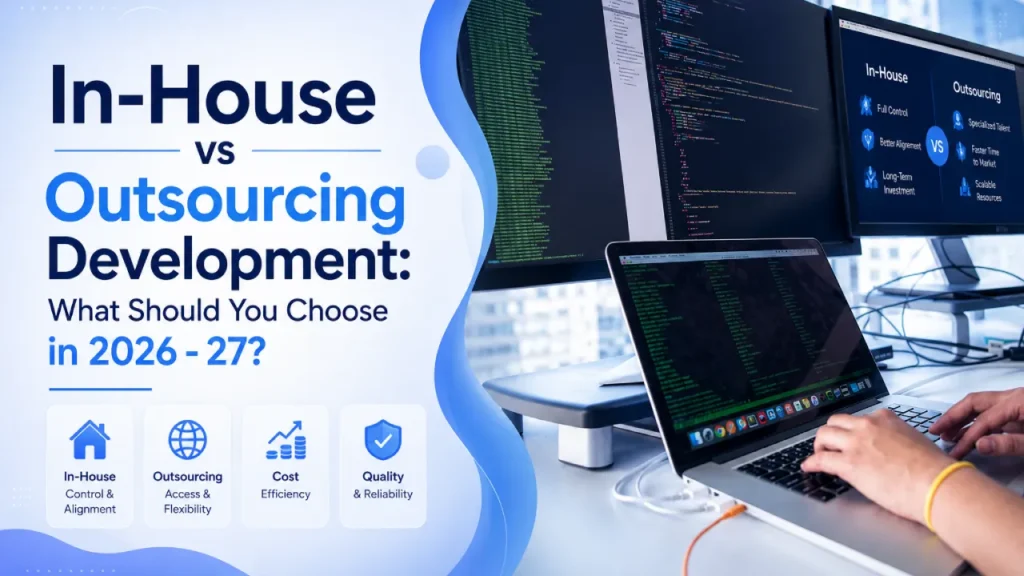
Custom Software vs. Off-the-Shelf Enterprise Software
| Factor |
Custom Enterprise Software |
Off-the-Shelf Enterprise Software |
| Customization |
Built around your processes |
Configurable within the product’s limits |
| Implementation time |
Longer to design and build |
Usually faster to start |
| Initial cost |
Typically higher upfront |
Typically lower upfront, with recurring licensing |
| Integrations |
Designed for your exact systems |
Depends on available connectors and APIs |
| Ownership |
You control the code and roadmap |
Vendor controls the product and roadmap |
| Maintenance |
You or your partner maintain it |
Vendor maintains the core product |
| Flexibility |
High, as requirements change |
Limited to what the vendor supports |
Neither approach is automatically better. Custom development is useful when standard software cannot support important workflows or integration requirements, or when the process itself is a source of advantage. Off-the-shelf platforms are often more practical when their existing functionality meets your needs, since they are faster to adopt and maintained by the vendor. A common middle path is a packaged product extended with custom modules and integrations. We will help you evaluate which fits.
Enterprise Software Development Cost
The cost of enterprise software depends on scope and requirements, not a fixed rate. The main factors are:
- Number and complexity of modules. More modules, and more complex business rules, mean more design, build, and testing.
- User roles and permissions. Each role often needs its own views and access rules.
- Third-party integrations. The number of systems to connect, and the quality of their APIs, affect effort.
- Data migration requirements. Volume, quality, and the need to clean and validate legacy data.
- Security and performance expectations. Higher standards require more design, testing, and infrastructure.
- Reporting and analytics. Custom dashboards and reports add scope.
- Cloud infrastructure. Environments, availability requirements, and operating costs.
- Testing and ongoing maintenance. Test coverage and the level of support after launch.
Because needs vary so widely, we do not publish generic price ranges. We recommend requesting an estimate after requirements and priorities have been assessed. A short discovery phase is often the most economical way to define scope and phasing before committing to a full build.
Plan Your Enterprise Software Solution
If you are dealing with disconnected systems, manual processes, an aging application, or software that cannot keep up with growth, the first step is a conversation about how your business runs today. Walk us through your processes, share what you use now, or tell us what you want to change, and we will explain what we would recommend and why, including when an off-the-shelf option is the better choice.
Discuss Your Business Processes →