Technology Stack and Integrations
Hire LangChain Developers in India based on the stack and integration.
| Function |
Technologies |
| Languages and application frameworks |
Python, TypeScript and JavaScript, and suitable backend and frontend frameworks based on your existing application |
| LLM providers |
OpenAI, Anthropic, Google Gemini, Amazon Bedrock, and other compatible providers where appropriate |
| Data retrieval and storage |
Vector databases and vector search, PostgreSQL with suitable vector extensions, document stores, relational databases, embedding models, and reranking components where required |
| Integration and workflow components |
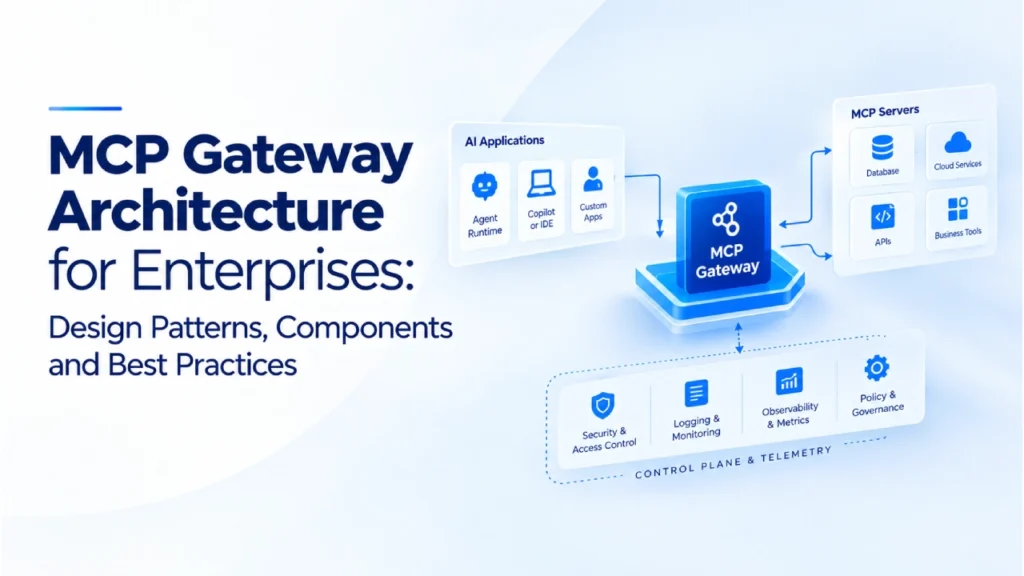
REST APIs and webhooks, external tools and business system integrations, structured outputs and schema validation, LangGraph for suitable stateful workflows, and Model Context Protocol (MCP) integrations where required and supported |
| Deployment and operations |
Cloud infrastructure, containerization where appropriate, API authentication and authorization, logging, tracing, evaluation, monitoring, CI/CD, and environment management |
For deployment pipelines and environments, we coordinate with our Cloud and DevOps Services.
What Can Our LangChain Development Team Build?
The right design always depends on data sensitivity, reliability requirements, integration complexity, and the consequences of incorrect output. Typical use cases include:
- Internal knowledge assistants: employees ask questions about approved company documents and receive responses grounded in retrieved content, with sources shown.
- Customer support assistants: users find product information, troubleshoot common issues, and retrieve support documentation, with escalation and human handoff for cases the assistant cannot resolve.
- Document intelligence applications: extract, classify, summarize, and retrieve information from business documents, with validation or human review for consequential outputs.
- AI research and information retrieval tools: combine approved data sources, retrieval, and model-generated summaries to support research and analysis.
- Tool-using business agents: call authorized APIs or business tools to perform specific tasks, subject to permissions, validation, and approval requirements.
- SQL and data assistants: let users query business data through controlled database access, query validation, permission checks, and execution safeguards such as read-only access.
- SaaS AI features: add AI-powered search, summarization, conversational interfaces, recommendation workflows, and document assistance to existing SaaS products.
- Enterprise process assistants: connect LLM applications with selected business systems to support defined workflows, while keeping important actions auditable and controlled.
LangChain Implementation: From Prototype to Production
A working demo is the beginning, not the end. LangChain implementation for a real business involves much more than connecting a prompt to a model. Production readiness also involves data governance, security, testing, monitoring, and failure handling. Our delivery stages are:
- Requirements and feasibility: define the target users, business problem, data sources, expected outputs, and acceptable failure conditions.
- Architecture design: choose the application structure, model providers, retrieval strategy, integration boundaries, and orchestration approach.
- Data and retrieval pipeline: prepare documents and data sources, implement ingestion and retrieval, and validate relevance.
- Prompt and model integration: configure prompts, model calls, structured outputs, and tool interfaces as required.
- Application and workflow development: implement application logic, state management, business rules, and external integrations.
- Testing and evaluation: assess correctness, retrieval relevance, robustness, access controls, latency, and cost using representative test cases.
- Deployment and observability: deploy with monitoring, tracing, error handling, and operational controls.
- Continuous improvement: review production behavior, update evaluations, improve retrieval, and refine workflows as requirements evolve.
LangChain, LangGraph, and LangSmith
These tools have different purposes, and not every project needs all of them. We select the combination based on your requirements and the current capabilities of each framework, using the official documentation at docs.langchain.com and the LangChain reference as our technical references.
- LangChain provides reusable components for building LLM applications, including model integrations, prompts, retrieval, and tool-enabled application logic.
- LangGraph supports stateful, multi-step workflows that need explicit control flow, persistence, branching, retries, or human-in-the-loop approval.
- LangSmith supports tracing, debugging, evaluation, and monitoring of LLM applications.
Framework APIs change over time, so we confirm current capabilities against the official documentation when designing a solution instead of relying on assumptions.
Security and Reliability for LangChain Applications
Production LLM systems introduce risks that traditional applications do not have. We address them as part of the architecture, not as a final check.
- Authentication and authorization: every request is tied to a verified user and their permissions.
- Tenant isolation: in multi-tenant applications, one customer’s data must never be retrievable by another.
- Document-level access control: retrieval respects who is allowed to see each document.
- Secret and API key management: credentials are stored securely and never exposed to prompts or logs.
- Input and output validation: structured outputs are validated against schemas before they affect other systems.
- Prompt injection and untrusted content: retrieved documents and user input can contain instructions that try to manipulate the model, so they are treated as untrusted.
- Tool permissions and least-privilege access: agents only receive the tools and access they need.
- Human approval for sensitive actions: consequential steps such as payments, deletions, or external messages require confirmation.
- Privacy-aware logging and tracing: observability does not mean storing sensitive data unnecessarily.
- Data retention and handling: retention rules reflect your policies and obligations.
- Evaluation for hallucinations and incorrect retrieval: measured against realistic test cases.
- Rate limiting, retries, and failure handling: the application degrades gracefully when a provider is slow or unavailable.
Two points deserve emphasis. First, RAG reduces the risk of unsupported answers but does not eliminate hallucinations. Second, prompt instructions alone are not a security boundary, because a model can be persuaded to ignore them. Real controls belong in application code, permissions, and infrastructure. We recommend testing retrieval permissions, tool access, and overall behavior against realistic abuse and failure scenarios before launch.
How to Hire LangChain Experts
Choosing between candidates or vendors is difficult because many people can follow a tutorial but fewer have shipped reliable systems. When you evaluate LangChain experts, look for:
- Experience building LLM applications beyond basic demonstrations
- Understanding of RAG and how retrieval quality is measured
- Knowledge of model and embedding integrations
- Ability to design safe tool-calling workflows
- Solid Python or TypeScript application architecture skills
- Testing, tracing, and observability practices
- Awareness of security and data-access control
- Ability to explain trade-offs in cost, latency, and quality
- Clear technical communication and documentation
- Experience integrating AI features with existing software
Familiarity with the LangChain API alone does not establish production expertise. Ask prospective teams how they test retrieval, how they handle failures, and what they would do differently for your risk level. We welcome those questions, and you should ask them of any provider you consider.
Engagement Models for LangChain Development
- Dedicated LangChain development team: a team aligned with your product roadmap, technical requirements, and ongoing development priorities.
- Project-based LangChain development: a defined engagement with agreed deliverables, milestones, integration scope, and acceptance criteria.
- LangChain integration and consulting: targeted help with architecture reviews, RAG implementation, model integration, debugging, evaluation, or modernization of an existing LLM application.
- Prototype and MVP development: a scoped initial implementation that tests a business hypothesis, validates data access, and assesses technical feasibility before expanding functionality.
The right model depends on project scope, your internal capabilities, delivery expectations, and long-term maintenance needs. Availability and terms are confirmed during scoping rather than assumed in advance.
Hire LangChain Developers in India, the USA, and the UAE
Cybertize can discuss project requirements with businesses seeking LangChain development support in India, the USA, and the UAE, with delivery and contracting arrangements confirmed for each engagement.
In India, teams in Delhi, Mumbai, Bengaluru, and Chennai are often building AI-enabled SaaS products, enterprise knowledge assistants, customer support automation, and document processing applications. In the USA and UAE, similar needs appear alongside internal research tools, regulated-document workflows, and AI features added to existing platforms. The use cases are broadly shared; what differs is data handling, hosting expectations, and integration with local business systems.
A remote development engagement can give you access to a broader engineering team and a clear milestone-based way of working. It also requires planning for time-zone coordination, data residency, contracting, and communication practices. We discuss these points at the start so they do not become surprises later.
Why Choose Cybertize Technologies?
- Integration with existing business software: AI features connect to the systems your teams already use.
- An engineering-oriented approach to RAG and LLM implementation: retrieval, prompts, and workflows are designed and tested as software components.
- Security and data access considered during architecture: permissions and isolation are designed in from the beginning.
- Evaluation and monitoring as part of production readiness: quality is measured, not assumed.
- Coordination with APIs, cloud infrastructure, and DevOps: the application is deployable and operable.
- A focus on maintainable software rather than isolated demonstrations: code, configuration, and documentation are meant to last.
- Scope-driven implementation aligned with business requirements: we build what the use case needs, not the most elaborate architecture.
LangChain Development Cost Factors
Cost depends on the following factors:
- Application scope and workflow complexity
- Number and type of data sources
- Document processing and ingestion requirements
- Retrieval architecture and evaluation needs
- Model choice, token usage, and API pricing
- Vector database and infrastructure requirements
- External integrations and tool permissions
- Authentication and data security requirements
- Testing, observability, and deployment requirements
- Ongoing model evaluation and maintenance
A prototype costs less than a secure, production-ready application with complex integrations and operational requirements. Running costs also include model usage, which changes with traffic and model choice. We do not publish fixed prices, rates, or timelines, because they depend on your requirements. Share your use case, data sources, and constraints, and we will provide a scoped estimate.
What is the difference between an AI agent and a fixed workflow?
A fixed workflow follows predefined steps, which makes it predictable and easier to test. An agent decides which tools to use and in what order, which adds flexibility but also variability. We use fixed workflows where steps are known and agents where flexibility is needed.
How much does LangChain development cost?
Cost depends on scope, data sources, retrieval design, integrations, security requirements, infrastructure, and ongoing evaluation, as well as model usage fees. A prototype costs differently from a production system. We provide a scoped estimate after understanding your requirements.
Can you help move an existing AI prototype into production?
Yes. We review the prototype’s architecture, prompts, retrieval, and integrations, then address gaps in testing, security, observability, and error handling. Sometimes this means simplifying the design. The effort depends on the prototype’s condition and the production requirements.
Can I hire LangChain developers in India for a project serving US or UAE customers?
Yes, this is a common remote model. The key considerations are communication across time zones, data residency, contracting, and compliance with the regulations that apply to your customers. We discuss these requirements early and plan the engagement accordingly.
How do you monitor and maintain a LangChain application after launch?
We use tracing, logging, and metrics to watch latency, errors, cost, and output quality, and we maintain evaluation sets to detect regressions when prompts, models, or data change. Maintenance also includes dependency and framework updates, model changes, and retrieval tuning.
Build Your Next AI Application With LangChain
If you are planning an LLM application, a RAG system, an AI agent, or an integration project, we can discuss it based on your data, users, security requirements, and existing software stack. A short conversation often clarifies whether the project is feasible, what approach fits, and what a sensible first phase looks like.
To help us prepare, share:
- The business problem you want to solve
- Your existing application and technology stack
- The data sources or APIs involved
- Whether you need a prototype, an implementation, or an ongoing team
- Security, deployment, and integration constraints