Table of Contents
Key Takeaways
Here are the key takeaways from our High-Quality vs. Low-Quality Website Traffic: SEO & AEO Guide, straight from the Cybertize team’s desk:
- Traffic volume is a vanity number. Traffic quality is the business number. A visitor who is relevant, engaged and trusting is worth more than a hundred who bounce in three seconds.
- Traffic exchanges and “inflation tools” are a slow poison. The shutdown of HitLeap is not a surprise to us. Artificial visits raise bounce rates, flatten engagement and, in the long run, put your site’s visibility and indexing at risk.
- 1,000 genuine visitors a month is a stronger signal than 100,000 hollow ones. Search engines and AI answer engines read the quality of the audience, not just the size of it.
- Genuine content earns genuine traffic. We have seen this repeatedly across a decade of client work, including HouseGyan (100k+ monthly visits, organic backlinks) and Carfinder (creator-driven referral traffic).
- Search engines and answer engines carry a responsibility to be accurate. That is why their ranking, indexing and citation systems keep tightening against shallow, misleading and manipulated visits.
- A low-DR site with great content can get cited in an AI Overview. In our view, the reason is the quality of the audience that content attracts and satisfies.
- The “pogo-stick” click is the clearest low-quality signal. If a visitor lands, finds nothing useful and goes back to the results page, that visit works against you.
- In 2027, measure SEO and AEO separately. Rankings and clicks tell one story; AI citations, brand mentions and AI referrals tell another.
Introduction: The Question Nobody Asks Enough
Every month, thousands of marketing teams open an analytics dashboard, look at the line going up and feel good. Very few ask the question that actually matters: who are these people, and why are they here?

At Cybertize Technologies, we have spent almost a decade building websites, platforms and products for market leaders and MSMEs alike. We build the technology, and in many cases we stay on to monitor how that technology performs in the real world. That position gives us something most blog posts on this topic do not have: a long-term, ground-level view of which websites grow steadily and which ones quietly collapse.
This article about High-Quality vs Low-Quality Website Traffic is our opinion, and we will state it plainly. Getting more traffic is not a sign of better SEO. Getting the right traffic is. Everything below comes from what we have seen, what our SEO research team has observed, and what we believe is the direction search and answer engines are moving in.
1. What Defines High-Quality vs Low-Quality Website Traffic?
Forget the textbook definitions for a moment. Here is how we define it in practice.
High-quality website traffic is made up of people who:
- Are genuinely interested in the topic, product or problem your page addresses
- Read, scroll and explore instead of leaving instantly
- Visit more than one page, return later, or take a meaningful next step
- Find what they came for, and do not need to go back to the search results
- Eventually trust you enough to enquire, subscribe, buy or recommend you
Low-quality website traffic is made up of visits that:
- Come from bots, traffic exchanges, auto-surf tools or paid “visitor packages”
- Arrive through misleading headlines or click-bait that promise more than the page delivers
- Land on your page, find it irrelevant, and leave within seconds
- Never scroll, never click, never return
- Have no possible connection to your business
The difference is not about the source label in your analytics. Organic traffic can be low quality if your title promises something the page does not deliver. Social traffic can be excellent if the person sending it has real credibility with their audience. Quality is about intent, relevance and satisfaction, not channel.
2. Why High Traffic Doesn’t Always Translate Into Business Growth
We have sat in many review meetings where a client proudly shows a traffic graph that has tripled, while enquiries, sales and revenue have not moved at all. The explanation is almost always the same: the visitors were never going to buy.

Here is the uncomfortable truth about vanity traffic:
- It does not convert. A visitor with no interest in your offering will never fill a form, no matter how good your landing page is.
- It poisons your data. When half your traffic is junk, every metric you rely on, whether bounce rate, average engagement time or conversion rate, becomes unreliable. You end up making business decisions on corrupted numbers.
- It misleads your content strategy. You start creating more of whatever attracted the junk, and drift further from what your real customers need.
- It costs money and time. Whether you pay for the traffic or spend months chasing click-bait topics, the return is zero.
- It damages trust signals. We will explain this in detail below.
A small, relevant audience beats a large, irrelevant one every time. A site with 1,000 genuine visitors a month is in a healthier position than a site with 100,000 visits that no human actually wanted. The first is smaller in quantity but high in quality, and it sends a strong signal to search engines and AI engines. The second sends noise.
3. Our Strong Opinion: Traffic Exchanges Are Dangerous

Let us be direct about something that still tempts too many website owners.
Traffic exchange platforms promise visitors in exchange for credits, or in exchange for money. HitLeap was one of the best-known names in this space. In recent times it has been shut down, and in our view that is exactly what happens to models built on artificial attention. Nobody needed that platform to disappear to know it was a bad idea, but its closure is a useful reminder.
Here is why we call traffic exchanges dangerous:
- The visits are not human intent. They are people or scripts viewing your page in order to earn credits. They have zero interest in your content.
- Bounce rates explode. Visitors arrive, stay just long enough to earn their credit and leave. Your engagement data fills up with short, empty sessions.
- Your site starts to look like a poor answer. When a large share of visitors behave as if your content is useless, you are teaching machines that it is.
- The damage compounds. In our experience, sites that build their numbers this way struggle to hold visibility over time. In the long run, this pattern can contribute to ranking decline and, in the worst cases, de-indexing.
- You cannot undo it. Once your history is full of artificial behaviour, rebuilding trust takes far longer than building it right in the first place.
Our advice to every founder and CMO reading this: never chase low-quality traffic, and never chase click-bait. There is no shortcut that does not eventually send you the bill.
4. A Decade of Evidence: What We Have Seen With Our Own Clients
Opinions are cheap. Here are two real projects we have worked on.
HouseGyan: Genuine Content, Genuine Growth
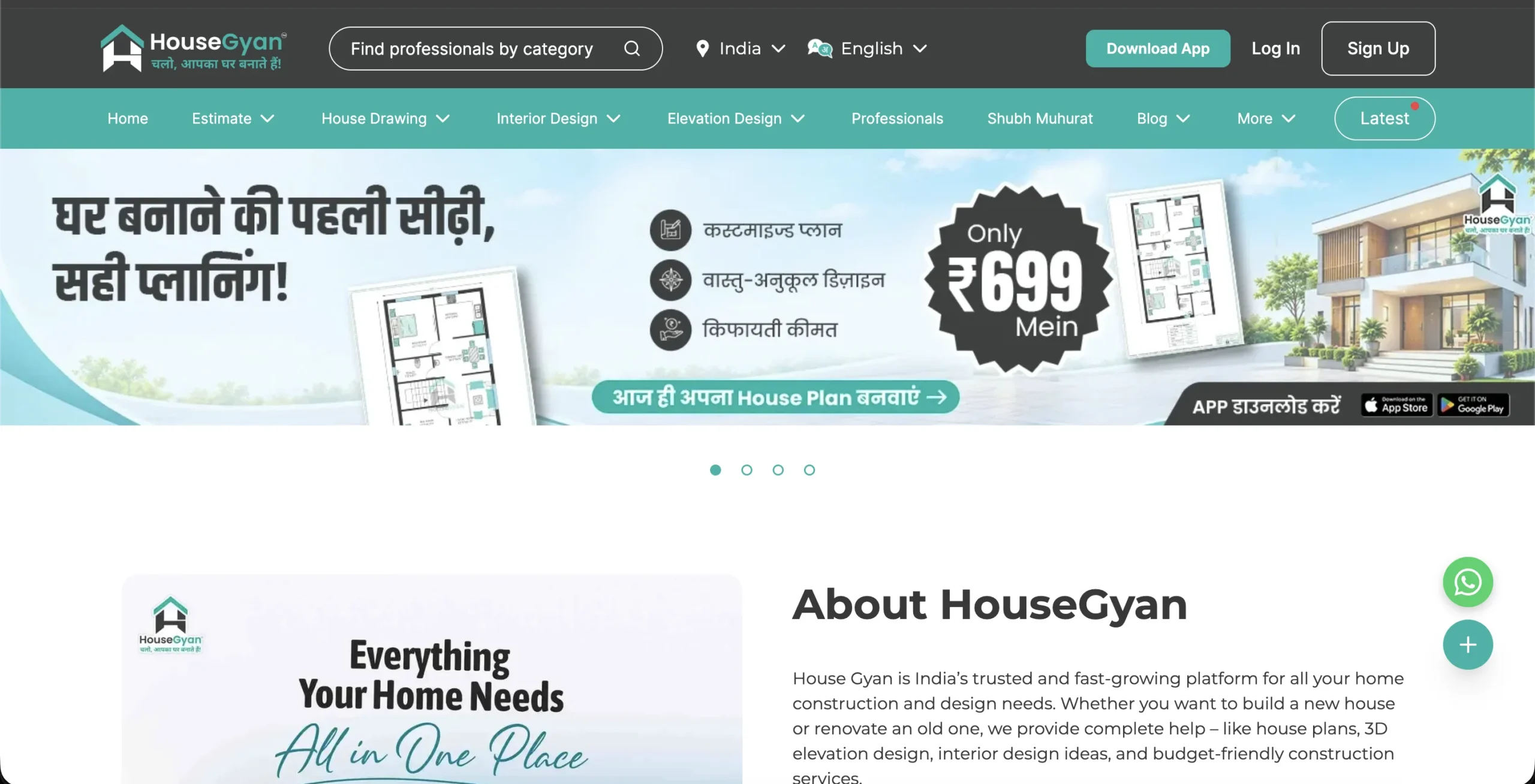
HouseGyan approached us to build the technology for their platform. After we delivered it, their team took charge of the content, and our team has been actively monitoring the website’s performance ever since.
Today, HouseGyan receives more than 100,000 visits a month, along with a large number of organic backlinks.
Think about what that result actually required. If the marketing team had used a shady tool to inflate viewer numbers, the bounce rate would have shown it. The engagement data would have collapsed. Genuine publishers do not link to a site that visitors abandon. Organic backlinks, the kind nobody asks for, only arrive when real people find real value and decide to reference it. That outcome cannot be faked at scale, and it was never produced by inflation.
Carfinder: Trust Borrowed From a Real Voice
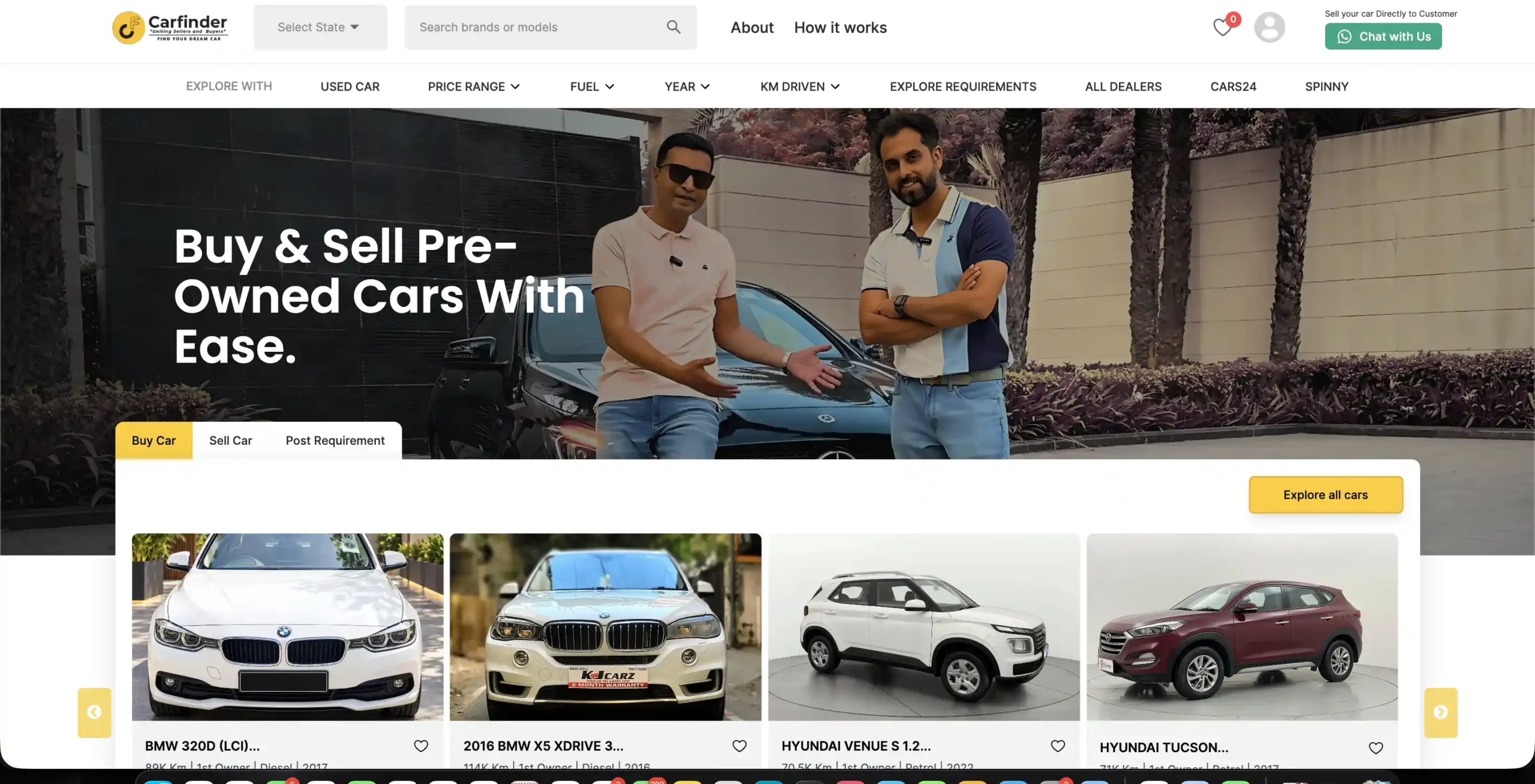
Carfinder is another client we built for. Its founder, Mr. Vasim Khan, endorses the website through his own content on Instagram and YouTube. The website receives referral traffic from those platforms.
What makes this traffic high quality is not the platform. It is the pre-existing trust and interest. People who arrive from a creator they follow are already interested in cars. They come to browse, they explore listings, and that behaviour naturally increases dwell time and scroll depth.
Two very different websites, two very different channels, one common pattern: real interest produces real engagement, and real engagement produces lasting growth.
5. How to Evaluate Traffic Quality Using GA4 and Google Search Console
You do not need expensive tools to tell whether your traffic is any good. You need to look at the right signals, and look at them together.
In Google Analytics 4 (GA4)
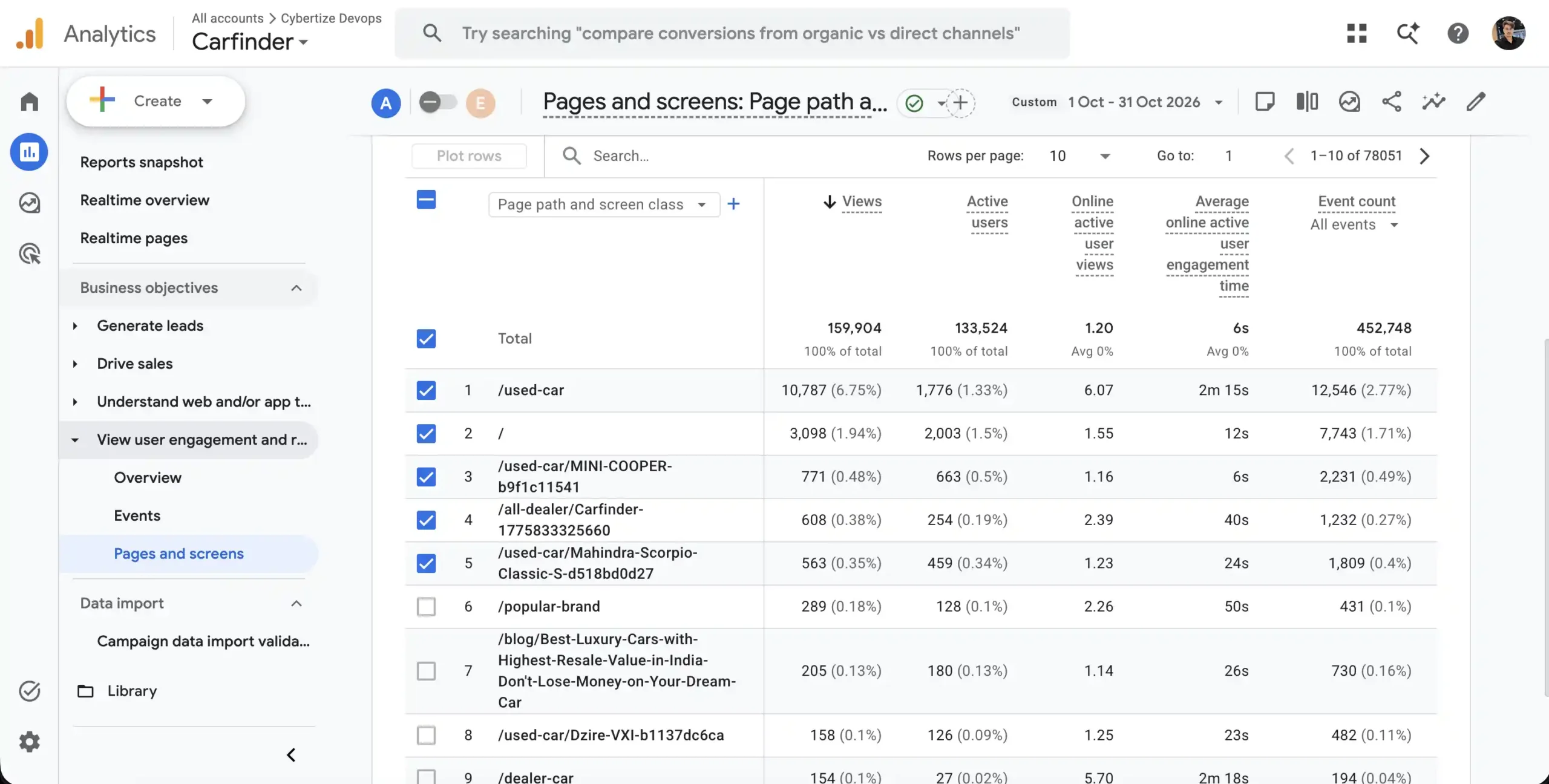
- Engagement rate and average engagement time. In GA4, these replace the old way of thinking about bounce rate. A genuine audience engages. Look at these by landing page, not just sitewide.
- Engaged sessions per user. Do people come back and consume more than one thing?
- Scroll depth. Enable and review scroll events. If visitors never scroll past the first screen, either the traffic is wrong or the page failed to deliver on its promise.
- Pages per session and path exploration. Real prospects explore. Junk visits do not.
- Source/medium quality, not volume. Compare channels on engagement and conversions, not on sessions. A small channel with deep engagement is often your best one.
- Geography, device and time-of-day anomalies. Sudden spikes from irrelevant countries, identical screen sizes or odd hours are classic signs of artificial traffic.
- Key events and conversions by channel. Ultimately, quality shows up in what people do.
In Google Search Console (GSC)
- Queries versus pages. Are you appearing for queries that match what the page actually delivers?
- Click-through rate against position. A page ranking well with a poor CTR may have a weak title. A page with a high CTR but terrible engagement may have a title that over-promises. Both deserve attention.
- Impressions without clicks. This often reveals relevance gaps.
- Query diversity and long-tail growth. Healthy sites gradually earn visibility for a widening set of relevant queries.
- Indexing and coverage trends. A sudden drop in indexed pages is a warning that deserves immediate investigation.
The Combined View
The real insight of High-Quality vs Low-Quality Website Traffic comes when you put the two together. Take a landing page from GSC, then see in GA4 how those visitors behaved. If a query brings clicks but the engagement is poor, you have a mismatch between promise and delivery, and that is precisely what we call low-quality traffic.
6. Does Traffic Quality Directly Influence Google Rankings?
This is the question we get most often while discussing High-Quality vs Low-Quality Website Traffic, and we will give our honest answer.
Search engines publicly say a lot about how they rank content, and they are careful about what they confirm. We do not claim to have a leaked formula. What we have is a decade of observation, a dedicated SEO research team, and a firm belief about where this is going.
Here is our position:
We believe Google, Bing and other search engines pay close attention to how real users interact with results, including click depth, scroll behaviour, time spent and whether the user returns to the results page. Information that surfaced publicly through legal proceedings and documentation leaks in recent years has pointed to click-based systems being part of how search works, and it reinforces what our own observations had already suggested.
Now think about the experience you have had yourself. You search for something, click the top result and the answer is not there. You hit the back button and click another result. According to our SEO research team, that is a bad-quality click, and it is exactly the kind of behaviour search engines want to reduce. This still happens, quite often, even today. But our genuine belief is that Google, Bing and Yahoo are actively working to fix it, because their entire business depends on users trusting what they find.
The practical conclusion is simple. You cannot trick a system that is measuring whether people were actually satisfied. You can only satisfy them.
7. How AI Search and Answer Engines Change the Definition of Quality Traffic
Search is no longer ten blue links. Google’s AI Overviews, ChatGPT, Claude, Perplexity and similar answer engines now summarise, recommend and cite sources directly.
This changes the stakes in three ways.
1. The bar for being cited is higher than the bar for being ranked. An answer engine does not need to show ten results. It needs to be confident in one or two. That puts enormous pressure on these systems to choose sources that are accurate and genuine.
2. Responsibility is higher. Search engines and answer engines carry a huge responsibility to deliver accurate, genuine results, because an AI that confidently quotes a bad source damages trust far more visibly than a poor link on page two. In our view, this is why they are working so actively on their ranking, indexing and citation logic.
3. Quality is judged on more than backlinks. We believe Google, ChatGPT and Claude-style systems weigh content quality, depth of engagement and user behaviour signals alongside traditional authority markers.
Here is the observation that supports this. You have probably noticed that a low-DR website with genuinely good content sometimes gets cited in an AI Overview, while a higher-authority site does not. Domain rating alone cannot explain that. Our opinion is that the reason is the quality of the audience, and the quality of the audience comes from the quality of the content. Pages that satisfy real people produce strong behavioural signals, and strong signals make a source easier to trust.
It is also why a small site with 1,000 genuine monthly visitors can punch above its weight in this new world.
8. Why AEO Visibility and AI Referrals Need Different Measurement Approaches
Many teams are making the mistake of measuring AEO (Answer Engine Optimization) with SEO tools alone. The two are related, but they are not the same thing.
| Area | Traditional SEO | AEO |
|---|---|---|
| Goal | Rank and earn clicks | Be cited, quoted and recommended |
| Primary signal | Position, impressions, CTR | Citations, brand mentions, answer inclusion |
| Visit behaviour | Many clicks, some conversions | Fewer clicks, usually higher intent |
| Where it shows | GSC, GA4 organic | AI platforms, referral sources, brand search lift |
| Typical risk | Ranking drop | Being left out of the answer entirely |
What this means in practice:
- Citation presence is a metric. Regularly test the questions your customers ask across AI platforms and record whether you are cited, how you are described and who is cited instead of you.
- AI referrals should be tracked as their own segment. In GA4, look at referral sources from AI platforms and compare their engagement and conversion with organic search. In our experience, a visitor who arrives after an AI system recommended you tends to arrive with a very clear intent.
- Zero-click does not mean zero-value. Someone may read your brand in an AI answer, never click, and search your name three days later. Watch branded search growth in GSC as a downstream indicator.
- Not all AI visibility produces a session. Do not expect your analytics alone to capture the whole picture. You will need a mix of platform testing, referral tracking and brand-demand signals.
The businesses that win here will be the ones that stop asking “how many visits?” and start asking “how often are we trusted?”
9. How to Attract High-Intent Organic Traffic Through SEO and AEO
This is where our advice is deliberately unglamorous, because the honest answer is not a trick.
Build genuine content, and you will get high-quality traffic.
Here is how we recommend putting that into practice.
- Write for one real person with one real problem. Decide who is reading and what they need to do after reading. If you cannot answer that, do not publish yet.
- Deliver on the headline. Click-bait is a short-term trade that destroys long-term trust. Make the title exactly as promising as the page is useful.
- Answer the question early and clearly. This helps users and also makes your content easier for answer engines to extract and cite.
- Show first-hand experience. Original observations, your own data, real project learnings and honest opinions are the content that machines and humans cannot get anywhere else. Commodity content is the first to be replaced by AI summaries.
- Structure for scanning and for machines. Clear headings, concise definitions, FAQs, lists, tables and sensible schema markup help both readers and AI systems understand your page.
- Earn backlinks by being worth linking to. Original research, useful frameworks and honest case studies attract links that nobody had to be asked for.
- Borrow trust where it is real. Like Carfinder, partner with creators, experts and communities who genuinely believe in what you offer. Their audience comes with built-in interest.
- Keep your technology clean. Fast load times, mobile-friendly design, clean architecture and sensible internal linking all lead to the experience that keeps people reading. This is where our engineering background shapes our SEO view.
- Update what works, prune what does not. Content that no longer helps anyone is a drag on your site’s overall quality.
- Be patient. Genuine traffic compounds. Artificial traffic decays.
10. Traffic Quality Metrics Every Business Should Monitor in 2027
Here is the dashboard we would want to see before approving any marketing report or jumping into the High-Quality vs Low-Quality Website Traffic conclusion
| Metric | Where to find it | Why it matters |
|---|---|---|
| Engagement rate | GA4 | Shows whether visitors found the page worth their time |
| Average engagement time | GA4 | Distinguishes readers from drive-by visits |
| Scroll depth | GA4 | Reveals whether content is being consumed |
| Pages per session / click depth | GA4 | Signals real exploration and interest |
| Returning visitor rate | GA4 | Measures trust and brand pull |
| Conversion rate by channel | GA4 | Connects traffic to business outcomes |
| CTR versus position | GSC | Reveals title and relevance health |
| Query diversity | GSC | Shows growing topical authority |
| Branded search growth | GSC | Captures the downstream effect of AI and content visibility |
| Indexed pages trend | GSC | Early warning for quality or technical problems |
| AI citation presence | Manual and tool-based testing | Measures AEO visibility directly |
| AI referral engagement | GA4 referrals | Tests the quality of AI-sourced visits |
| Organic backlink growth | Backlink tools | Indicates earned trust, not bought trust |
| Pogo-sticking signs | GSC plus GA4 comparison | Flags a gap between what you promise and what you deliver |
Final Word From the Cybertize Team
We have built products for market leaders and MSMEs for almost a decade, and the lesson has never changed: there is no sustainable shortcut to an audience.
The teams that win are not the ones with the biggest traffic graph. They are the ones whose small, genuine audience finds exactly what it was looking for. That audience sends the strongest possible signal to Google, Bing, Yahoo, ChatGPT, Claude and every answer engine that follows, because it behaves the way real satisfied people behave.
So stop chasing numbers. Build something worth reading. Whether it brings you 1,000 visitors a month or 100,000, make sure every one of them is there for a reason.
If you want a technology partner that builds with SEO and AEO in mind from day one, or an honest audit of the quality of your current traffic, Cybertize Technologies Private Limited would be glad to help.
Frequently Asked Questions (FAQs)
The questions we got more than 10+ AEO clients while having the High-Quality vs Low-Quality Website Traffic conversation:
1. What is website traffic quality?
Website traffic quality describes how relevant, engaged and valuable your visitors are to your business. High-quality traffic consists of people with real interest in your topic who read, explore and eventually convert. Low-quality traffic consists of bots, irrelevant clicks and short, empty visits that never lead anywhere.
2. What is the difference between high-quality and low-quality website traffic?
High-quality traffic is intentional, relevant and engaged, with strong scroll depth, meaningful time on page and a path toward conversion. Low-quality traffic is accidental, artificial or misled, and it shows up as instant exits, no interaction and zero business value.
3. Is more website traffic always better for SEO?
No. More traffic only helps if it is relevant and engaged. A large volume of irrelevant visits can raise bounce rates, distort your analytics and weaken the quality signals around your site. In our experience, a smaller, genuine audience is a stronger foundation for long-term growth.
4. Are traffic exchange websites like HitLeap safe to use?
In our opinion, no. Traffic exchanges deliver visits from people or scripts that have no interest in your content. This tends to inflate bounce rates and weaken engagement, and over time it can hurt your visibility and even your indexing. HitLeap’s closure reflects how fragile that model is.
5. Does low-quality traffic hurt my Google rankings?
We believe it can. Search engines care whether users are satisfied, and visits that end in an immediate return to the results page send a poor signal. While no one outside Google can confirm every ranking factor, our research and client observations consistently show that artificial or mismatched traffic does not help, and often harms, long-term performance.
6. How can I check the quality of my website traffic in GA4 and Google Search Console?
In GA4, review engagement rate, average engagement time, scroll depth, pages per session, returning users and conversions by channel. In Google Search Console, compare queries, click-through rate, positions and indexing trends. Then combine both views to find pages where search visits arrive but engagement is poor, which signals a mismatch between promise and content.
7. Can a small website with low Domain Rating get cited by AI search engines?
Yes, and we see it happen regularly. In our opinion, this is because answer engines weigh content quality and genuine user engagement alongside backlinks. A low-DR site with helpful, trustworthy content that satisfies real visitors can earn citations that stronger domains miss.
8. What is AEO, and how is it different from SEO?
AEO, or Answer Engine Optimization, focuses on getting your content cited and recommended inside AI-generated answers on platforms such as Google AI Overviews, ChatGPT, Claude and Perplexity. SEO focuses on ranking in search results and earning clicks. They overlap, but they need different measurement: SEO tracks rankings and CTR, while AEO tracks citations, brand mentions and AI referrals.
9. How do I measure AI referral traffic and AEO visibility?
Segment referral sources from AI platforms in GA4 and compare their engagement and conversions against organic search. Alongside that, regularly test your target questions on major AI platforms to check whether you are cited, and watch branded search growth in Search Console as an indirect signal of AI-driven awareness.
10. How can I attract high-intent organic traffic without paid tools or shortcuts?
Publish genuine, first-hand content that solves a specific problem, deliver exactly what your headline promises, structure pages clearly for both readers and answer engines, earn backlinks through original insights, and partner with credible voices who bring an interested audience. It is slower than shortcuts, but it compounds, and it is the only approach that has held up across the projects we have built over the last decade.