Table of Contents
A lot of founders ask us the same thing: “I have written good content, so Why aren’t Google AI Overviews citing my website?”
We have been asking ourselves the same question at Cybertize, so this blog is our honest take. No magic tricks here. Just what we believe and what we are seeing.
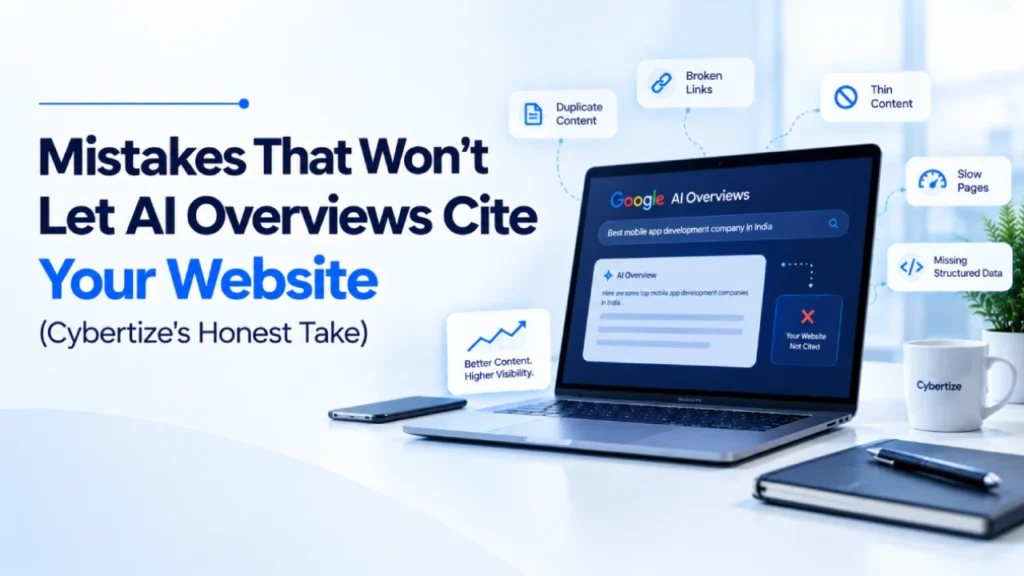
AI Overviews Citations Mistakes you may be doing:
A note before we start: AI citations are not guaranteed by any single SEO factor. Google’s official guidance says pages must be indexed and eligible to appear in Search, but even meeting the requirements does not guarantee that Google will show them in AI Overviews.
1. You are ignoring Domain Authority
This one is not going to sound nice, but it is what it is.
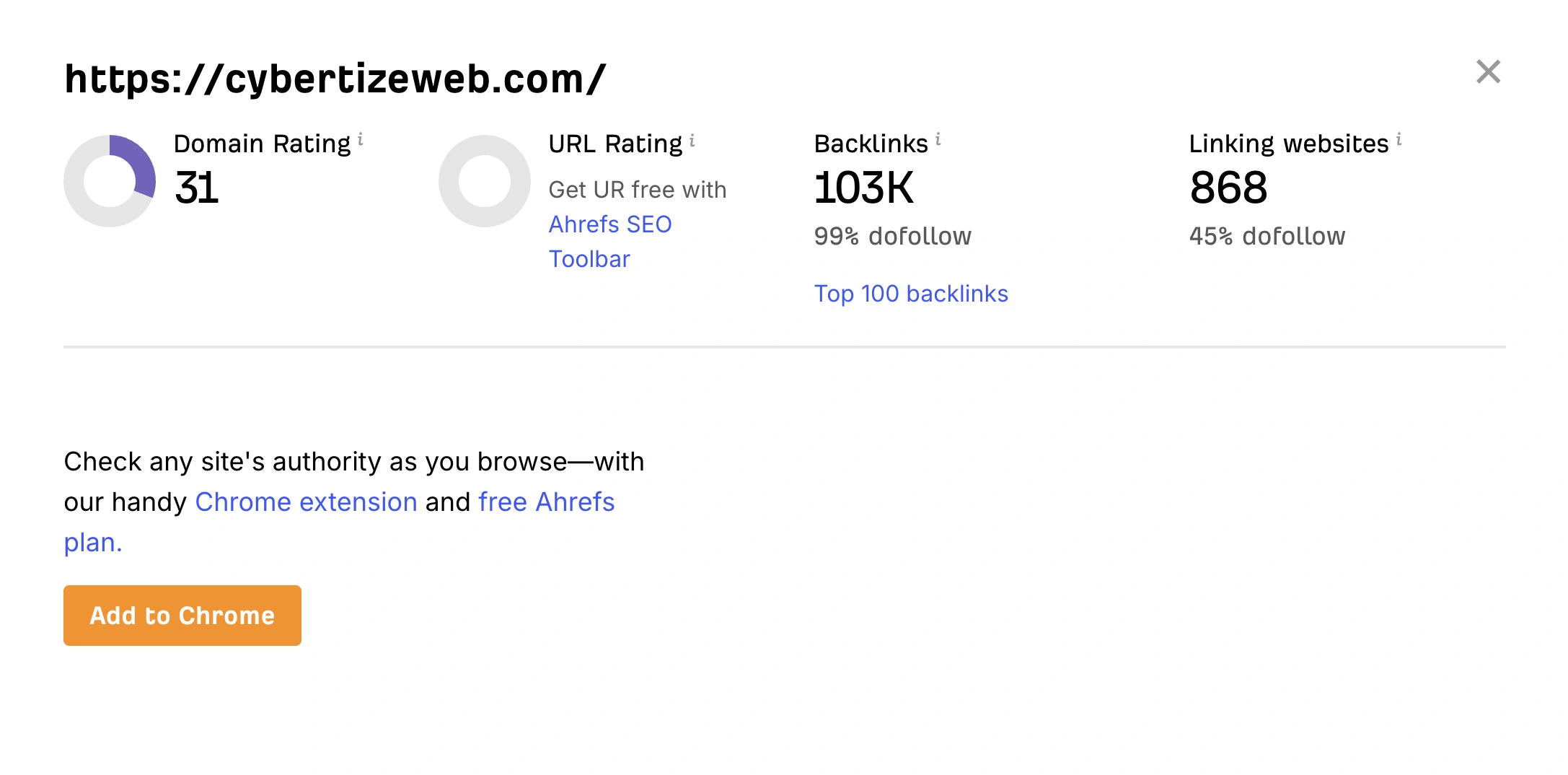
Our CTO, Shubham Mukherjee, believes that overall website authority is one of the most important foundations for organic search visibility and AI citations. A website needs more than good individual articles. It needs a history of credible references, relevant backlinks, brand recognition and demonstrated subject knowledge. Tools like Moz DA and Ahrefs DR help us monitor this progress, but they are indicators, not Google’s actual ranking scores.
In the old days, a page with decent content could rank even if the website had little authority. Over the last 5 years, Google has changed its indexing and algorithms a lot. Now just writing good content does not get you ranked. The website behind the content needs authority too.
Think of Domain Authority like a local politician recommending you to a prestigious college. If a respected politician introduces you to the college principal and says, “This person is trustworthy and deserves a chance,” the college is more likely to take you seriously.
Similarly, when established and trusted websites link to your website, they pass a signal of credibility to search engines. The more trustworthy websites that recommend you, the stronger your website’s reputation becomes.
Domain Authority (DA) is essentially an estimate of how strong that reputation is and how likely your website is to compete in search rankings.
See an example how some websites have provided backlink to one of our research article:
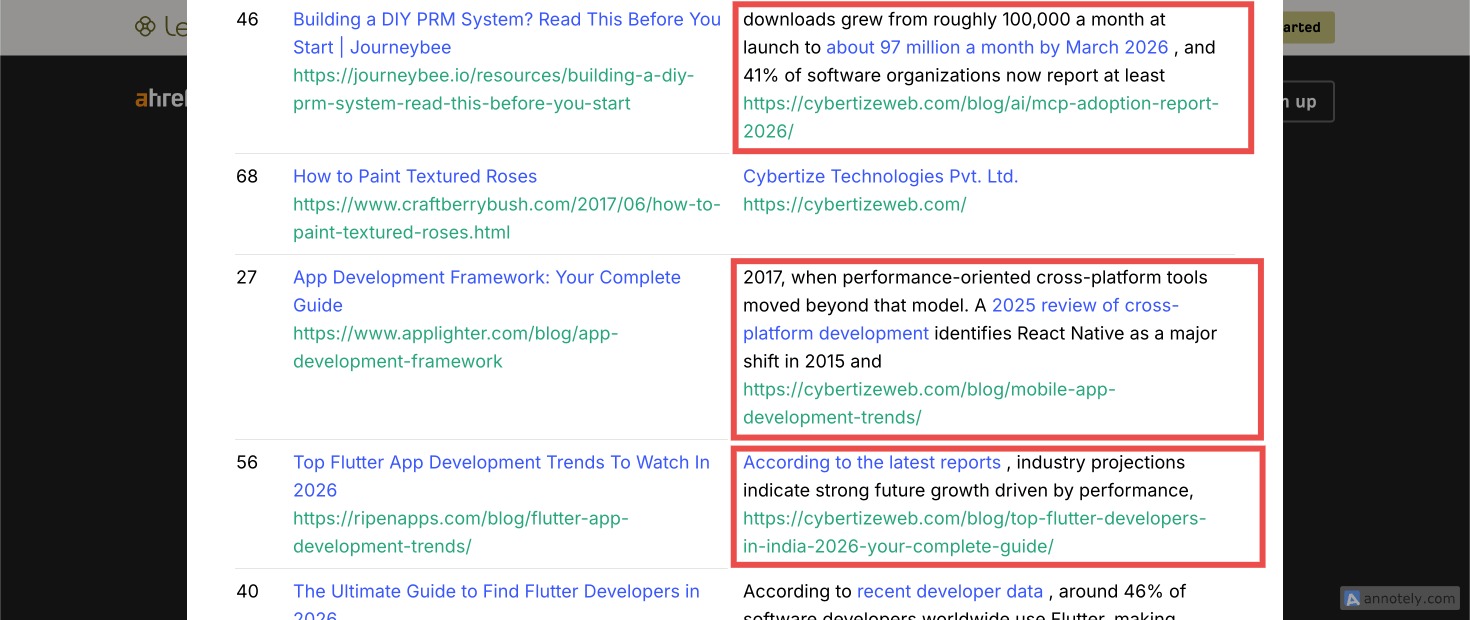
These links send credibility signals because trusted websites are referencing relevant content on our website.
You need to write well researched content, your first hand opinion and supporting proofs so that people read and actually get value out of your content which, Write content worth reading and linking and authority is the byproduct, build authority first by investing good amount of time in content / research / analysis / opinion.
It is tough, and it takes time, but trust the process it will give you better results eventually if everything goes right and your website avoids search policy violations
2. You are writing commodity content
Commodity content is the same thing every other website already says. If you write “What is AI based software testing?”, you are competing with many big companies that have huge authority and have already written it better.
Google itself says it wants helpful content that is rich in knowledge and shows first-hand experience. So do not repeat what the web already has. Give your own opinion and your own take.
Here is an example from us:
- Commodity: “What is AI-based QA / software testing?”
- Non-commodity: “How Cybertize does AI based quality assurance, and the benefits we get as an organisation to help our clients deploy with Reduced security risks.”
The first is available everywhere. The second comes from real experience, and it can actually help a founder or a product planner make a decision. That is the kind of content people want to read, and the kind AI wants to cite.
Here are three industry examples:
1. Fintech
Commodity: “What is digital payment processing and how does it work?”
Non-commodity: “How our fintech team reduces payment failures, strengthens transaction security, and helps businesses deliver a smoother checkout experience.”
2. E-commerce
Commodity: “What is an e-commerce website and what features should it have?”
Non-commodity: “How we build e-commerce platforms that handle high traffic, reduce cart abandonment, and make product discovery easier for customers, based on challenges we have encountered in real projects.”
3. Healthcare
Commodity: “What is healthcare software development and why is it important?”
Non-commodity: “How our healthcare development approach balances patient data privacy, clinical workflows, and system reliability to help healthcare organisations build software that medical teams can actually depend on.”
The underlying lesson for founders: Don’t just publish information that anyone can generate from Google. Publish your organisation’s thinking, processes, experiences, decisions, mistakes, and practical learnings. That’s what makes content genuinely difficult to replicate and more useful to readers.
3. You are falling into the spammy backlinks trap
You have seen those messages: “Pay $10 and we will give you 500 backlinks.”
Please don’t. It will not help you, and it can hurt your website badly.
Backlinks and citations are about quality, not quantity. Write content that is good enough to earn a link naturally. Yes, it is slow. But a shortcut can destroy your genuine hard work and put you behind.
Think of backlinks like recommendations for your business. If a respected industry leader recommends your startup, people are more likely to trust you. But if 500 unknown people suddenly start recommending you, especially from suspicious backgrounds, those recommendations don’t build much credibility.
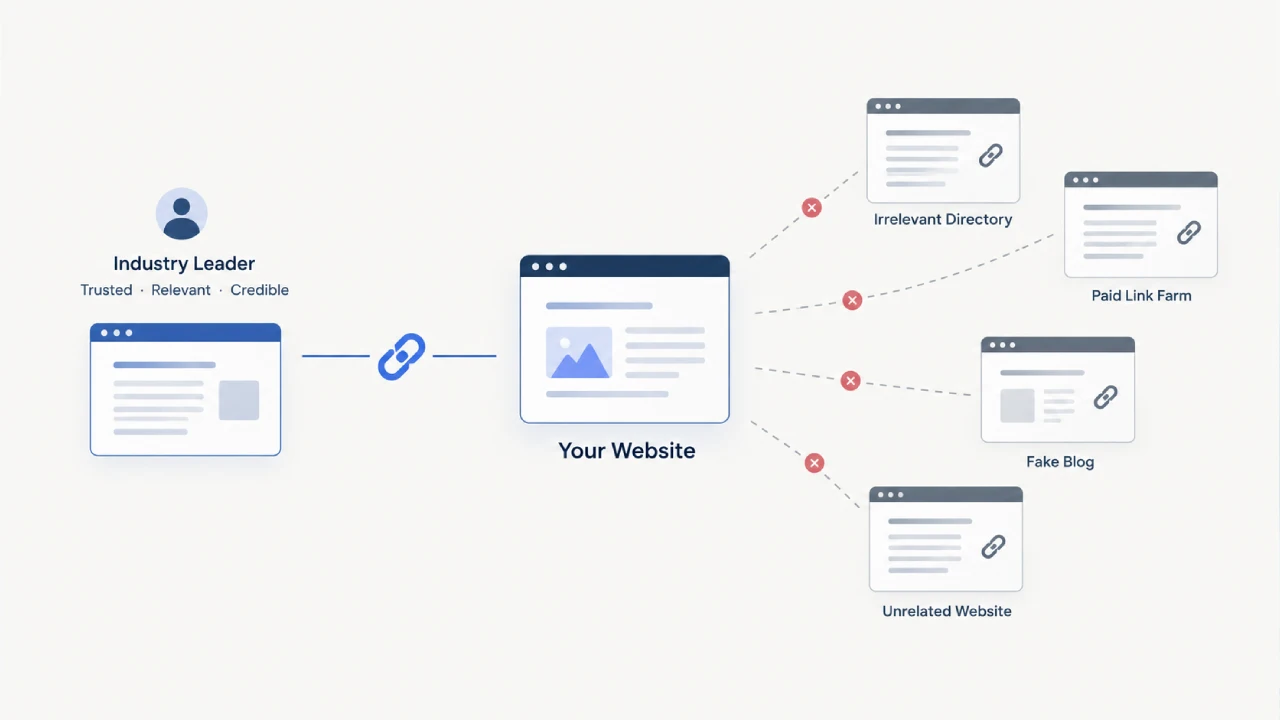
That’s how spammy backlinks work. Links from irrelevant directories, paid link farms, fake blogs, and unrelated websites can make your backlink profile look manipulative. Google may simply ignore such links, but if you deliberately use manipulative link schemes, your website can face ranking-related penalties. If you are paying for advertising or sponsored coverage, make sure the links are properly marked. Paying for genuine exposure is different from buying backlinks to manipulate rankings.
Realistic ways Indian startups can earn good backlinks
1. Publish original industry research
Conduct a survey, analyse industry data or publish a useful report. For example, a fintech startup could publish India’s Digital Payment Failure Trends: 2026 Report. Business publications, bloggers and industry researchers may cite the findings.
2. Get featured in genuine industry publications
Share meaningful company developments, expert opinions, product innovations and founder insights with publications such as YourStory, Inc42, Entrepreneur India or relevant trade publications. Earn editorial coverage rather than buying guaranteed links.
3. Create useful resources that others want to reference
Build free calculators, comparison guides, technical documentation, templates or industry benchmarks. For example, a SaaS startup could create a free GST invoice calculator that accounting blogs and business resource websites naturally recommend.
4. Build genuine industry partnerships
Collaborate with incubators, universities, startup communities, technology partners and industry associations. Participate in events, publish joint case studies or contribute expert articles. When these organisations reference your contribution on their websites, you can earn relevant backlinks.
The takeaway: Don’t chase 1,000 backlinks. Aim to earn 10 genuine recommendations from websites that are relevant to your industry. One meaningful editorial mention can be more valuable than hundreds of links from random websites.
4. Your structure and schema are messy
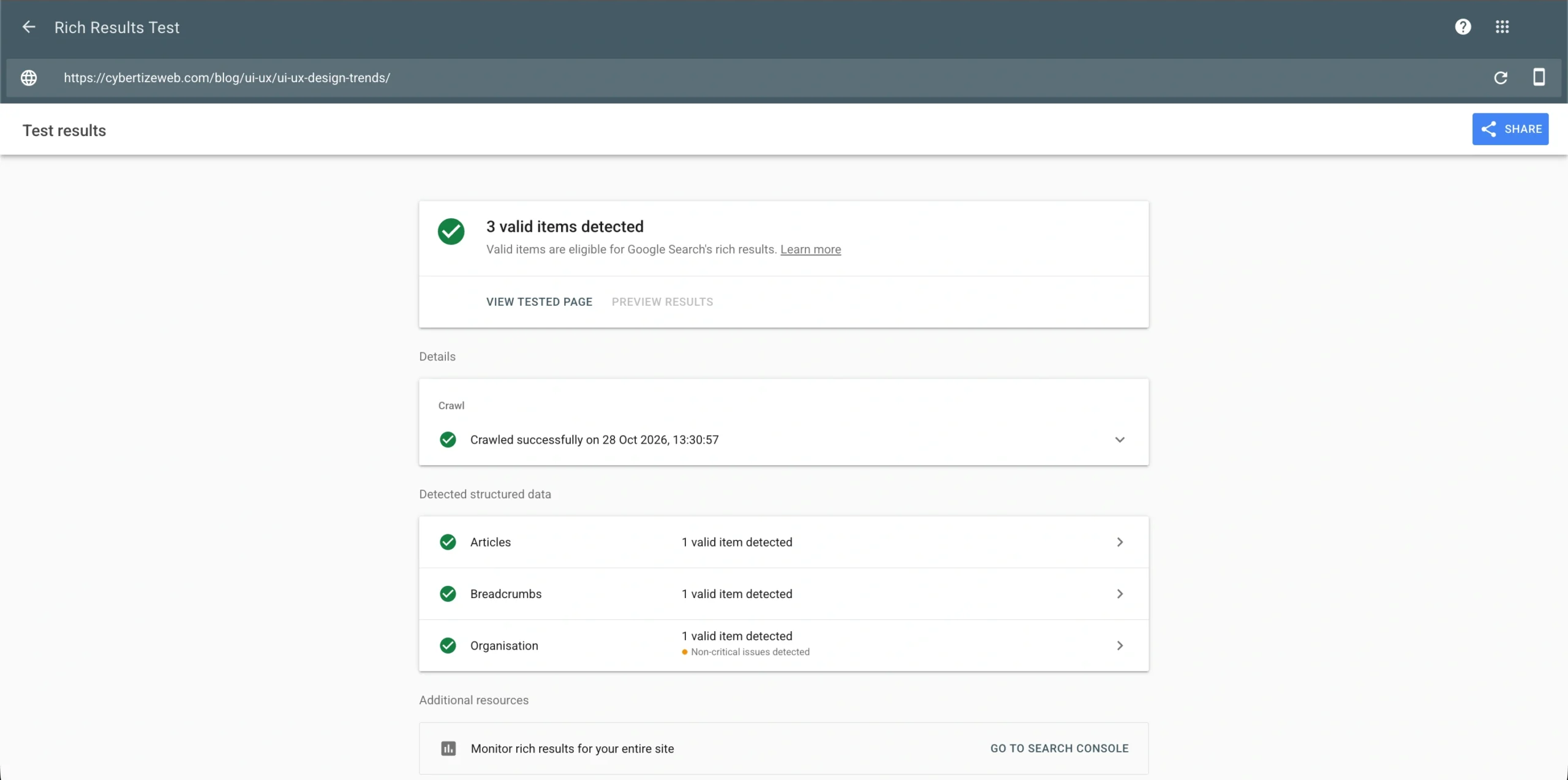
Schema and clean structure do not guarantee ranking or citation. We want to be clear about that. But they are essential.
Structured data helps machines understand your page quickly. So make it clean:
- One clear H1, then proper H2s and H3s
- Relevant schema (Article, Organization, Author)
- Short, direct answers near the top of each section
One more thing from our side: check that you are not blocking crawlers by mistake (robots.txt, noindex tags, or content that only loads with heavy JavaScript). If they cannot read you, they cannot cite you.
5. You are not taking E-E-A-T seriously
Experience, Expertise, Authoritativeness and Trust. Don’t just make claims, back them up. Add supporting links for your statements, mention who wrote the article, and show their experience. This marks your content as genuine.
Our small addition: keep your content updated and mention the date. Old content with no author looks less trustworthy.
Website Trust & E-E-A-T Mini Checklist
Use this checklist to make your website more credible, transparent and trustworthy to both readers and search engines.
- Credentials: Mention relevant qualifications, professional experience, certifications or industry knowledge.
- Reliable Sources: Link to original research, government data, official reports and credible references wherever factual claims require support.
- Last Updated Date: Display the actual publication and last substantial update dates. Don’t change dates just to make old content appear fresh.
- About Us Page: Clearly explain who you are, what your organisation does, who runs it and why readers should trust you.
- Real Client Proof: Showcase genuine client testimonials, case studies, project outcomes, portfolio examples and measurable results, with permission.
- Contact Information: Provide a genuine business address, working email, phone number or other accessible contact channel.
- Editorial Transparency: Explain your content review process, corrections policy and how your articles are researched.
Remember: Trust cannot be manufactured through a checklist. These elements should reflect real people, genuine expertise, verifiable work and transparent business practices.
6. You are not using Google Search Console’s new feature
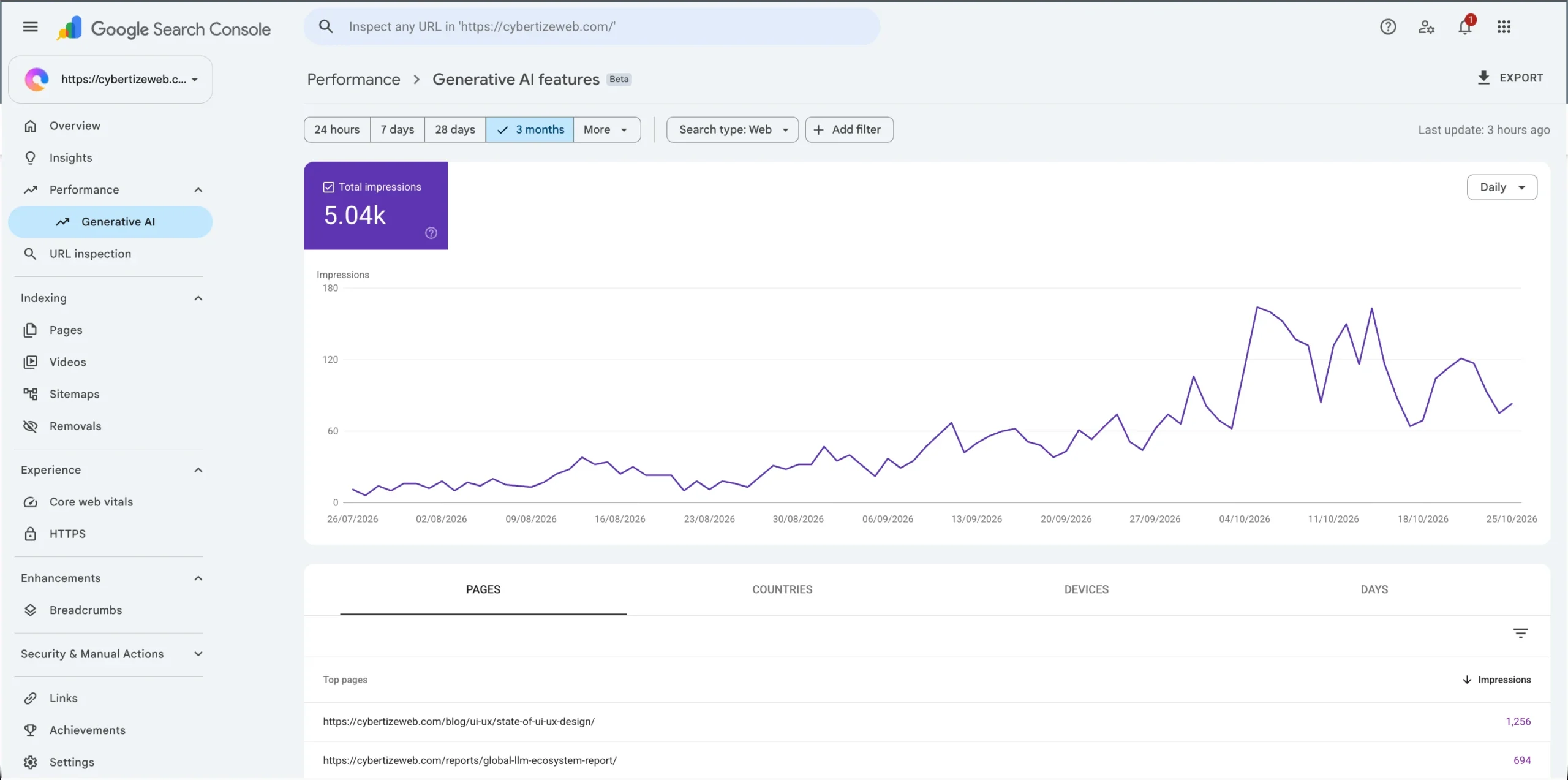
Google launched dedicated Search Generative AI performance reports on June 3, 2026, covering AI Overviews, AI Mode and Discover. They show impressions, pages, countries, devices and dates, but not clicks or CTR, and AI Overviews and AI Mode cannot be separated. The rollout reached all sites worldwide by the end of August. Most people will not even look at it. Use it. See where your pages appear, find what they have in common, and plan your next content around that.
Our Hottest Take: Work on Authority First
If you are a new website, authority is your first job. Plan a content strategy that attracts genuine organic citations from bloggers, journalists, companies and products.
Why? Because you need authority to enter the top lobby, where you can actually compete for your desired keyword. Without it, you are standing outside the door.
One honest note: Domain Authority is not a Google metric. It was developed by Moz. Ahrefs has its own similar metric called Domain Rating (DR). In our experience, and According to Cybertize’s experience and opinion overall site authority (links, brand mentions, topical depth) matters most, and DA or DR is just a scoreboard which help google to factor where you stand and not the only metric to rank. Still, we find these tools useful as a scoreboard. Check your Ahrefs or Moz score regularly to see where you stand and whether your content is earning backlinks.
How to Measure Your AI Search Visibility
Traditional SEO measures how often your website appears in Google search results. AI visibility requires an additional layer of measurement: Are AI tools actually mentioning and citing your website when people ask relevant questions?
Here is a simple two-part approach:
1. Monitor Google Search Console
Use Google Search Console to track:
-
Total impressions and clicks.
-
Search queries bringing visitors to your website.
-
Changes in organic visibility over time.
-
Which pages are gaining or losing search traffic.
This helps you understand your traditional search performance, which can support your broader AI visibility strategy. However, Search Console does not provide a dedicated AI citation report.
2. Run a monthly AI citation test
Create a list of 10 questions your potential customers are likely to ask. Once a month, ask the exact same questions to ChatGPT, Gemini and Perplexity. Record whether your brand or website appears in their answers and, more importantly, whether they cite your actual content.
For example, a software development startup might ask:
-
Which are the best AI development companies in India?
-
How do I choose a software development partner?
-
Which companies offer custom AI chatbot development?
-
What should businesses look for in a healthcare software development company?
Maintain a simple spreadsheet:
| Question | ChatGPT | Gemini | Perplexity |
|---|---|---|---|
| Best AI development companies in India | Cited / Not cited | Cited / Not cited | Cited / Not cited |
| Healthcare software development partners | Cited / Not cited | Cited / Not cited | Cited / Not cited |
| Custom chatbot development services | Cited / Not cited | Cited / Not cited | Cited / Not cited |
Also record the cited URL, competing brands mentioned and the date of testing. AI answers can vary between runs, so treat this as a directional benchmark rather than a definitive ranking.
The founder’s takeaway: Don’t just measure how many people visit your website. Start measuring whether AI systems recognise your brand as a credible source when potential customers ask questions related to your industry.
Our Unfiltered Opinions, Straight from the Cybertize AEO Team’s Desk
1. Are SEO and AEO really two disciplines or one?
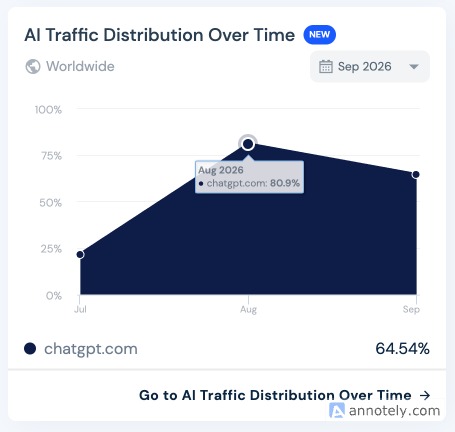
At Cybertize, we consider SEO and AEO closely connected disciplines rather than completely separate activities. Traditional search visibility helps people discover your website, while AI visibility helps your brand and content become part of generated answers. Both require useful content, technical accessibility, credibility and a clear understanding of what your audience wants.
Example: AI traffic distribution of one of our clients:
2. Should a new site write 50 average articles or 5 excellent ones?
This one has a one-line answer: write 5 excellent articles with powerful, strong opinions. That’s it.
3. Why we think AI engines favour established brands, and what a small brand can do instead.
AI engines and AI Overviews are meant to give accurate, on-point answers, so they rely on strong trust signals and domain authority to judge sources. As a result, the content gets pulled from highly authoritative websites, which are often brands.
You need to understand one thing: these sites aren’t cited because they are brands. They’re cited because they hold authority, which they’ve built over years. If you don’t have that authority yet, you need to invest a good amount of time in content and in building authority to increase your citability.
4. llms.txt, FAQ stuffing, and prompt-style headings are useless.
We don’t recommend spending time on llms.txt files, FAQ stuffing or unnatural prompt-style headings as shortcuts to Google AI Overviews. Google has clarified that these special files and additional markup are not required for visibility in its AI search features. Other AI platforms may have different approaches, but our advice remains simple: invest in useful content, technical accessibility and genuine expertise instead of chasing every new AEO hack.
5. Which metric you actually trust, and why you still glance at DR.
At Cybertize, we regularly use Ahrefs because it helps us analyse backlinks, referring domains and our website’s overall link profile. We also monitor Domain Rating to understand how our backlink profile is progressing. But let’s be clear: DR is an Ahrefs metric, not a Google ranking factor. We use it as a comparative benchmark, not as a measure of Google’s actual trust in our website.
Last but not least: Have Patience
Authority building & earning citations in AI Overviews takes time. Whether it is Answer Engine Optimisation (AEO) or Search Engine Optimisation (SEO), the rules of the game are the same.
Keep publishing useful, experience-backed content and earning genuine references. These efforts can improve your website’s credibility and visibility, but AI citations are never guaranteed. Measure your progress, learn from what works and keep improving.