SaaS Product Development Services Across the Product Lifecycle
SaaS Application Development Company, Cybertize Technologies, does more than implementing a list of features. It requires connecting business objectives, user needs, product decisions, engineering, and post-launch learning.
Our SaaS product development services can support the following stages.
Product Discovery and Requirements Definition
We begin by understanding the business problem, target customers, intended workflows, revenue model, existing systems, and technical constraints.
The output can include a product requirements document, feature inventory, user roles, key workflows, integration requirements, and initial technical considerations.
Market and User Needs
Product assumptions need to be translated into testable requirements. We help identify the primary user journeys and define what the application must enable users to accomplish.
Market research and user validation may be included in the engagement where required, with research depth agreed during planning.
Feature Prioritization and MVP Scope
Features are prioritized according to user value, business objectives, dependencies, risk, and implementation effort.
The result is a defined first release with clear inclusions, exclusions, and acceptance criteria. This helps prevent the initial scope from expanding into a complete platform before the core workflows have been tested.
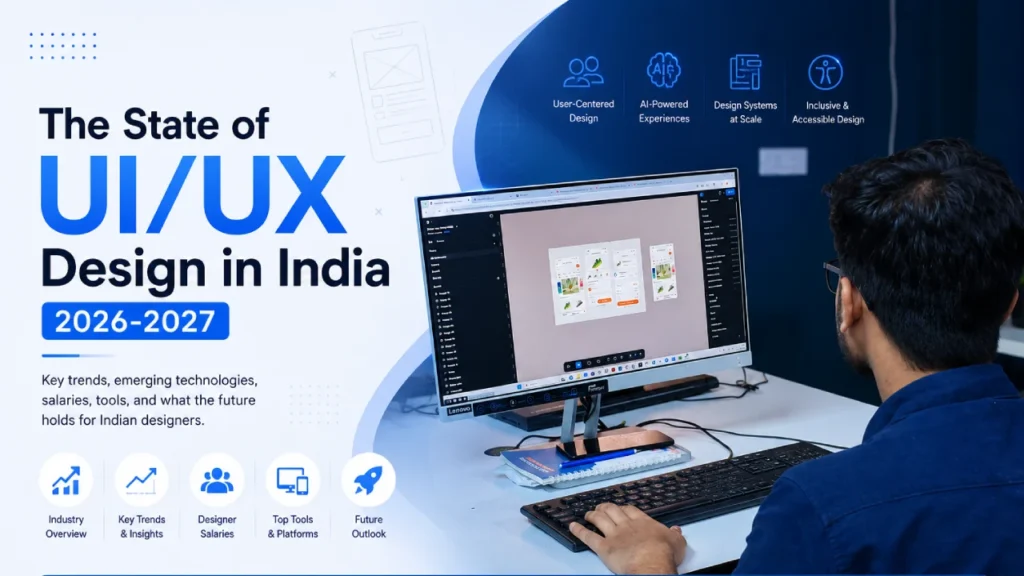
User Journeys, Wireframes, and Interface Design
We map how users enter the application, complete tasks, manage their accounts, and navigate the interface. Wireframes and UI designs help establish page structures, states, and interactions before engineering begins.
Architecture and Technology Selection
We evaluate suitable frontend and backend technologies, database models, tenancy requirements, authentication, integration patterns, cloud infrastructure, and operational needs.
The objective is not to use the most complex stack. It is to select an approach that fits the product’s requirements and can be maintained by the team responsible for it.
Iterative Development and Testing
Development proceeds in manageable increments. Each iteration focuses on defined functionality, integration requirements, and testing criteria.
This approach helps product stakeholders review working software, clarify requirements, and identify issues before they affect larger parts of the application.
Deployment and Launch Preparation
Launch preparation may include production configuration, environment management, data migration, access permissions, monitoring, backup procedures, release checks, and operational documentation.
The exact deliverables depend on the product and deployment scope.
User Feedback and Product Analytics
After launch, product teams can use user feedback, support requests, usage patterns, and available analytics to identify friction and opportunities for improvement.
Analytics should be selected around meaningful product questions, with appropriate attention to privacy and data collection requirements.
Continuous Improvement and Feature Expansion
Subsequent releases may introduce advanced workflows, additional integrations, new pricing plans, reporting, automation, or performance improvements.
A phased approach helps businesses validate assumptions and direct investment toward demonstrated needs. It cannot guarantee product-market fit or commercial success, but it provides a more structured basis for product decisions.
Custom SaaS Application Development for Business-Specific Workflows
Custom SaaS platforms are useful when a business model, customer experience, or operational workflow cannot be fully accommodated by off-the-shelf software.
A custom SaaS application can provide a shared product experience while supporting configurable features, permissions, integrations, and workflows for its intended users.
Examples include:
- B2B workflow and operations platforms: Task routing, approval chains, service requests, team coordination, and operational reporting.
- CRM and customer management products: Lead tracking, customer records, communication history, sales pipelines, and account management.
- HR and employee management systems: Employee records, leave workflows, onboarding, attendance integrations, and workforce dashboards.
- Inventory and order management software: Stock visibility, order processing, warehouse workflows, supplier records, and status tracking.
- Booking and scheduling platforms: Availability management, appointment booking, calendars, notifications, and cancellation workflows.
- Reporting and analytics applications: Consolidated data, configurable dashboards, scheduled reports, and business performance monitoring.
- Industry-specific SaaS products: Specialized workflows, domain-specific records, and configurable rules for a defined industry.
- Customer and partner portals: Account access, document exchange, requests, transaction history, and self-service operations.
The product’s feature set should follow its intended users and business model. Some applications require extensive tenant-level customization, while others benefit from standardized workflows and centrally managed features.
During planning, we define which functionality should be shared across customers, which settings should be configurable, and which requirements justify custom implementation.
SaaS Architecture and Multi-Tenancy
The architecture of a SaaS product influences how it handles customer separation, security, performance, deployment, and future change. These decisions should be made in relation to the product’s real requirements rather than by defaulting to a particular architecture.
Multi-Tenant vs. Single-Tenant Architecture
Multi-tenant architecture: Multiple customer organizations use the same application platform. Tenant-aware data access and authorization help maintain separation, while shared infrastructure can simplify deployment and updates.
Single-tenant architecture: A customer receives a dedicated application environment or deployment, depending on the design. This can support specific isolation, customization, or operational requirements but may introduce additional infrastructure and maintenance costs.
Hybrid approaches are also possible. For example, an application may share its frontend and control plane while isolating selected customer workloads or databases.
The right choice depends on data sensitivity, contractual requirements, customer expectations, workload characteristics, customization needs, and operating costs.
Tenant Data Isolation
Tenant isolation must be enforced by the application and its data-access mechanisms. Depending on the architecture, this can involve tenant-specific database schemas, separate databases, tenant-aware queries, or other isolation controls.
We consider how tenant identity is established, how permissions are evaluated, how data access is restricted, and how isolation is tested. Merely adding a tenant identifier to a database record is not, by itself, a complete security strategy.
Authentication and Authorization
Authentication establishes who the user is. Authorization determines which actions and resources the user can access.
A SaaS platform may require organization-level roles, resource permissions, administrative privileges, session management, and audit records for sensitive actions. These controls should be designed alongside the application workflows rather than added as an afterthought.
Database and Application Architecture
Data models should reflect the product’s core entities, relationships, reporting requirements, and transaction patterns.
PostgreSQL or MySQL may suit relational workflows and structured transactions. MongoDB may suit particular document-oriented data models. Redis can support selected caching, session, or fast-access use cases.
Database selection should follow data access patterns, consistency requirements, expected scale, operational expertise, and cost.
API Design and Integrations
A maintainable SaaS backend needs clearly defined API contracts, input validation, authentication, authorization, error handling, and versioning strategies where appropriate.
For asynchronous work, event-driven integrations or queues can help separate user-facing requests from background processing. Retry rules, idempotency, and failure handling are important when tasks involve payments, notifications, imports, or external services.
Scalability and Performance
Scalability may involve improving inefficient queries, adding appropriate indexes, introducing caching, tuning application workers, separating background jobs, or adjusting cloud resources.
Horizontal scaling and distributed services can be useful, but they also add operational complexity. The architecture should evolve according to measured performance and workload patterns.
Logging, Monitoring, and Observability
Application logs, metrics, traces where appropriate, alerts, and operational dashboards help teams identify errors and investigate production problems.
Useful monitoring should cover application health, API latency, failed jobs, database performance, resource usage, and critical business workflows.
Backup, Recovery, and Secrets Management
Backup frequency, retention, recovery objectives, and restoration procedures should be defined according to business requirements.
Sensitive credentials and API keys should be managed through suitable secrets-management mechanisms rather than being hardcoded into application source code. Production access and configuration should be controlled and documented.
Infrastructure Automation and Deployment Pipelines
Infrastructure as code and CI/CD pipelines can make deployments more repeatable. Depending on the product, the delivery process may include automated tests, environment-specific configuration, release approvals, database migration procedures, rollback planning, and deployment monitoring.
The goal is to make production changes controlled, traceable, and appropriate to the application’s operational risk.
SaaS Subscription, Billing, and Monetization
A subscription model connects commercial rules with application access. Customers should receive the features and usage allowances associated with their plans, while administrators need visibility into subscription status and payment events.
We can implement subscription workflows that support:
- Free trials and paid plans: Trial periods, plan selection, eligibility rules, and conversion workflows.
- Recurring billing integrations: Integration with a suitable payment or subscription provider.
- Plan and feature management: Configuration of plans, limits, and feature entitlements.
- Usage-based billing: Usage measurement and billing inputs where the business model supports metered pricing.
- Upgrades and downgrades: Plan changes, effective dates, and any relevant proration rules supported by the selected provider.
- Renewals and cancellations: Subscription status changes, renewal handling, and cancellation workflows.
- Invoices and payment status: Payment records, invoice references, and visibility into successful or failed transactions.
- Plan-based access control: Application features and usage limits linked to subscription entitlements.
- Administrative reporting: Subscription summaries, payment status, plan distribution, and relevant revenue reports.
How Subscription Logic Should Be Designed
The billing provider, payment records, and application permissions need a consistent integration strategy. For example, a delayed payment notification should not automatically produce contradictory subscription states across the application.
Webhook verification, duplicate-event handling, retry behavior, and reconciliation procedures can help maintain consistent records. Sensitive payment information should be handled according to the selected provider’s integration model.
Payment processing, recurring billing availability, tax calculations, invoicing obligations, and local payment methods vary by provider, country, and business model. These requirements should be confirmed during discovery for businesses operating in India, the USA, or the UAE.
SaaS Development Agency and Team Engagement Models
Different products require different delivery arrangements. A founder building an initial MVP may need a defined project team, while an established SaaS company may need additional engineering capacity or targeted modernization.
Cybertize can structure a SaaS development engagement around the agreed scope and delivery responsibilities.
End-to-End SaaS Product Development
Suitable for businesses that need coordinated support across discovery, design, architecture, development, testing, and deployment.
This model works well when the organization wants one delivery partner to manage an agreed product scope across multiple stages.
Dedicated SaaS Developers
Suitable for teams that already have product management and technical leadership but need additional development capacity.
Responsibilities, working arrangements, required expertise, and reporting should be agreed before engagement. A dedicated SaaS software developer may work within an existing team or focus on a defined component.
Product Engineering Team Augmentation
Suitable when an internal team needs additional frontend, backend, mobile, QA, or DevOps capacity.
This model can support existing sprint planning and engineering processes, provided responsibilities, code review, documentation, and communication are clearly established.
Fixed-Scope MVP Development
Suitable when requirements and acceptance criteria are sufficiently clear to define a bounded first release.
The scope should explicitly state deliverables, exclusions, dependencies, review stages, and the process for handling changes.
Feature-Based Development
Suitable for businesses that want to add specific functionality, such as reporting, integrations, billing workflows, or new user roles, to an existing product.
Each feature can be assessed against its dependencies, technical risks, acceptance criteria, and release requirements.
SaaS Modernization and Technical Improvement
Suitable when an existing application requires performance improvements, dependency upgrades, infrastructure changes, security enhancements, or architectural refactoring.
An initial assessment helps distinguish urgent reliability issues from longer-term improvements.
Ongoing Product Maintenance
Suitable for SaaS businesses that need continuing support after launch.
The agreement can cover defined support hours, bug fixes, maintenance releases, monitoring responsibilities, and planned feature development. Response times and service levels should be explicitly documented rather than assumed.
The appropriate engagement model depends on scope clarity, internal engineering capacity, deadlines, product maturity, and long-term plans.
SaaS Technology Stack
The right technology stack should support the product’s workflows, security requirements, integration needs, deployment model, and expected maintenance responsibilities.
Cybertize Technologies works with modern application technologies and can select an appropriate combination based on project requirements.
Backend Development
- Java with Spring Boot: Suitable for structured backend applications, business workflows, APIs, and systems that benefit from Java’s ecosystem.
- Node.js: Useful for API-driven products, asynchronous workloads, real-time functionality, and JavaScript or TypeScript-oriented teams.
- Python: Appropriate for selected business applications, data processing, automation, and products integrating AI or machine-learning capabilities.
- .NET: A strong option for applications aligned with Microsoft’s development and infrastructure ecosystem.
The decision should consider developer expertise, existing systems, performance requirements, library support, and long-term maintenance.
Frontend Development
React and Next.js can support interactive SaaS interfaces, dashboards, account portals, and application experiences. The implementation should consider routing, state management, accessibility, data loading, performance, and authentication flows.
A responsive interface is particularly important for products used across desktop, tablet, and mobile devices.
Mobile Application Development
Where users need mobile access, cross-platform technologies such as Flutter or React Native can support shared application development. Native technologies may be more appropriate when specific platform capabilities or performance requirements justify separate implementations.
The mobile scope should be based on actual user workflows rather than assuming every SaaS product requires a mobile application.
Databases and Caching
- PostgreSQL and MySQL: Relational data, transactions, reporting, and structured business entities.
- MongoDB: Document-oriented data models where they fit the application’s access patterns.
- Redis: Selected caching, temporary data, and low-latency access use cases.
Data consistency, indexing, backup procedures, migration strategy, and operating costs should be considered during database selection.
Cloud Infrastructure
AWS and other suitable cloud platforms can provide compute, managed databases, storage, networking, monitoring, and deployment services.
Infrastructure design should balance availability, security, operational effort, recovery requirements, and cost.
APIs and Event-Driven Integrations
REST APIs are suitable for many application-to-application interactions. Queues and event-driven mechanisms can help handle asynchronous tasks, notifications, data imports, and integrations that should not block user-facing requests.
DevOps and Delivery Automation
Docker, CI/CD pipelines, infrastructure as code, and container orchestration may help standardize development and deployment. Kubernetes or other orchestration systems should be introduced when operational requirements justify the additional complexity.
Monitoring and Performance Management
Application logs, metrics, alerting, database monitoring, and performance analysis help teams investigate errors and maintain visibility into production systems.
The final stack is selected according to the product’s requirements, existing team capabilities, security needs, integrations, cost constraints, and maintainability—not simply the popularity of individual tools.
Industries and SaaS Use Cases
SaaS applications can support a wide range of industries. The product scope should reflect the workflows, users, information, and operational constraints of the intended market.
B2B Software and Enterprise Services
Workflow automation, approval systems, service portals, document management, account administration, and cross-team reporting.
Retail and E-commerce
Inventory visibility, order management, catalogue administration, customer engagement, vendor portals, and sales reporting.
Healthcare
Appointment scheduling, patient communication workflows, administrative dashboards, records coordination, and operational reporting. Data access, privacy, and regulatory requirements must be assessed for the intended market and product.
Education and E-Learning
Course creation, educator and learner accounts, enrolment, video-based learning, assessments, doubt management, subscriptions, and progress tracking.
Logistics and Supply Chain
Shipment tracking, dispatch workflows, delivery coordination, fleet administration, partner portals, and operational dashboards.
Real Estate and Property Management
Property listings, lead management, booking workflows, tenant requests, maintenance tracking, document management, and portfolio reporting.
HR and Workforce Management
Employee onboarding, leave management, attendance workflows, recruitment pipelines, staff records, and workforce reporting.
Financial Operations
Invoice workflows, payment-status tracking, expense management, reconciliation support, approval processes, and financial reporting. Any regulated financial functionality requires appropriate domain, security, and compliance assessment.
Marketing and Customer Engagement
Campaign management, lead tracking, customer segmentation, communication workflows, reporting, and integrations with CRM or messaging platforms.
These are potential SaaS product use cases, not claims that every listed solution is an existing Cybertize product. Requirements, integrations, and industry-specific obligations should be established before development begins.
What you can work towards:
- Faster product validation: Prioritize essential features and bring a focused MVP to market for real-world feedback.
- Recurring-revenue readiness: Implement subscription plans, billing integrations, access rules, and renewal workflows appropriate to your business model.
- Operational efficiency: Replace fragmented processes with centralized workflows, dashboards, and integrations.
- Scalable architecture: Make informed decisions about tenancy, databases, APIs, and infrastructure based on expected workloads.
- Long-term maintainability: Build software that your team can test, understand, extend, and operate.
Discuss Your SaaS Product
Have a product concept, a defined MVP, or an existing SaaS application that needs improvement? Let’s discuss the requirements, technical challenges, and practical next steps.