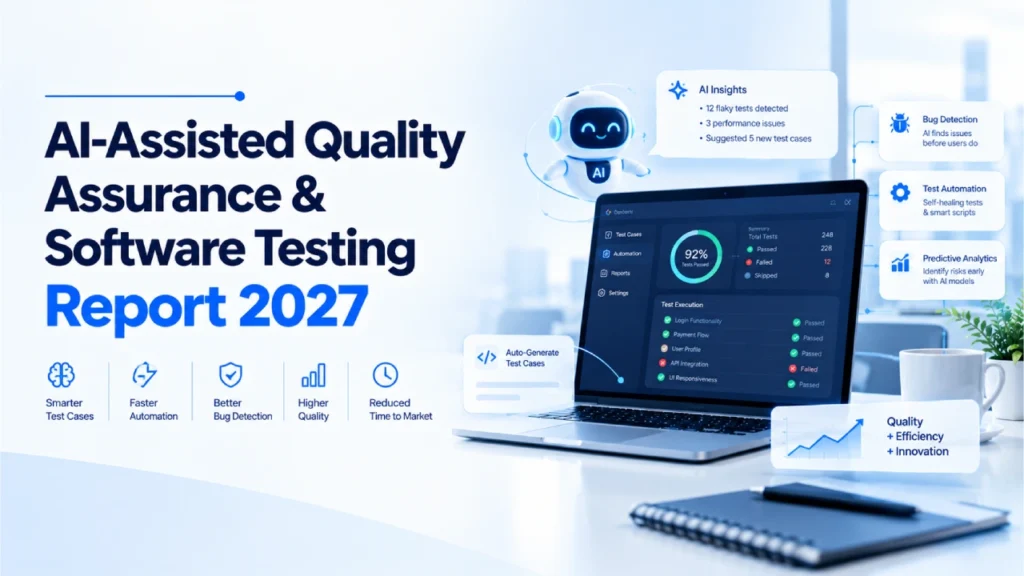
The Software Testing Agency you can rely
Structured software testing helps teams identify defects, validate requirements, evaluate user workflows and assess application behaviour before it reaches customers. It is most effective when it is planned, not left to the final days before launch.
QA activities can support every stage of the software development lifecycle:
- Requirements stage: reviewing specifications for gaps, ambiguity and untestable statements.
- Design and development: defining test scenarios, supporting unit and integration checks, and validating APIs early.
- Pre-release: functional, regression, compatibility and performance testing, followed by release validation.
- Post-release: smoke checks, regression after fixes and monitoring of recurring issues.
It helps to separate two ideas. Quality assurance is process-focused: it aims to prevent defects through clear requirements, reviews and agreed standards. Quality control, which includes testing, evaluates the actual software to find what the process missed. A good engagement uses both.
Effective testing reduces risk. It cannot guarantee that every defect will be found, and no credible QA provider can promise otherwise.
Mobile and Web Application Testing
Buyers searching for a mobile and web app testing agency usually need both platforms checked against the same business requirements. The two areas share principles but differ in risks.
Web application testing
- Functional workflows: core journeys such as sign-up, search, ordering and reporting.
- Forms and validation: field rules, error messages and boundary values.
- Authentication and authorisation: login behaviour, role permissions and restricted pages.
- Browser compatibility: behaviour across supported browsers and versions.
- Responsive layouts: rendering on different viewport sizes.
- API integrations: data exchange with back-end and third-party services.
- Error handling: how the system responds to failures and invalid input.
- Session management: timeouts, concurrent sessions and logout behaviour.
- Regression testing: rechecking existing behaviour after changes.
- Basic performance validation: page load and response checks under light load.
Mobile application testing
- Android and iOS behaviour: platform-specific conventions and differences.
- Device and OS compatibility: supported versions and representative hardware.
- Screen sizes and orientations: layouts in portrait and landscape.
- Touch interactions: gestures, taps, scrolling and keyboard behaviour.
- Permissions and notifications: camera, location, push notifications and denied access.
- Network interruptions: weak connectivity, offline mode and reconnection.
- Background and foreground behaviour: interruptions such as calls, and returning to the app.
- Installation and upgrade flows: fresh installs and updates that keep user data.
- Crashes and usability issues: stability and ease of use.
- Release build validation: checking the actual build submitted to the store.
The exact test matrix depends on your supported devices, operating systems, user base and business requirements. No team can test every device and browser combination, so we agree coverage by risk and usage data.
Manual Testing vs Automated Testing
The two approaches complement each other, and the choice is rarely either-or.
Manual testing suits exploratory testing, usability evaluation, new or frequently changing features, visual and contextual review and workflows that need human judgement. Its limits are speed and repeatability: running large regression sets by hand is slow and prone to inconsistency.
Automation suits repeated regression checks, stable critical workflows, API validation, data-driven tests, repetitive cross-browser scenarios and continuous integration pipelines. Its limits are real: it needs initial investment, scripts need maintenance as the application changes, and results need ongoing review. Not every test case should be automated, and automation does not replace human judgement.
A balanced strategy lets people explore new and changing areas while automated checks guard stable, high-value behaviour. As features mature, selected manual cases can be moved into the automated suite.
QA Software Testing and Automation
Our QA software testing and automation work covers the full lifecycle of an automation effort, not only script writing:
- Test automation planning: defining goals, scope and success measures.
- Automation suitability assessment: deciding which tests are worth automating.
- Test case selection: prioritising stable, high-risk and frequently repeated scenarios.
- Framework selection: choosing tools that fit your stack and team.
- UI and end-to-end automation: scripted browser and mobile journeys.
- API test automation: contract, data and error checks at service level.
- Regression suites: maintained collections run each release.
- Test data management: creating, resetting and protecting data used by tests.
- Reporting and failure analysis: separating genuine defects from flaky tests and environment issues.
- CI/CD pipeline integration: running suites automatically on builds.
- Test maintenance: updating tests as the application evolves.
Tools are chosen according to the application’s technology, platform, test objectives and team workflow. Depending on those factors, options may include Playwright, Selenium or Cypress for web UI, Appium for mobile, Postman or REST-assured for APIs, JUnit or TestNG for Java-based tests, and Jest or other framework-appropriate tools for JavaScript projects. This list illustrates common options. It is not a claim that every tool is used on every project or that we operate a proprietary framework.
It is also worth separating test execution from test coverage. A large number of automated tests does not mean an application is adequately tested. Coverage depends on whether the tests examine the right risks, data conditions and business rules, which is why test design matters more than test volume.
Dedicated Software Testing Team
If you want to hire software testers or outsource QA work, several arrangements are possible:
- Hire an individual software tester for a focused need.
- Engage dedicated QA engineers for continuing product work.
- Hire a software testing team to cover a larger scope.
- Add QA engineers to an existing development team.
- Outsource testing for a specific release.
- Establish ongoing testing support for a product.
Typical responsibilities include reviewing requirements, preparing test scenarios and test cases, executing manual tests, developing automated tests, logging and prioritising defects, retesting fixes, maintaining regression suites, preparing test reports and collaborating with developers and product managers.
We agree the working arrangements early: onboarding steps, communication channels, reporting formats, access permissions, test environments and who approves a release. Tester availability, team composition and timelines are confirmed after we understand your requirements.
Our Software Testing Process
The process below is adapted to each project. A short pre-launch check, a sprint-based product and a legacy maintenance engagement will not use identical steps.
- Requirements analysis and discovery. Review specifications, user journeys and constraints. Deliverable: a list of questions, assumptions and testable requirements.
- Test strategy and scope definition. Decide what to test, at what depth and with which approach. Deliverable: a scope and strategy summary.
- Risk-based test planning. Rank areas by business impact and likelihood of failure. Deliverable: a prioritised test plan.
- Test environment and data preparation. Confirm environments, accounts, builds and test data. Deliverable: a ready environment and data checklist.
- Test case and scenario design. Write cases covering normal, edge and failure conditions. Deliverable: reviewed test cases.
- Manual and automated test execution. Run planned tests and exploratory sessions. Deliverable: execution results and evidence.
- Defect reporting and prioritisation. Log defects with steps, severity and environment. Deliverable: tracked defect records.
- Fix verification and regression testing. Retest fixes and recheck related areas. Deliverable: verification status and regression results.
- Test summary and release-risk reporting. Summarise coverage, open issues and residual risk. Deliverable: a report supporting the release decision.
- Continuous improvement. Review what escaped, update suites and refine the approach. Deliverable: improvement recommendations.
In Agile sprints, these steps run in short cycles alongside development. With continuous delivery, more checks are automated and run on every build. For fixed release schedules, planning focuses on a defined test window. On legacy applications, we begin with the most business-critical workflows and build coverage gradually.
QA Tools and Technology Stack
The toolchain depends on the application, your existing engineering environment, testing objectives and client preferences. Categories commonly involved include:
- Browser automation: for example Playwright, Selenium or Cypress.
- Mobile testing: for example Appium, with emulators, simulators and real-device validation.
- API testing: for example Postman or REST-assured.
- Unit and integration testing: framework-appropriate tools such as JUnit, TestNG or Jest.
- Performance testing: for example JMeter.
- Defect tracking and test management: for example Jira or another tracker you already use.
- CI/CD integration: pipelines on the platform your team has adopted.
- Browser developer tools: network, console and performance inspection.
- Device emulators, simulators and real devices: emulators speed up early checks, while real devices reveal hardware-specific behaviour.
- Test reporting and analytics: dashboards and reports showing results, trends and coverage.
These are examples, not a statement that every tool is part of our confirmed internal stack. Where you already have tools and processes, we aim to work within them.
Why Choose Cybertize Technologies?
Cybertize Technologies is a software development and technology services company, which shapes how we approach testing. A QA partner that understands application behaviour, APIs, integrations and technical dependencies can design tests that find meaningful problems, not only surface-level faults. Our broader engineering capabilities include web and mobile development, API integration, back-end systems and application maintenance.
What you can expect from a QA engagement:
- Requirements-led test planning, so testing reflects what the software should do.
- Risk-based testing, focusing effort on what matters most to the business.
- Clear defect documentation, with reproducible steps and evidence.
- Collaboration with development teams, including prompt clarification and retesting.
- A manual and automation strategy, not a default to one approach.
- Coverage of critical business workflows.
- Regression testing after fixes.
- Reusable automated test suites where they make sense.
- Transparent test reporting, including what was not covered.
- Flexible engagement models.
- Integration with existing development workflows.
We do not make claims about guaranteed defect detection or specific outcomes. The value lies in disciplined, well-communicated work.
Industries and Application Types We Can Support
Software testing needs vary by application, and the following are application types where QA support is commonly relevant, not claims of verified industry experience:
- SaaS platforms.
- E-commerce applications.
- Enterprise web applications.
- Android and iOS apps.
- Business dashboards and portals.
- Education technology platforms.
- Healthcare applications.
- Financial and payment-enabled software.
- Logistics applications.
- API-driven products.
Testing requirements depend on application risk, data sensitivity, platform requirements and business workflows. For regulated or sensitive applications, such as those handling health or financial data, specialist validation and formal compliance activities may be needed beyond standard functional QA.
Software Testing Engagement Models
- Fixed-scope testing projects suit well-defined work, such as validating a single release or a new module.
- Time-and-materials testing support suits evolving scope, exploratory work and uncertain complexity.
- Dedicated QA engineers suit products with continuous development and steady testing needs.
- Extended QA teams suit larger programmes, multiple platforms or teams with limited internal QA capacity.
- Ongoing regression and release testing suits products with a regular release cadence that need consistent checks.
The right model depends on release frequency, scope clarity, testing complexity and internal team capacity. Commercial terms and timelines are agreed during scoping.
Software Testing Cost Factors
The cost of testing is influenced by:
- Application size and complexity.
- Number of supported platforms.
- Browser and device coverage.
- Number of critical workflows.
- Manual versus automated testing requirements.
- Test data and environment availability.
- API and third-party integrations.
- Performance testing scope.
- Security testing scope.
- Test automation framework setup.
- Regression testing frequency.
- Reporting and documentation requirements.
An accurate estimate requires an understanding of the application and the coverage you expect. A one-time release test, ongoing QA support and building an automation suite have different cost shapes. A release test is a bounded effort. Ongoing support is a recurring commitment. Automation involves upfront investment in framework and scripts, plus continuing maintenance.
Define Your Testing Scope and Release With Greater Confidence
A short conversation is the best way to start. We will discuss your application, platforms, release plans and current testing practices, then outline a sensible scope and suggest next steps, whether that is a single release test, an automation plan or an ongoing QA arrangement.
Discuss your project