AI Software Development for Business
AI Development Company: AI software development is a sequence of decisions, and getting the early ones right determines whether the later ones are easy or expensive.
It starts with use-case discovery: understanding the specific business problem, who will use the system, and what a correct outcome looks like. From there, we define the AI architecture, API-based, RAG, agentic, or a custom model, based on the nature of the task rather than a default preference. Data and knowledge sources come next: for a RAG system, how your documents are structured; for a machine learning model, whether your historical data is sufficient and clean enough to train on. Model or API selection follows the same logic, chosen for accuracy, latency, and cost on the specific task, not whichever provider is most talked about.
Backend development and AI integration turn the architecture into working software, the APIs, data pipelines, and business logic connecting the AI component to the rest of the product. User interfaces are built around how people will actually use the system, which looks very different for an internal tool than a customer-facing application.
Testing and evaluation matter more here than for most traditional software, since output quality can’t be verified with a simple pass/fail test. We evaluate against realistic scenarios, not just the cases that were easy to think of during development. Security, deployment, and monitoring close the loop, AI software development doesn’t end at launch, since model behavior and usage patterns both shift over time.
Explore AI powered Cyber Security
What We Build
Our AI development services cover a range of system types, depending on what the underlying business problem actually requires:
- AI-powered SaaS platforms with AI as a core, differentiated feature
- AI chatbots for customer support, sales, or internal use
- Enterprise AI assistants for internal knowledge and task support
- RAG applications grounded in company documents, policies, or product data
- AI agents that execute multi-step tasks across tools and systems
- Internal knowledge assistants for employee-facing search and Q&A
- Document intelligence systems for extracting and structuring data from documents
- AI recommendation systems for product, content, or service matching
- Predictive analytics applications for forecasting and planning
- AI-powered workflow automation for repetitive, judgment-involving processes
- Customer support AI, including escalation handling and ticket triage
- AI-enabled CRM and ERP features layered into existing business systems
- Custom machine learning applications for specific prediction or classification problems
- AI APIs and integrations connecting AI capability into other software products
Explore AI Agent Dev Guide
Artificial Intelligence Software Development Approach
Our approach to artificial intelligence software development starts with a plain question: what decision or action does this system need to support, and what does getting it wrong actually cost. The answer shapes every decision that follows, use-case definition first, kept deliberately separate from technology selection, then data strategy: what information the system needs access to, where it lives, and how current it needs to stay.
Where a language model is involved, prompt engineering and context design determine a meaningful share of real-world reliability. Where retrieval is involved, chunking strategy and retrieval accuracy become the core engineering work, since a language model is only as good as what it’s actually given to work with. Where the problem is a genuine prediction or classification task, machine learning model selection and training take priority instead.
API and system integration connect the AI component to your actual software and data, since a system that can’t act on real information is limited to being a conversation piece. Security is addressed at the architecture level, access control, data handling, audit logging, not added after the system is already built. Evaluation precedes production deployment, with monitoring continuing well past launch, since behavior can shift as underlying models and data change.
Explore Business Report
AI App Development Company for Custom Applications
As an AI app development company, we build AI capability directly into web applications, mobile applications, SaaS products, enterprise platforms, and both customer-facing and internal business applications.
There’s a meaningful difference between simply calling an AI API from an application and building an application where AI is properly integrated into the product architecture. Calling an API is a few lines of code; it works until the use case needs context the API alone doesn’t have, consistent output formatting, cost control at scale, or grounding in your actual business data. A properly integrated AI application handles all of that: retrieval where answers need grounding, structured output validation where results feed other systems, usage monitoring where cost needs to stay predictable, and fallback behavior for when the AI component genuinely can’t handle a request reliably, the difference that matters most once a feature moves from demo to real, unpredictable daily use.
AI Chatbot vs Human Support
Machine Learning Development
As a machine learning development company, Cybertize builds custom models for problems general-purpose AI APIs aren’t designed to solve: predictive models for forecasting demand or revenue, classification systems for categorizing data at scale, recommendation systems matched to specific user or product data, anomaly detection for unusual patterns in operational or transaction data, and natural language processing for structured text analysis beyond what a general-purpose model handles well. Computer vision applications fit here too, where the task involves analyzing images or video against your specific domain.
Not every AI problem needs custom model training. For many use cases, an API-based approach or a RAG system is faster to build, cheaper to maintain, and perfectly adequate for the accuracy the task requires. Custom machine learning becomes the right call when the problem is a well-defined prediction or classification task, sufficient historical data exists to train on, and the accuracy requirement genuinely exceeds what a general-purpose model or simple retrieval system can deliver.
Model integration and deployment follow standard engineering discipline: serving infrastructure for real request volume, versioning so updates don’t silently break downstream systems, and monitoring that catches accuracy drift before it becomes a business problem nobody notices until something goes visibly wrong.
AI Development Process
- Discovery and AI Use-Case Analysis. Understanding the specific business problem, who the system serves, and what a correct outcome looks like, before any technology decisions are made.
- Technical Architecture. Defining whether the problem calls for an API-based approach, RAG, an AI agent, or a custom machine learning model, based on the use case and available data.
- Data and Model Strategy. Assessing data sources, quality, and structure, and selecting the models or APIs that fit the task’s accuracy, latency, and cost requirements.
- Prototype or Proof of Concept. Building a working version against real, representative data to validate feasibility and accuracy before committing to a full production build.
- AI Software Development. Building the full system: backend logic, AI integration, data pipelines, and the user interface people will actually interact with.
- Testing and Evaluation. Structured testing against realistic scenarios, not just the cases that were easy to anticipate, since AI output quality requires a different evaluation approach than standard software testing.
- Deployment. A planned, monitored release into production, with clear rollback options if something doesn’t behave as expected under real usage.
- Monitoring and Optimization. Ongoing tracking of accuracy, cost, and performance after launch, since model behavior and usage patterns both shift over time.
AI Development Technologies
We work with large language models from OpenAI, Anthropic, and Google, selecting between them based on the task’s requirements for reasoning quality, cost, latency, and context window, rather than defaulting to a single provider. For LLM application development, this includes prompt design, context management, and output structuring that keeps model behavior consistent in production.
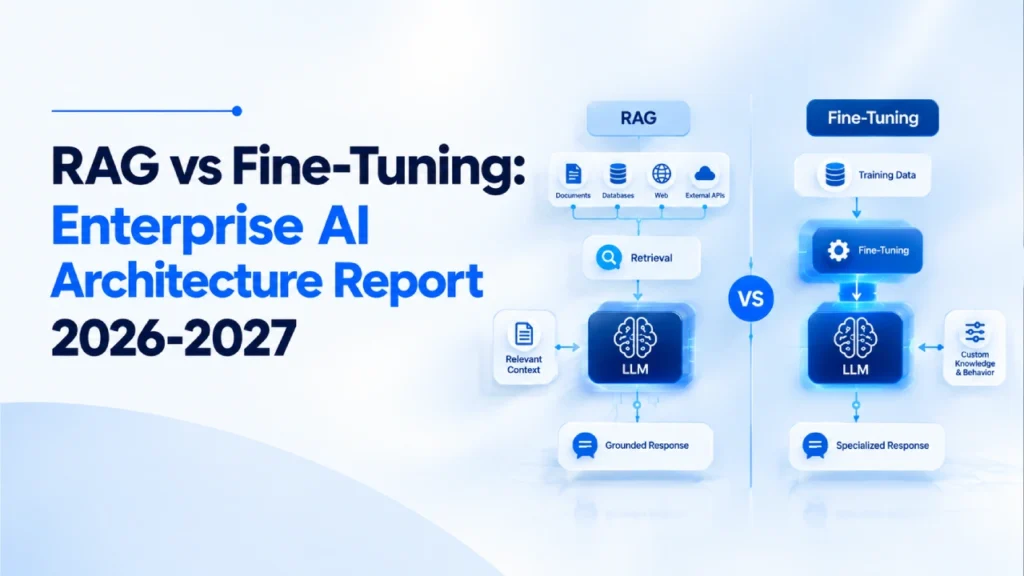
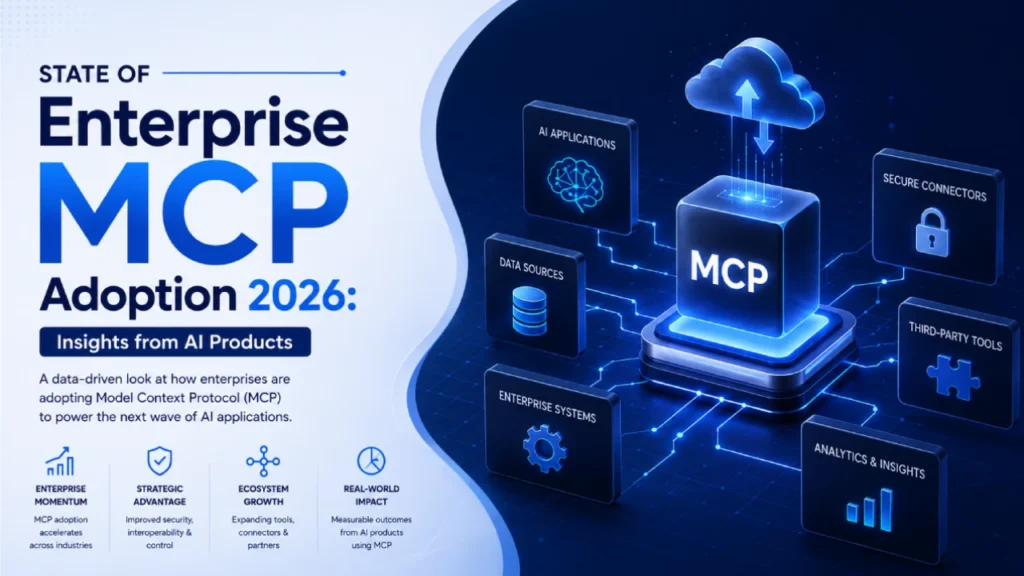
For RAG systems, we work with vector databases (Pinecone, Weaviate, Qdrant, and pgvector for teams already on PostgreSQL) and embedding models suited to the content being retrieved. For AI agents, we build on function calling and tool-use patterns, including the Model Context Protocol where it fits the integration need.
Machine learning development uses standard, well-supported frameworks with Python as the primary language. Backend, API design, and system integration typically run on Node.js or Python depending on the project’s existing stack. Infrastructure runs on AWS, Azure, or GCP, containerized with Docker for consistent deployment, with database choice matched to how the application actually needs to query its data.
AI Development Use Cases
AI development services apply to a specific set of recurring business problems rather than a generic promise of automation:
Customer support systems that resolve common questions accurately using retrieval-grounded responses, escalating cleanly to a human agent when needed. Enterprise knowledge search that lets employees find answers across internal documentation instead of searching multiple disconnected tools. Document processing that extracts and structures data from contracts, forms, and reports automatically. Sales automation for lead qualification and research compilation. Marketing automation for content generation and campaign analysis grounded in actual performance data.
Business intelligence applications that let stakeholders query structured data in plain language. Workflow automation for processes that involve judgment calls a simple rules engine can’t handle. Predictive analytics for demand forecasting, churn prediction, and resource planning. Recommendation engines matched to actual user or product data. Internal AI assistants for employee-facing tasks. AI-powered SaaS products where AI is a genuine product differentiator. AI-enabled CRM and ERP systems that surface insights or automate data entry within tools your team already uses daily.
Industries We Serve
SaaS and technology companies adding AI features to existing products or building AI-native platforms from the start. Healthcare organizations building clinical documentation, patient communication, or administrative automation tools, architected around data privacy requirements. Fintech companies building risk analysis, customer support, or internal compliance tools. E-commerce businesses building product recommendation and customer service systems. Education platforms building personalized learning or administrative tools.
Real estate businesses building property matching and document processing systems. Logistics companies building demand forecasting and route optimization tools. Professional services firms building research and document automation tools. Media organizations building content tools and audience analysis systems. Manufacturing businesses building quality control and predictive maintenance applications.
These are examples of where AI development applies within each industry, not a claim that every business in these categories needs the same solution. The right application depends on the specific problem being solved.
AI Development Company in India
Cybertize works with businesses across India, including Delhi, Mumbai, Gujarat, and Bengaluru, on custom AI software development, AI application development, automation, machine learning, and AI integration projects. Business needs differ by sector and by company stage rather than by city, a fintech company in Mumbai and a SaaS company in Bengaluru are likely to need meaningfully different AI architectures even if both are described as “AI development” projects. We scope each engagement around the specific problem a business is solving, wherever in India that business is based.
AI Development Company for USA and UAE Businesses
For businesses in the USA and UAE, we work as a remote AI development partner, handling custom AI software and application development through structured technical communication, defined project milestones, and scalable engineering practices rather than requiring in-person presence to deliver reliably.
Projects are scoped the same way regardless of location: a clear discovery phase, defined architecture decisions, and a development process with visible progress throughout, not a black-box handoff with no insight into how the system is actually being built. For USA and UAE businesses, this typically means working across overlapping hours for coordination on key decisions, with asynchronous progress on development work in between.
Why Businesses Choose Custom AI Development
Off-the-shelf AI tools solve a narrow, predefined problem well. Custom AI development becomes the better choice once a business needs more than that tool was built to offer: control over how the system behaves rather than a vendor’s fixed configuration options, integration with your actual existing systems and data instead of a standalone tool operating in isolation, and data ownership, keeping your business data under your control rather than inside a third-party platform.
It also matters for custom workflows that match how your business actually operates, product differentiation where AI becomes a genuine feature of your own product rather than a visible, swappable plugin, security requirements a generic tool’s default configuration doesn’t fully address, scalability architected for your actual growth trajectory, and business-specific functionality a one-size-fits-all tool was built for the average case, not your case.
Why Cybertize Technologies
Cybertize approaches AI development as software engineering with AI components, not as a separate discipline bolted onto a marketing pitch. Our AI development work sits inside a broader custom software development practice covering web applications, mobile applications, SaaS platforms, CRM and ERP systems, APIs, and cloud and DevOps infrastructure, which means an AI system we build is designed to integrate into your actual product and technical environment, not delivered as a disconnected prototype.
We work across the full range of AI approaches, API-based integration, RAG, AI agents, and custom machine learning, and recommend based on which one actually fits the problem, not a default answer that happens to be easier for us to deliver. Architecture is designed for production use from the start: security, evaluation, and monitoring are part of the initial build, not a phase added later once something has already gone wrong.
Development is end-to-end: data strategy, backend architecture, AI integration, interface design, and deployment, handled as one coordinated engineering effort rather than split across disconnected vendors who have to be manually kept in sync.
Who Needs an AI Development Company?
Startups building AI products that need the core capability engineered properly from the first version, not retrofitted after early users expose its limitations. SaaS companies adding AI features to an existing platform, where the new capability needs to integrate cleanly with what’s already there. Enterprises modernizing workflows that currently depend on manual review or judgment calls a simple automation tool can’t replicate.
Businesses replacing manual processes involving unstructured data, documents, emails, support tickets, where rule-based automation alone isn’t flexible enough. Companies integrating AI into existing software without destabilizing a system that already works. Organizations building internal AI tools for employee-facing knowledge search, reporting, or task support, where a generic internal tool means paying for features that don’t match the actual workflow.
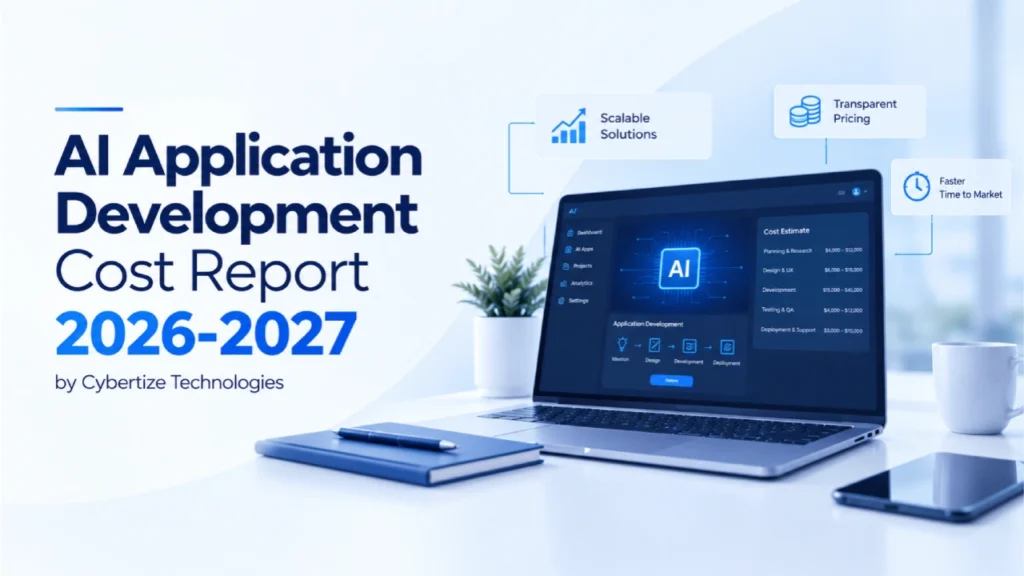
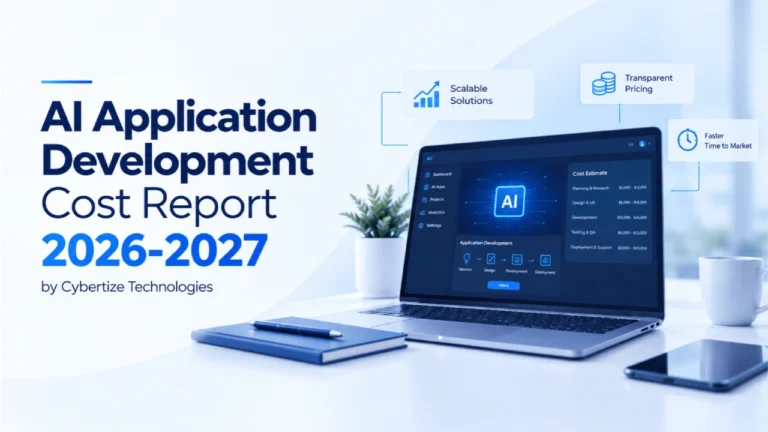
How Much Does AI Development Cost?
AI development cost depends on several variables that genuinely change scope, not a single number that applies across every project.
Project complexity is the largest factor: a proof of concept validating one use case against sample data is a materially smaller engagement than a production system serving real users at scale. The number of AI features matters directly, a single chatbot interface costs less than a platform with several distinct AI capabilities working together. Model and API usage affects both build and ongoing operating cost, since different models carry different per-request pricing. Data requirements shape cost significantly: clean, well-structured data is faster to work with than data needing substantial preparation first.
RAG complexity depends on how many data sources need connecting and how large the document corpus is. Custom machine learning, when the problem genuinely calls for a trained model, typically adds cost for data preparation, training, and evaluation. Integrations, UI/UX work, industry-specific security requirements, and cloud infrastructure all factor into total cost, and ongoing maintenance is a separate, recurring cost once the system is live.
A proof of concept, an MVP, and a full production system represent genuinely different scopes of work, and we quote each based on what it specifically requires rather than a flat package price.